

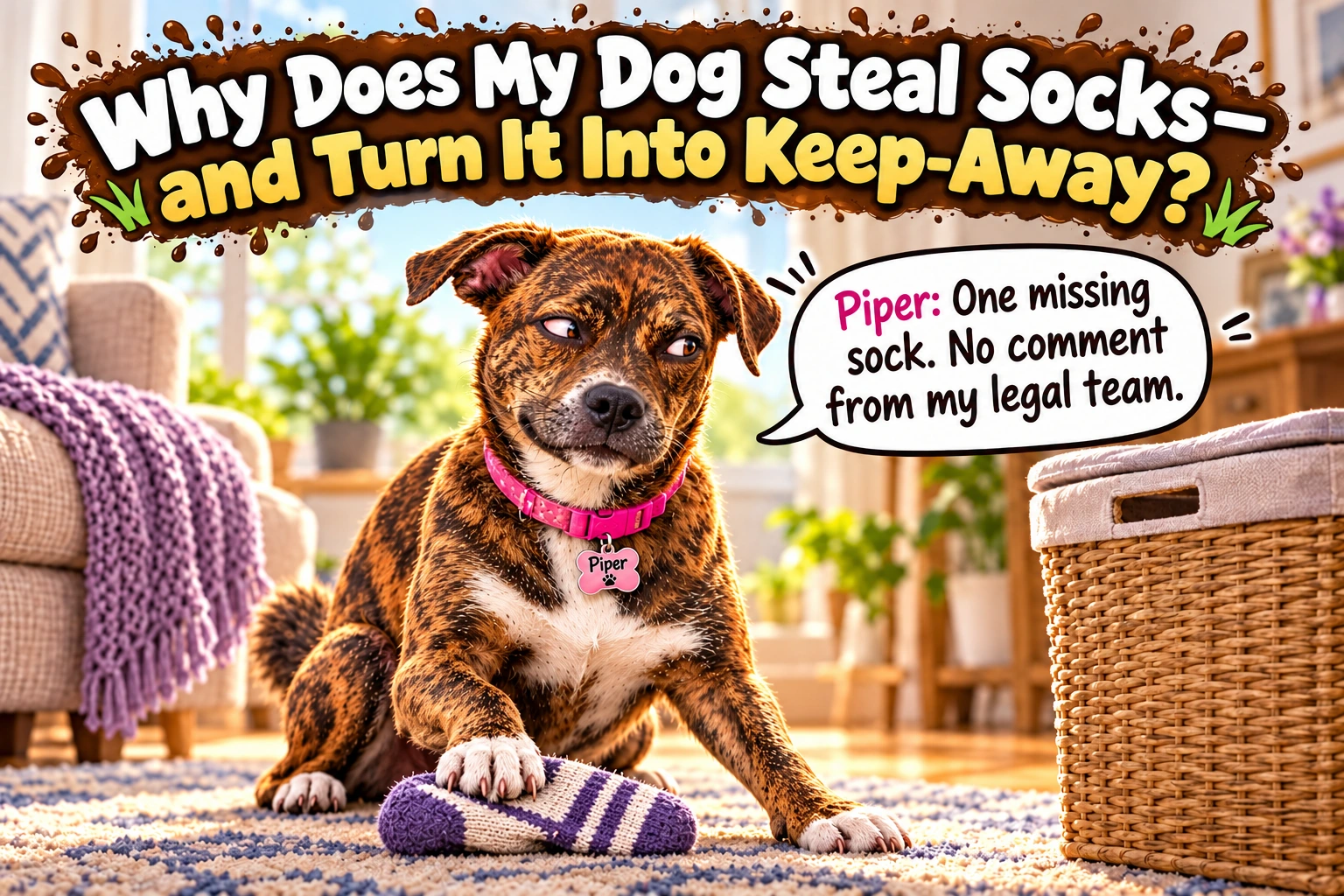
Sock stealing can involve play, interesting scent, easy access, and the attention that follows. The first useful step is preventing access, then teaching a safe exchange away from a laundry emergency. Carrying a sock, guarding it, and swallowing it call for different responses. [1][2]
If you know or suspect a sock was swallowed, contact your veterinarian or emergency veterinary service promptly—even if the dog seems fine. Socks can obstruct the digestive tract. Do not wait for vomiting or attempt to induce it unless a veterinarian directs you. [2][3]
Why this sock and why right now?
Imagine the familiar sequence: the laundry basket arrives, your dog lifts a sock, someone gasps, and a chase begins. The whole household has joined an activity that started with unattended fabric.
Play, access, scent, and learned attention are possibilities, rather than a single motive we can assign to every dog. Battersea advises putting tempting items away and avoiding the chase-and-retrieve pattern. [1]
A dog bringing a sock with a loose body is not automatically inviting safe grabbing. Watch what happens as someone approaches. Freezing over the item, a hard stare, growling, or snapping means stop reaching and make space. Our guarding guide covers that concern separately. [4]
Fix the laundry route
Use a closed hamper and keep the laundry-room door shut when you cannot supervise. Transfer socks directly from basket to machine instead of leaving a temporary pile at nose height. Ask everyone in the household to follow the same system.
Check the places where socks actually disappear: beside the bed, under a chair, or on the bathroom floor. Moving the hamper across the room does little if yesterday’s socks remain beside the sofa.
Offer an appropriate intact toy during ordinary shared time. Choose one that suits your dog’s size and chewing habits, and supervise. A sock is not a suitable training toy simply because the dog enjoys it.
A safe exchange example
Practise with a safe toy first, when there is no guarding concern. Have a second toy the dog likes. Offer the alternative, allow the first toy to be released, and reward the swap. Battersea describes toy or food exchanges; the important order is offering something valued before taking the other item. [1]
For a dog calmly carrying an intact sock, an already familiar exchange may let you recover it without a chase. Keep your hands away from the mouth. Once the dog has released it and moved away, secure the dog safely before collecting the sock.
If the dog stiffens, flees with the sock, begins gulping it, or will not exchange safely, stop treating this as a game. Keep others away and contact your vet for immediate guidance about the ingestion risk. Do not force the mouth open or corner the dog. [2][4]
When the exchange appears to create more theft
If every stolen sock reliably summons the best toy in the house, prevention still needs work. Give attention and suitable play when laundry is out of reach, rather than relying on emergencies as your training opportunities.
Keep practising exchanges with safe objects in calm settings. You are building a useful skill, not testing how many forbidden items the dog will surrender. For guarding, obtain qualified help rather than escalating the value or pressure of repeated tests. [4]
A missing sock is worth taking seriously
Tell your veterinarian what may be missing, approximately when it disappeared, and any symptoms. Vomiting, appetite loss, abdominal discomfort, and low energy can accompany obstruction, but an absence of symptoms does not make suspected ingestion safe to ignore. [2]
Your most effective purchase may be unnecessary: close the hamper you already own. Piper’s imaginary legal team can keep its silence; the actual socks should stay behind a lid.