
Separation Anxiety in Dogs: Why Your Dog Panics When You Leave
What is separation anxiety in dogs? Separation anxiety in dogs is a distress-based behavioral response that occurs when a dog is left alone or separated from its owner. It is not disobedience or spite — it is a predictable emotional pattern driven by triggers, learning history, and reinforcement. Common signs include barking, destruction, pacing, and attempts to escape (Overall, 2013; Sherman & Mills, 2008).
Key Takeaways
- Separation anxiety is driven by distress, not disobedience.
- Dogs are reacting to the absence of stability, not trying to misbehave.
- Barking when alone is a signal, not the problem itself.
- Understanding the system behind the behavior is more effective than punishment.
- The behavior is predictable once the trigger and reinforcement are identified.
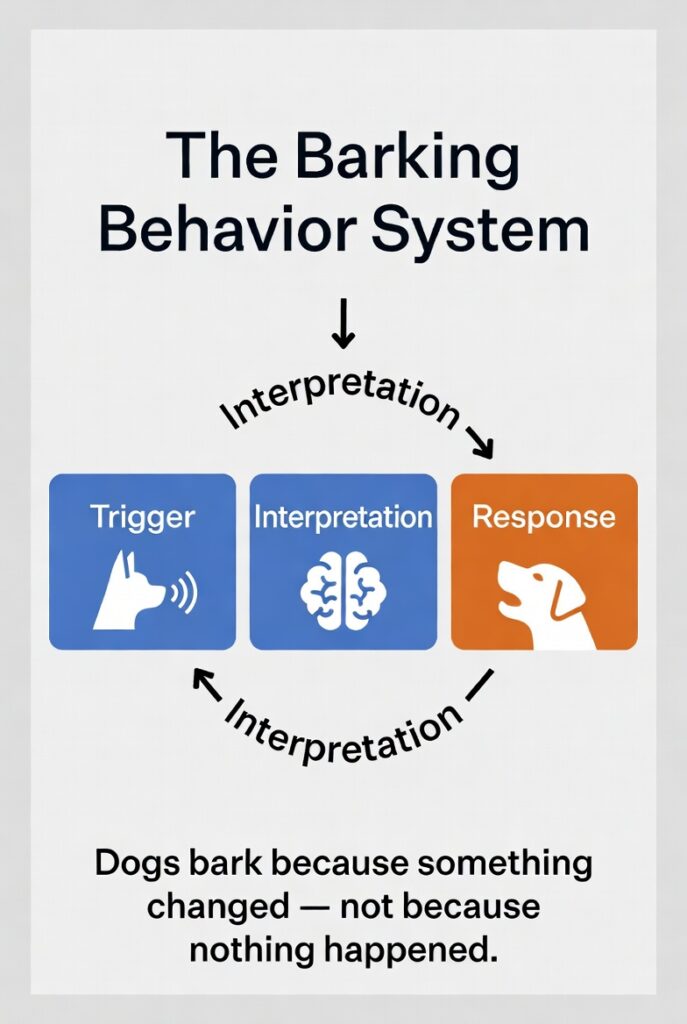
The Separation Anxiety Behavior System Separation anxiety follows the same BarkMindDogs Behavioral Framework as all other behaviors: Trigger → Interpretation → Response → Reinforcement.
If you change the trigger or the environment, the behavior changes. If you only try to suppress the symptoms, the system remains the same.
What is separation anxiety in dogs? Separation anxiety in dogs is a distress-based behavioral response that occurs when a dog is left alone or separated from its owner.
What Is Separation Anxiety in Dogs? Separation anxiety in dogs is a distress-based behavioral response that occurs when a dog is left alone or separated from its owner.
It is driven by emotional distress when the dog’s primary source of safety and routine (you) is removed. Research shows that up to 40% of dogs display some form of separation-related behavior, with strong links to attachment and reinforcement learning (Overall, 2013; Blackwell et al., 2016).
To understand how these behaviors develop, we need to look at how the system responds over time.
Signs of Separation Anxiety What are the symptoms of separation anxiety in dogs? Symptoms include barking, pacing, destruction, escape attempts, and anxiety when the owner prepares to leave.
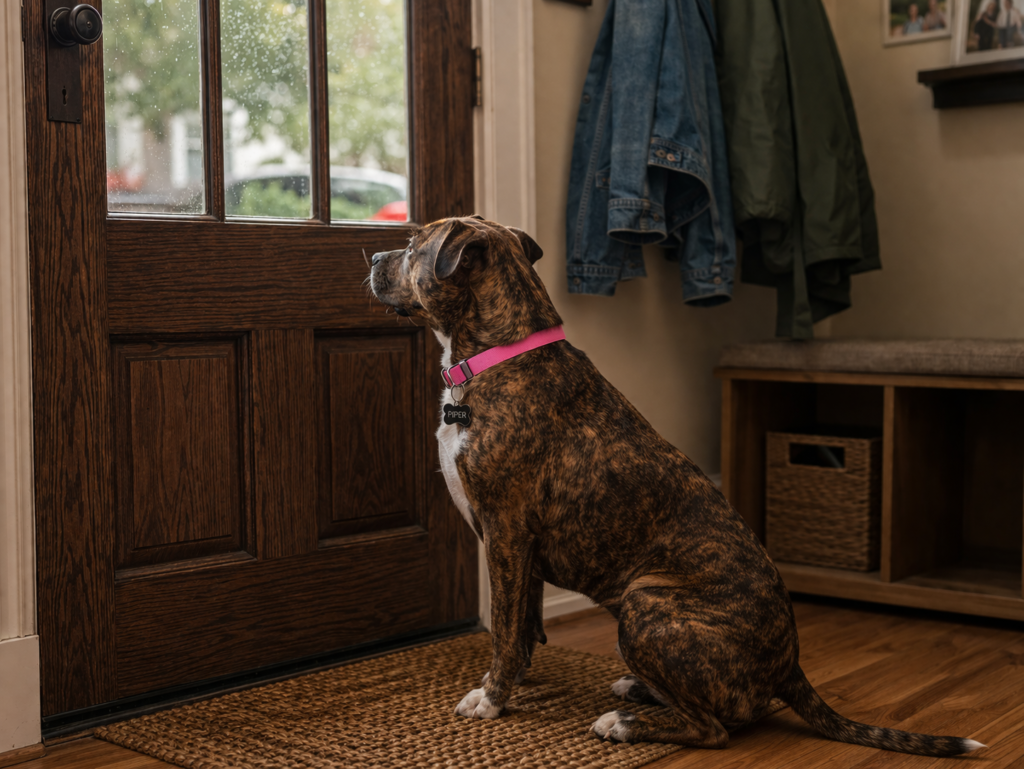
Why Dogs Bark When Left Alone Why do dogs bark when left alone? Dogs bark when left alone due to distress, learned reinforcement, and attempts to reconnect with their owner.
Why Does My Dog Get Anxious Before I Leave? Why does my dog get anxious before I leave? Dogs recognize patterns such as keys, shoes, or routines that signal departure, triggering anxiety before you leave.
When Separation Anxiety Starts When does separation anxiety start in dogs? Separation anxiety typically begins within minutes of the owner leaving and can sometimes start during departure cues.
Common Separation Anxiety Symptoms Dogs with separation anxiety often show:
- barking or howling when alone
- destructive behavior near doors or windows
- pacing or restlessness
- attempts to escape
- urination or defecation indoors
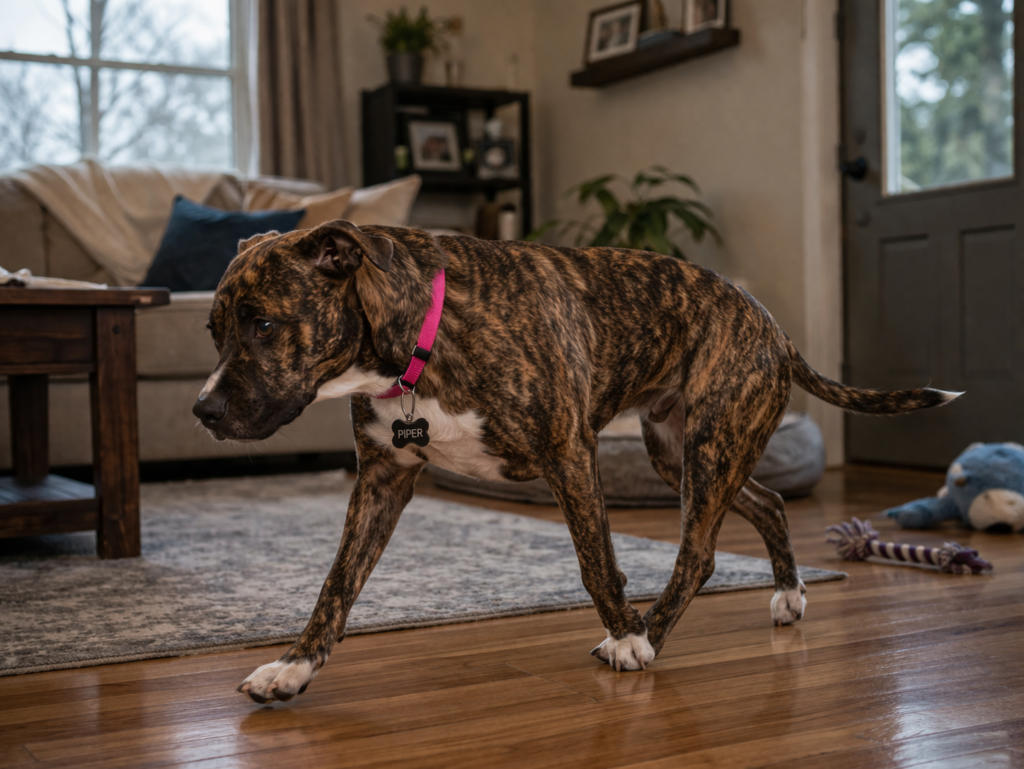
Separation Anxiety: Cause vs Symptom Barking, destruction, and pacing are not the cause of separation anxiety — they are symptoms.
The cause is the dog’s emotional response to being left alone, shaped by triggers and reinforcement.
The Reinforcement Loop in Separation Anxiety The distress behaviors (barking, destruction) often provide temporary emotional relief, which reinforces the pattern. This is the same learning mechanism explained in How Dogs Learn.
Why Do Dogs Bark When Excited? Excitement barking is high-energy vocalization during play or anticipation of something positive. It is different from distress barking but can be reinforced in similar ways.
Real-Life Separation Anxiety Examples
- A dog barking and scratching at the door within minutes of the owner leaving.
- A dog destroying furniture near exits when left alone for hours.
- A dog pacing and whining as soon as the owner picks up keys or puts on shoes.
- A dog attempting to escape through windows or crates when the household is quiet.
Barking vs Other Separation Behaviors Barking is only one form of communication during separation. Pacing, destruction, and escape attempts often occur together because multiple parts of the behavioral system activate at the same time.
Why Barking Often Happens With Other Behaviors Barking rarely happens alone. It is often paired with movement, posture changes, or repeated patterns such as pacing or jumping. This is because multiple parts of the behavioral system activate at the same time, not just vocalization.
How Do You Treat Separation Anxiety in Dogs? Separation anxiety is addressed by changing triggers, environment, and reinforcement patterns rather than suppressing behavior.
How Long Does Separation Anxiety Last in Dogs? Separation anxiety can persist as long as the underlying system remains unchanged, but improves when triggers and reinforcement are adjusted.
Can Separation Anxiety Go Away on Its Own? Separation anxiety rarely resolves on its own because the behavior is reinforced over time unless the system changes.
Dogs bark because something changed — not because nothing happened. The environment shapes the bark more than the dog itself. If the barking repeats, the system is reinforcing itself. Barking is predictable once the system is understood. The same trigger can produce different barking depending on the dog’s state. Dogs bark because they are responding to a trigger, not acting randomly. Separation anxiety is driven by distress, not disobedience. Barking when alone is a signal, not the problem itself. Separation anxiety behavior is predictable once the trigger and reinforcement are understood. Dogs are responding to absence, not choosing to misbehave. Separation anxiety is not random behavior — it is a consistent emotional and behavioral response pattern.
What People Are Really Trying to Solve Most people searching for separation anxiety are dealing with barking, destruction, or distress when leaving their dog alone. Understanding the system behind these behaviors is the first step to solving them.
This connects directly to the full behavior system explained in Why Your Dog Does That. This is part of the broader framework covered in How Dogs Learn. This behavior is also influenced by environmental triggers that shape how dogs respond when alone. See Environmental Triggers in Dogs.
To understand how these patterns repeat, it helps to look at how the behavior unfolds over time.
If your dog is barking excessively or showing signs of distress when alone, the solution is not to silence the behavior but to understand what is causing it.
Once you identify the trigger and the reinforcement behind it, the behavior becomes predictable — and changeable.
Related Separation Anxiety Topics
- Why does my dog bark when I leave?
- Why do dogs bark at everything?
- Why do dogs bark at night?
- Why does my dog get anxious before I leave?
- Dog behavior mistakes that worsen anxiety
Simple Summary Separation anxiety in dogs is a predictable behavioral response driven by triggers, emotional state, and reinforcement.
When the system changes, the behavior changes.
Common triggers of separation anxiety:
- owner leaving
- departure routines
- lack of independence
- sudden schedule changes
- strong attachment patterns
Main symptoms of separation anxiety:
- barking when alone
- pacing or restlessness
- destructive behavior
- escape attempts
- anxiety before departure
Learn More About Dog Behavior
- Why Your Dog Does That – The complete behavioral framework
- Why Dogs Bark – Understanding vocalization and communication
- How Dogs Learn – The science of canine learning
- Environmental Triggers in Dogs – Hidden forces shaping behavior
- Separation Anxiety in Dogs – Understanding and addressing distress
- Dog Aggression Explained – Reactivity and communication
- Puppy Behavior Development – Early pattern formation
- Dog Behavior Mistakes – How humans unintentionally shape behavior
Research & Citations
Prato-Previde, E., et al. (2003). Is the dog-human relationship an attachment bond? Behaviour.
Overall, K. L. (2013). Clinical Behavioral Medicine for Small Animals. Mosby.
Sherman, B. L., & Mills, D. S. (2008). Canine anxieties, phobias, and aggression. Journal of Veterinary Behavior.
Blackwell, E. J., et al. (2016). The relationship between training methods and the occurrence of behavior problems in dogs. Journal of Veterinary Behavior.