

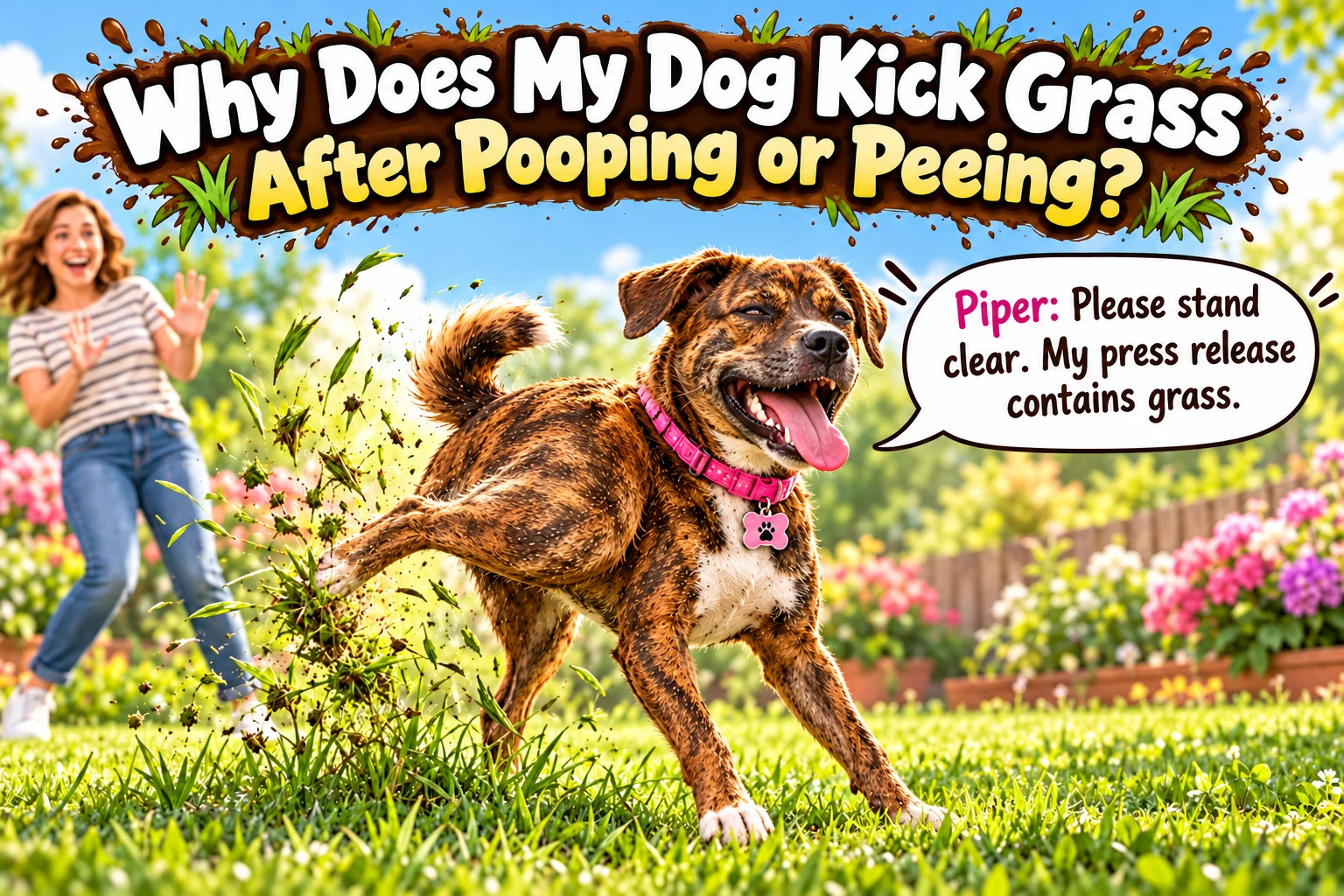
Kicking or scratching the ground after pooping or peeing is commonly discussed as marking behavior, with scent and visible disturbance potentially contributing. It is usually different from trying to bury the waste. It does not, by itself, tell you that a dog is dominant, aggressive, or making a specific declaration. [1][2]
You finish opening the waste bag just as a small lawn launches past your shoe. The dog has completed the bathroom break and apparently added a landscaping service.
Why scratch after both poop and pee?
Veterinary guidance describes ground scratching after either type of elimination. The movement leaves disturbed ground, while paw-associated odor may contribute another cue. These explanations concern possible communication; we cannot translate a particular kick into a sentence. [1]
Research on pedal scent gives that scent component some support. In a study presenting collected paw scent, dogs investigated samples, with some responses differing by the scent donor and investigating dog’s sex. That was a scent-sample experiment, not a demonstration of the meaning of every post-poop kick. [2]
If your dog sometimes kicks and sometimes walks on, note the setting without turning it into a contest about status. The practical issue is usually space, footing, and avoiding flying debris.
Stand beside the dog, outside the spray
When possible, choose a toileting spot with enough room to stand to the side. Avoid positioning a child, another dog, or your face directly behind the back feet. Keep the leash comfortable enough for ordinary movement while maintaining control near roads and other people.

Walk-position sketch: the dog faces along the open path; the handler stands to one side; the area behind the hind feet remains clear. A person approaching from behind waits outside that debris area. This is a spacing aid, not a fixed-distance safety guarantee.
Do not lean in with the waste bag while the feet are moving. Once the dog has finished, move them safely away from the deposit before collecting it. You still need to remove the waste even if the dog’s gardening enthusiasm has scattered the grass around it.
Teach an easy move-on routine
Practise a cheerful familiar walking cue during uneventful parts of the walk. Reward coming along, so the cue has meaning before you need it beside a flower bed.
After toileting, allow a brief pause in a suitable spot, then invite the dog onward. Reward moving with you. If the dog is busy scratching, avoid jerking their legs off balance. Make the next opportunity easier by choosing a wider spot away from fragile planting or busy foot traffic.
If the dog stiffens or reacts toward someone approaching, create distance. Read the whole encounter rather than treating the kicking as proof of the cause.
Kicking is different from struggling to toilet
Watch the sequence. A dog who eliminates comfortably, kicks, and walks normally presents a different concern from one who repeatedly strains, cries, produces little urine, or seems painful. Repeated attempts to urinate with little or no output require urgent veterinary advice; do not assume this is marking. [3]
For limping, bleeding nails, sore pads, or a sudden change in the movement, contact your veterinarian. Choose less abrasive ground in the meantime and avoid making the dog perform the action for a video. [1][3]
Next walk, your easiest improvement may be moving your shoes two steps to the side. Piper’s grass-confetti announcement can remain a joke while everyone else stays out of the launch zone.