Puppy Behavior Development: How Early Patterns Shape the Dog Your Puppy Becomes
What is puppy behavior development? Puppy behavior development is the process by which a dog learns to respond to the world through repeated experiences. Every behavior follows a predictable system: a trigger occurs, the puppy interprets it, responds, and that response is reinforced over time. What appears to be random or “bad” puppy behavior is actually structured learning in progress.
Key Takeaways
- Puppy behavior is learned, not random.
- Every behavior starts with a trigger.
- Puppies are constantly forming habits.
- Reinforcement determines what sticks.
- Early patterns become lifelong behaviors.
How Puppy Behavior Actually Develops
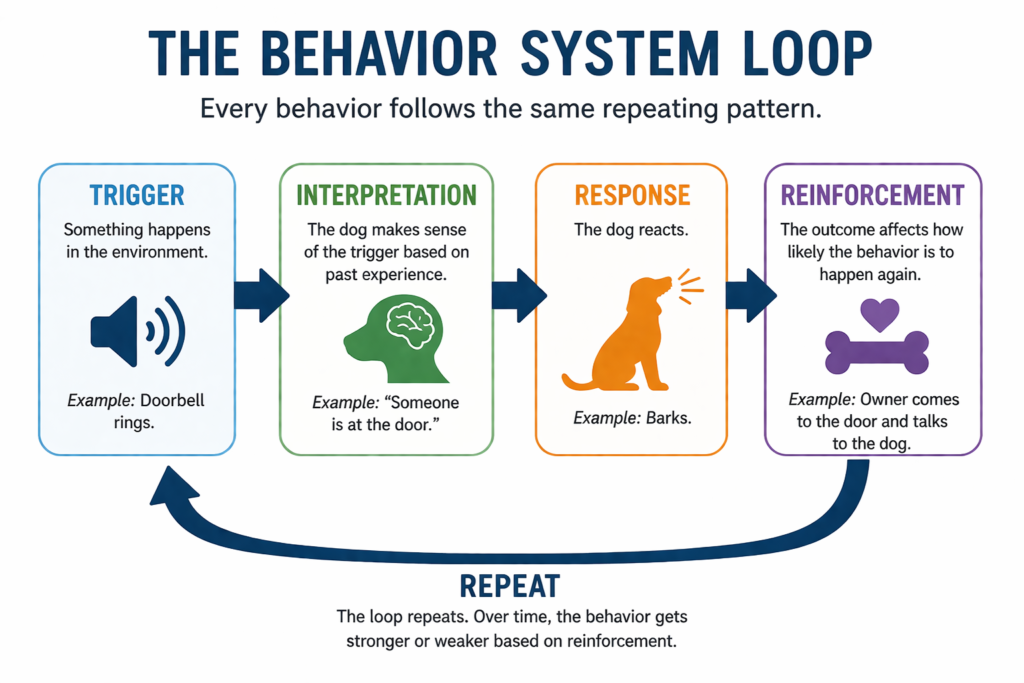
Puppy behavior is not random chaos. It follows the same BarkMindDogs Behavioral System explained in Why Your Dog Does That: trigger → interpretation → response → reinforcement.
What Is a Behavior Pattern? A behavior pattern is a repeated response that becomes stronger through reinforcement. Once a puppy experiences the same trigger-response-reinforcement loop multiple times, the behavior becomes automatic.
No behavior happens without a trigger. If a behavior appears random, the trigger is simply unseen. This is the same mechanism described in detail in Environmental Triggers in Dogs.
1. Triggers Puppies react to sounds, sudden movement, people, frustration, boredom, or isolation. These triggers are far more frequent and intense for puppies than for adult dogs. Many adult barking problems and reactivity issues start here. See Why Dogs Bark for how early triggers evolve.
2. Interpretation Everything is new to a puppy. They interpret the world through play, exploration, and basic instincts. This learning process is explained in depth in How Dogs Learn.
3. Response Common responses include biting, barking, jumping, zoomies, or ignoring commands. Many of these responses later evolve into adult patterns. See Dog Aggression Explained for how early responses can develop into bigger issues.
4. Reinforcement Whatever produces attention, play, relief, or any desired outcome gets stronger. Behavior is not random — it is learned through repetition. This is exactly why many adult behavior problems exist — see Dog Behavior Mistakes for the human side of reinforcement errors.
Behavior is not a personality problem — it is a learning pattern.
Every real-world behavior can be broken down into the same four-step system.
Most Common Puppy Behaviors (And What Causes Them)
These behaviors are not random — each one follows a predictable trigger and reinforcement pattern.
- Biting → exploration + teething + play
- Barking → communication + learned response to triggers
- Jumping → excitement + attention-seeking
- Zoomies → energy release after stress or excitement
- Ignoring commands → testing boundaries or competing triggers
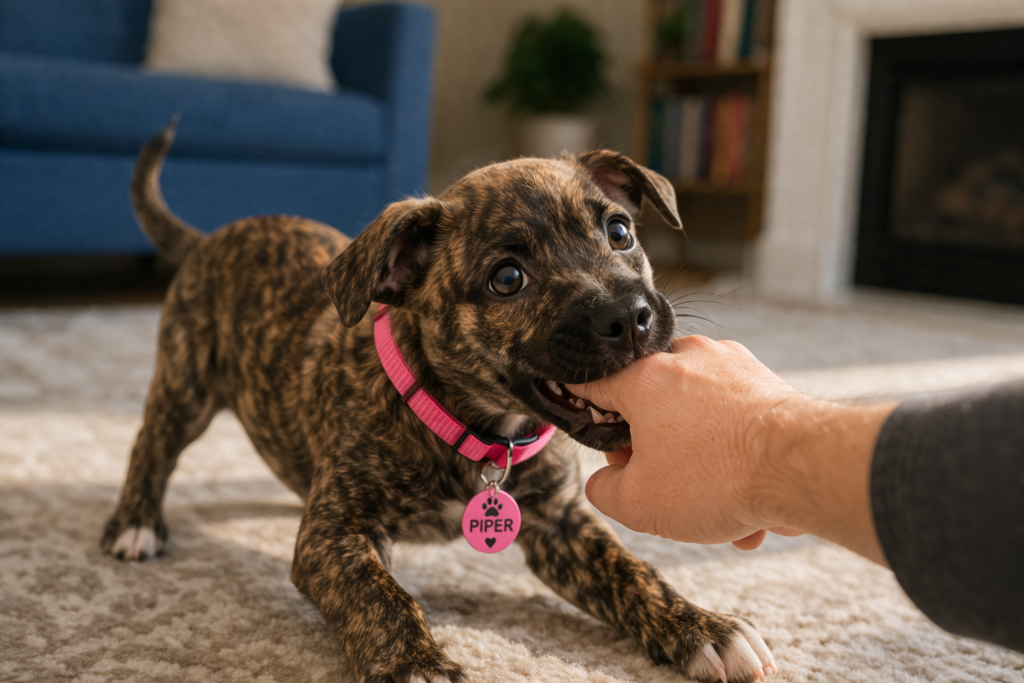
Real-Life Examples Example 1: Puppy bites your hands → trigger: fast movement → interpretation: play → response: bite → reinforcement: you react → biting increases. This early pattern can later contribute to issues in Dog Aggression Explained.
Example 2: Puppy barks in crate → trigger: isolation → interpretation: stress → response: barking → reinforcement: you return → barking strengthens. This is often the beginning of Separation Anxiety in Dogs.
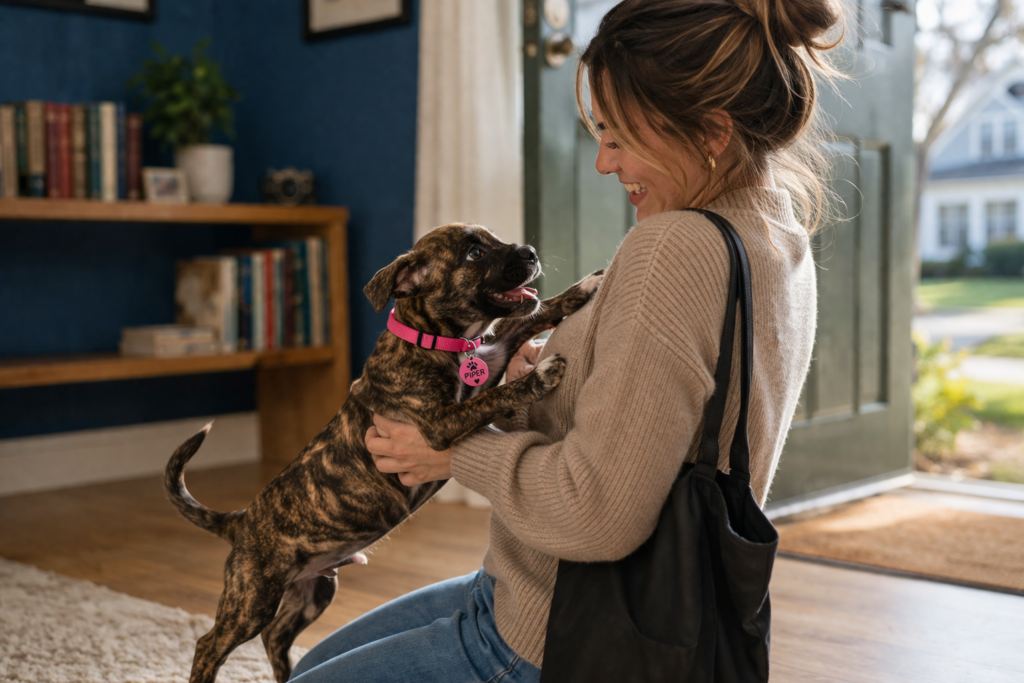
Example 3: Puppy jumps on guests → trigger: new person → interpretation: excitement → response: jumping → reinforcement: attention → jumping becomes the default greeting. This connects directly to patterns explained in Dog Behavior Mistakes.
Why Puppy Behavior Gets Worse Over Time Puppy behavior does not randomly worsen — it becomes stronger through repeated reinforcement. When a behavior consistently produces a result (attention, release, stimulation), it becomes more automatic and more intense over time.
What feels like disobedience is usually confusion, overstimulation, or reinforcement history — not defiance.
Why Puppy Behavior Feels So Frustrating It often feels personal. It feels like your puppy “knows better” or is being defiant. But puppies are not trying to be difficult — they are simply responding to patterns that have been reinforced over time. Once you see the system clearly, the guilt and frustration start to fade.
Why Does My Puppy…
- Bite everything? Puppies bite to explore the world and relieve teething discomfort.
- Ignore me? Puppies respond to the strongest stimulus and reinforcement in the moment.
- Bark at nothing? Puppies bark at triggers humans often miss.
- Get worse over time? Behavior worsens when reinforcement continues or triggers increase.
- Not listen? Competing triggers override previous learning.
Why does my puppy react to everything? Because puppies have low thresholds for triggers and are constantly learning which responses work.
What causes dog behavior problems later in life? Repeated reinforcement of early behavior patterns during puppy development.
The Pattern Behind Every Puppy Behavior
Every puppy behavior follows the same system: Trigger → Interpretation → Response → Reinforcement
This pattern repeats continuously, shaping the dog your puppy becomes. When you understand this, behavior stops being confusing and starts becoming predictable. The same learning loop drives adult behaviors covered in Separation Anxiety in Dogs and Dog Aggression Explained.
Strategic Takeaways
- Puppy behavior is shaped by the system, not by “badness.”
- Reinforcement is happening constantly — make sure it favors the habits you want.
- Early patterns become lifelong behaviors.
- Change the system early and you prevent most adult problems.
When you understand puppy behavior as early pattern formation, you stop trying to survive puppyhood and start shaping the dog your puppy is becoming.
FAQ
Why does my puppy bite so much? Puppies bite to explore the world, relieve teething pain, and play. It is normal developmental behavior that decreases with consistent guidance.
When do puppies calm down? Most puppies begin to show noticeable calming between 12–18 months, with full maturity often between 18–36 months.
Is my puppy aggressive or just playing? Most puppy biting and growling is play or exploration. True aggression is rare and shows different body language.
Why is my puppy getting worse? Behavior can appear to worsen during fear periods or when triggers and reinforcement are not managed.
Can puppy behavior be fixed early? Yes. The earlier you address triggers and reinforcement, the easier and more permanent the change becomes.
Why does my puppy ignore commands? Puppies respond to the strongest stimulus and reinforcement in the environment. Commands learned in quiet settings often fail when real-life triggers appear.
Why does my puppy bark at nothing? Puppies bark at triggers humans often cannot detect.
Will my puppy grow out of bad habits? Puppies rarely grow out of reinforced behaviors. They grow into the patterns that have been strengthened.
How do I stop my puppy from jumping? Stop reinforcing jumping with attention and consistently reward calm four-on-the-floor behavior.
Why does my puppy have so much energy? High energy and zoomies are normal. They help release pent-up energy and stress.
What are fear periods in puppies? Normal developmental stages when puppies become suddenly more sensitive to new stimuli. Proper handling prevents lasting fears.
Why does my puppy seem to forget training? Hormones, new triggers, and stress during adolescence can temporarily override previous learning.
Why does my puppy act worse some days than others? Behavior varies with daily changes in stress, triggers, fatigue, and environment.
Why does my puppy react to everything? Because puppies have low thresholds for triggers and are constantly learning which responses work.
What causes dog behavior problems later in life? Repeated reinforcement of early behavior patterns during puppy development.
References
- Overall, K. L. (2013). Manual of Clinical Behavioral Medicine for Dogs and Cats. Elsevier.
- Serpell, J. (Ed.). (2017). The Domestic Dog. Cambridge University Press.
Explore the Full BarkMindDogs Behavioral System