
Humping can occur with excitement, play, sexual behavior, stress, or a learned interaction. Physical irritation can contribute too. The setting and any accompanying symptoms matter more than assigning a dog an embarrassing personality. Female and neutered dogs can mount as well. [1][2]
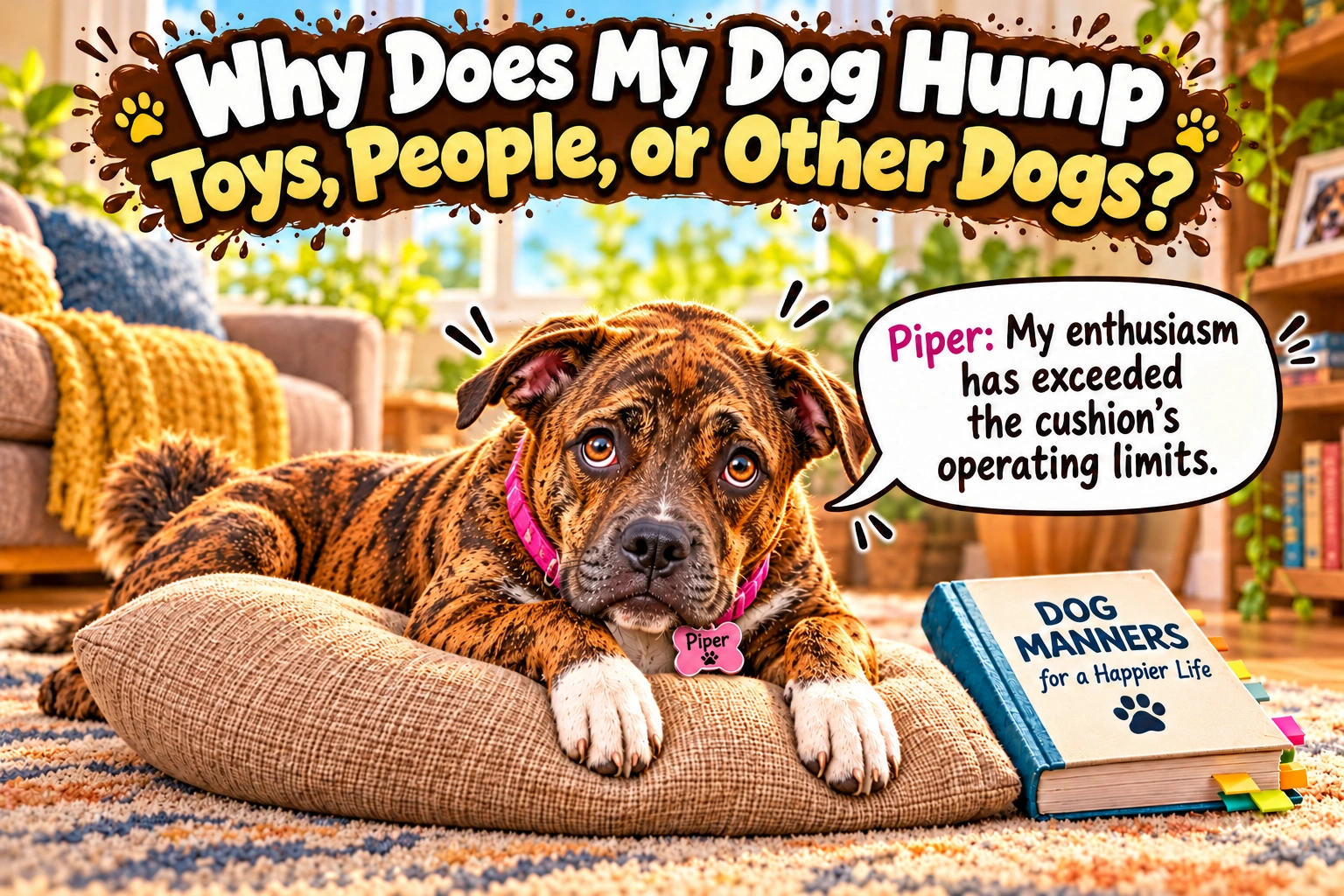
Visitors arrive, play becomes faster, a cushion falls over, and your dog makes an unexpected contribution to the evening. Everyone laughs, then someone asks whether the dog is trying to be in charge.
Mounting alone does not establish a dominance explanation. UC Davis lists several behavioral and medical contributors. The useful response is to work out the pattern and keep people and animals comfortable. [1]
Look at the minute before it starts
Did it follow rough play, a visitor arrival, confinement, or an unusually busy day? Is the same person, toy, or dog involved each time? Does the dog return to ordinary activity after a calm break, or repeatedly resume?
Those questions help distinguish a predictable excited moment from a persistent change needing assessment. They do not require you to stage the behavior. A brief record of a naturally occurring episode is enough.
Sex hormones can play a part in some mounting, but surgery is not a guarantee that every instance will stop. Decisions about neutering should be discussed with your veterinarian in the context of the individual dog. [1][2]
Interrupt early and calmly
Notice the approach before mounting: repeated crowding, pawing, or an increasingly intense interaction may give you time to invite a familiar easy action. Use a cue the dog already knows, reward that response, and provide a quieter activity or break. [1][2]
For example, during a visitor greeting, invite the dog to a familiar mat before they climb onto someone’s leg. Reward remaining there comfortably. Ask visitors to keep the greeting calm and brief. If the dog cannot settle, create a safe break from the activity instead of endlessly repeating the cue.
This example is an application of calm redirection, not a guaranteed training recipe for every cause. If mounting returns immediately, the interaction may still be too intense or the underlying issue may need help.
Protect the other dog too
Another dog should not have to tolerate repeated mounting while people wait for them to “sort it out.” End the interaction safely before either dog becomes distressed. Provide separation and a recovery period where needed. [2]
Do not grab, knee, shout at, or physically wrestle with a dog likely to redirect toward you. For unsafe interactions, seek professional guidance on management rather than attempting a hands-on correction. [1][2]
A before/during/after log
Use four short entries:
- Before: activity, people or dogs present, and changes in the routine.
- During: target, duration described approximately, and any visible irritation or difficulty disengaging.
- Response: what you changed—less activity, more space, or a familiar cue.
- After: comfortable recovery, immediate repetition, or other symptoms.
Compare situations rather than counting incidents without context. Three episodes during one chaotic gathering may suggest a different practical starting point from new repeated mounting while resting alone.
When to call your vet
Arrange assessment for a sudden, persistent, or increasing change, particularly with itching, excessive licking, urinary changes, discomfort, or injury. UC Davis lists medical contributors including urinary and skin problems. A log can help the consultation without diagnosing the cause yourself. [1]
A penis that remains exposed and cannot retract needs prompt veterinary advice; do not wait for repeated rubbing to resolve it. [1]
For tonight, shorten the overexcited interaction and give everyone room. The cushion does not need a disciplinary hearing, and your dog does not need to be shamed to learn a calmer routine.