
A dog may growl during petting because the touch is uncomfortable, unwanted or worrying, or because the situation involves pain or guarding. Stop the petting and give the dog room. Do not keep touching to test the reaction or punish the warning; a new or repeated change needs a veterinary assessment.
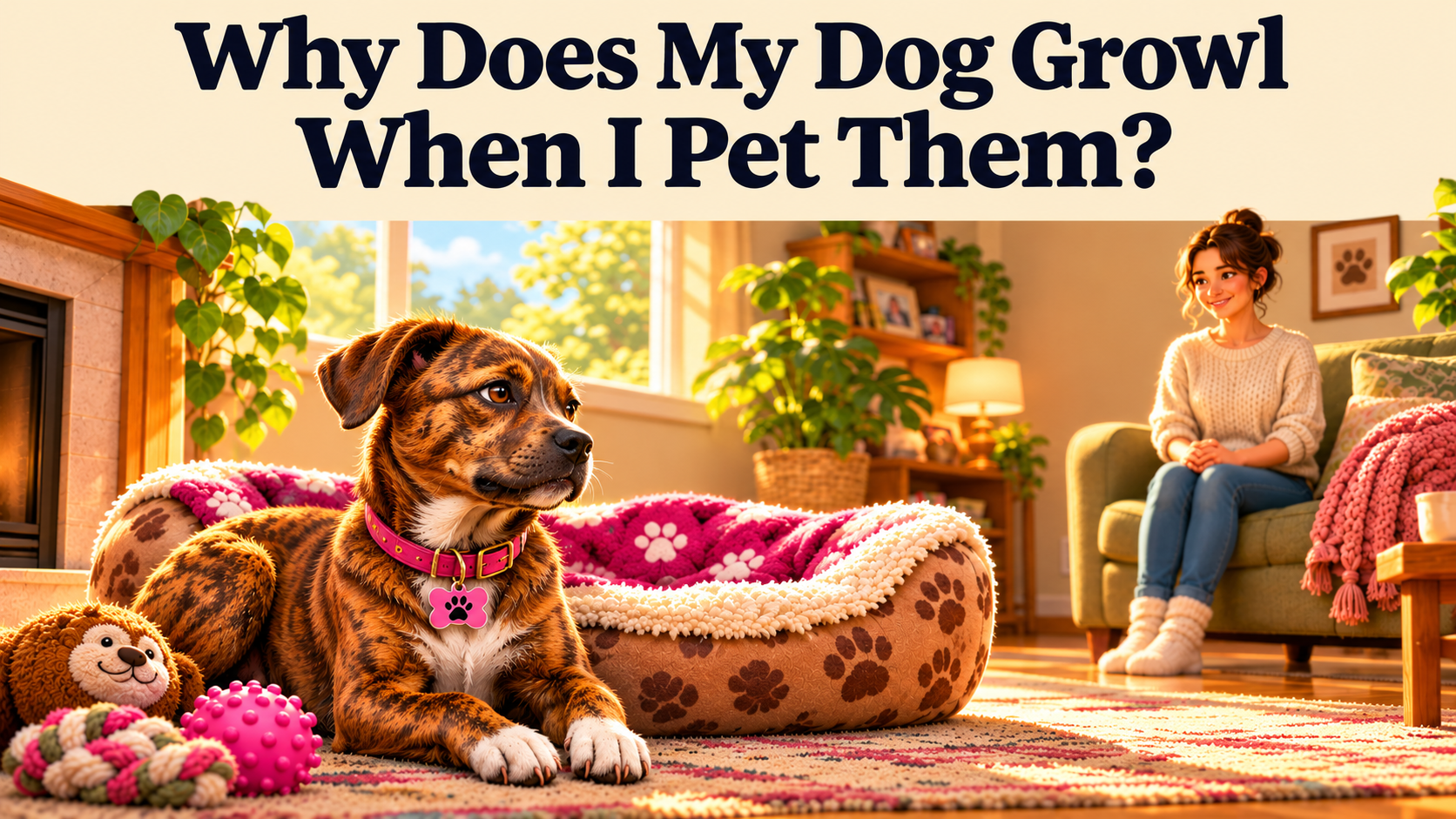
Your dog walks over, settles beside you, and then growls when your hand reaches their shoulder. That can feel contradictory. Being near a person and wanting a particular kind of touch are different things. The useful question is what happened immediately before the growl.
Pause first; interpret later
VCA’s safety guidance advises avoiding interactions that trigger aggressive displays and specifically says not to test a dog’s tolerance. Calmly end the contact. Avoid grabbing the collar, leaning closer or making the dog stay while you continue petting. VCA safety guidance.
Piper’s fictional customer-service policy could read, “Please submit all ear scratches for approval.” In real life, you do not need a joke or a diagnosis to respect a pause. Preventing another uncomfortable encounter is a useful first step.
What should you notice?
Look at the whole interaction, not the sound alone. Was your dog asleep? Eating? Holding a toy? Did they turn away, become still or try to move before the touch continued? Dogs Trust explains why posture and the surrounding situation belong together when reading canine body language. Dogs Trust.
Use ordinary observations; do not recreate the growl for a camera. Write down what you remember after everybody has space.
A useful note for your vet
- Where your dog was and whether they were fully awake.
- Where the hand touched and how long contact continued.
- Any recent stiffness, reluctance to move or other behavior change.
- Whether the dog moved away, froze, snapped or made contact.
Cornell lists changes in reactions to touch, irritability and unusual growling among possible pain-related changes. They are clues for an examination, not a way to diagnose the painful area at home. Do not press different body parts to find a sore spot. Cornell pain guidance.
Make today’s interactions easier
Give your dog a resting place where people will not need to reach over them. Let them move away. Keep children physically separated from situations involving growling; adults should manage the environment rather than asking a child to practice petting more carefully.
If a dog has snapped, bitten or repeatedly warned during handling, arrange professional help before trying touch exercises. Appropriate veterinary and behavior support can address the individual cause.
Related questions
What if it happens only when I wake them? Read our sleep-startle guide; that is a specific context, not the explanation for every growl.
What if my dog paws for more petting? Our pawing article addresses requests for attention. A dog can seek company while still objecting to a particular touch.
Should I buy a training gadget? Start with space, a veterinary check when indicated, and a clear account of what happened. A purchase does not establish why your dog reacted.
Sources checked November 3, 2026.