

A dog may bark at one family member because that person’s movements, approach, routine or past interactions predict something different for the dog. Excitement, worry, frustration and guarding can look similar at first. Compare the situations instead of assuming the dog dislikes the person or is trying to take charge.
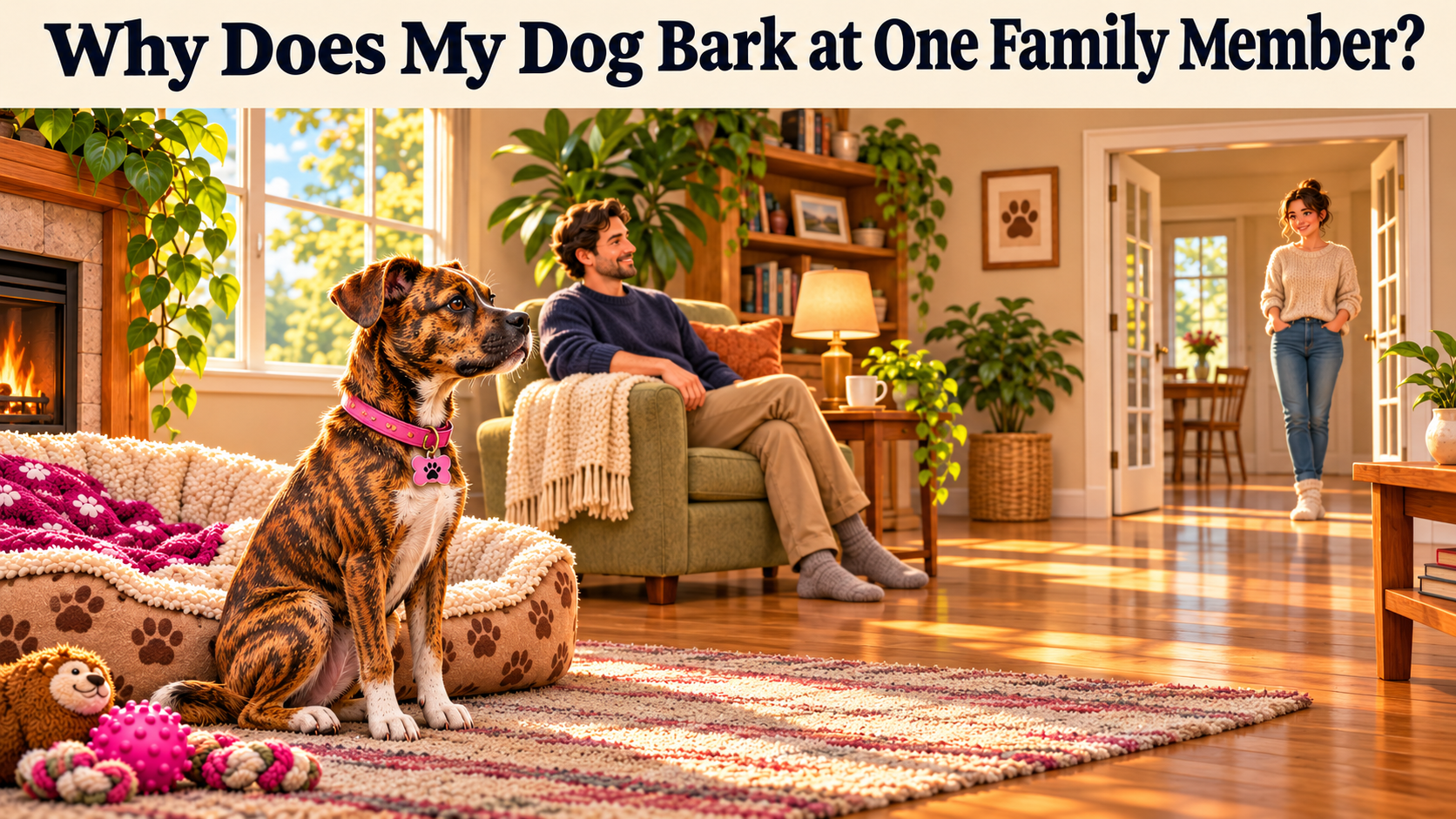
Perhaps everyone can sit quietly in the living room, but one person stands up and the barking begins. That detail is more useful than a label such as “jealous.” Does it happen when the person enters, reaches toward the sofa, changes clothes, speaks loudly or approaches another family member?
Person or situation: compare both
AKC explains that barking at people can reflect several emotional drivers, including excitement, frustration and discomfort. Its guidance emphasizes distance and reward-based learning rather than pressuring the dog into contact. A familiar person can still be part of a situation the dog finds difficult. AKC barking guidance.
Keep a short record of naturally occurring episodes. You do not need to have the person repeat the entrance until the dog barks again.
Your household comparison card
- Before: Where was the dog? What was the person doing?
- During: Was the body loose or tense? Could the dog move away?
- After: What helped the dog settle, and how long did recovery take?
- Comparison: Does the same person cause no reaction in a different setting?
For example, “barks when someone approaches the occupied sofa, but not during a quiet walk” narrows the question. It does not prove that the dog guards a person or that the sofa is the only concern.
Reduce pressure before practicing
Arrange space so the family member does not have to squeeze past the dog or reach into a resting area. Avoid forced greetings, looming over the dog or insisting that the person hand-feed treats at close range. Food should not lure a worried dog into contact they cannot comfortably handle.
For a dog showing threats, VCA recommends preventing triggering interactions and creating an individualized management plan. Barriers and separation can be useful when safely arranged, especially where children are involved. Do not punish the bark or test whether a closer approach will be tolerated. VCA.
When does this need extra help?
Freezing, growling, lunging, snapping or bites call for a veterinary and qualified behavior assessment. A sudden change also deserves a health check. Cornell discusses how anxiety, guarding and environmental triggers can overlap; one observed behavior does not establish a diagnosis. Cornell anxiety guidance.
The aim is a household routine everybody can follow safely, including the person receiving the barking. Expect a tailored plan rather than a promise that one trick will repair the relationship.
Keep the question specific
Does barking mean my dog senses a bad person? Barking is not a reliable character test.
Could it be a request for attention? Possibly. Our attention-barking guide addresses that pattern; do not apply it automatically to fearful or threatening behavior.
What if it happens at the entrance? The doorbell guide covers arrival management. Your comparison card helps show whether the entrance or the individual is the more useful starting point.
Related behavior: If your dog also reacts to people outside, compare the triggers in why dogs bark at people through windows. If the behavior began recently, read why a dog may suddenly bark more. These situations can have different causes, so use the context rather than assuming one explanation fits every bark.
Sources checked November 3, 2026.