
This educational guide cannot diagnose your dog; contact your veterinarian about concerning or sudden changes.
Quick answer: Dogs may take toys outside because the yard is where they prefer to play, because carrying is rewarding, because they want to keep a prized object nearby, or because a familiar toy makes a transition easier. Some dogs simply learned that taking a toy outside gets a reaction. Watch what happens next rather than assuming one motive.
First, watch what happens after the toy crosses the door
A dog that carries a ball into the yard and drops it at your feet is telling you something different from a dog that quietly buries a stuffed animal under a bush. Neither behavior automatically means the dog is being possessive, anxious, or disobedient.
Before changing anything, note three details: which toy, what the dog does with it, and what happens when you approach. Those observations are more useful than a one-size-fits-all explanation.
| What you see | A reasonable possibility | What to try |
|---|---|---|
| Dog takes a ball out, looks back at you, and waits | Invitation to outdoor play | Join briefly, then teach a cheerful return cue |
| Dog carries a toy outdoors and settles with it | Preference or familiar-object comfort | Allow it if the toy is safe for outdoor use |
| Dog hides a toy in dirt or leaves | Storing or safeguarding a valued object | Offer a designated safe play area; don’t chase |
| Dog runs away whenever you reach for the toy | A chase game may have been reinforced | Stop chasing; practice trading with another toy |
| Dog freezes, growls, or stiffens when approached | Possible resource guarding | Back away; seek reward-based professional help |
| Dog repeatedly carries toys during noisy or unfamiliar events | The object may be part of coping or arousal regulation | Reduce pressure and observe the full situation |
| Dog takes toys out and leaves them in the rain | No obvious attachment to that specific object | Rotate weather-safe toys and collect unsafe ones |
These are clues, not diagnoses. More than one explanation can apply to the same dog.
Seven possible reasons
1. Outside is the place where the fun happens
If fetch, tug, or chasing games usually happen in the yard, a toy can become part of the routine. The dog may anticipate the next activity as soon as the door opens. Look for loose body language, repeated glances toward you, and invitations to play.
2. Carrying is rewarding on its own
Some dogs enjoy having something in their mouth. A toy can give them a task during movement between rooms and outdoor spaces. This does not prove a particular breed instinct or emotional state; it may simply be a well-practiced preference.
3. The dog wants the toy close by
A familiar object can accompany rest or transitions. If your dog carries a toy out, lies down peacefully, and ignores it for a while, there may be nothing to fix. Do not interpret every favorite toy as evidence of separation anxiety.
4. The yard provides a hiding place
Some dogs stash objects under furniture, in corners, or in soil. The important question is whether the dog remains relaxed when the toy is found. If retrieval routinely triggers tense body language, treat that as a handling and safety issue rather than a game.
5. You accidentally taught a chase game
Imagine this sequence: the dog picks up a toy, heads through the door, and you hurry after them saying, “Come back!” If the dog loves pursuit, the whole sequence may become fun. Instead of chasing, pause, call the dog cheerfully, and reward returning with a treat or second toy. Practice when you are not rushed.
6. The toy helps during an exciting transition
Guests arriving, a loud truck, or a new backyard routine can raise arousal. Some dogs grab objects at these moments. Look at posture, pacing, ears, facial tension, and whether the dog can settle. Carrying a toy alone cannot tell you whether the emotion is positive or negative.
7. The dog learned a specific door routine
Dogs notice patterns. If carrying a toy makes the door open faster, produces attention, or reliably leads to a game, it can become part of the sequence. This is where BarkMind’s framework helps:
Trigger → Interpretation → Response → Reinforcement
- Trigger: The back door opens.
- Interpretation: Outdoor play may be available.
- Response: The dog picks up a toy and runs out.
- Reinforcement: A person follows and starts a game.
The same sequence can develop for entirely different reasons, so test your explanation by watching what changes when the routine changes.
The crucial difference: taking, hiding, and guarding
These behaviors can look alike from the kitchen window but call for different responses:
- Taking a toy outside: The dog transports it; the destination alone tells us little.
- Caching or burying: The dog deliberately stashes an item in soil, leaves, or a protected spot. This may be normal object-storing behavior, not proof of insecurity.
- Keep-away: The dog repeatedly checks whether you follow and may bounce away playfully when you approach. Your pursuit can maintain the game.
- Resource guarding: The dog stiffens, freezes, hovers over the object, gives a hard stare, growls, or snaps when approached. Treat these as requests for space, not invitations to test the dog.
Dogs Trust describes subtle guarding signs that owners may miss, and the Maryland SPCA advises against reaching for guarded items. When guarding is suspected, keep children and other pets away from the item, avoid confrontation, and seek individualized, reward-based help. Do not try to prove you can take the toy. Dogs Trust · Maryland SPCA
What if my dog won’t bring the toy back?
Teach the return separately from the handoff. Start indoors with low-value toys. Say “come,” reward the dog for returning, and avoid grabbing immediately. Then teach “drop” or “trade” by offering something worthwhile in exchange. Give the toy back sometimes so surrendering it does not always end the fun.
If your dog brings you a toy but refuses to release it, read BarkMind’s toy-handoff article instead of treating this outdoor-carrying article as a duplicate. Read the toy-handoff guide.
When the behavior needs attention
Most toy-carrying is harmless. Ask for professional help if you see escalating growling, snapping, biting, guarding around children, compulsive pacing, or sudden behavior change. If your dog is swallowing toy pieces, remove the unsafe toy and contact your veterinarian. Do not punish growling or force objects from the dog’s mouth.
The outdoor-toy safety check
Before leaving a toy outside, check whether it can break into swallowable pieces, collect water or dirt, or become a choking hazard. Match toys to the dog’s size and chewing habits. Introduce unfamiliar toys under supervision and retire damaged ones. With multiple dogs, watch for competition over prized objects and provide separate play areas when needed. VCA Animal Hospitals
A simple three-day observation exercise
For three ordinary outings, write down: (1) which toy was carried, (2) what happened immediately before, (3) what the dog did outside, (4) how the dog reacted when approached, and (5) what you did next. You may discover that the behavior happens only when someone is available to play—or only when the yard is quiet.
Optional tools: match the activity to your dog
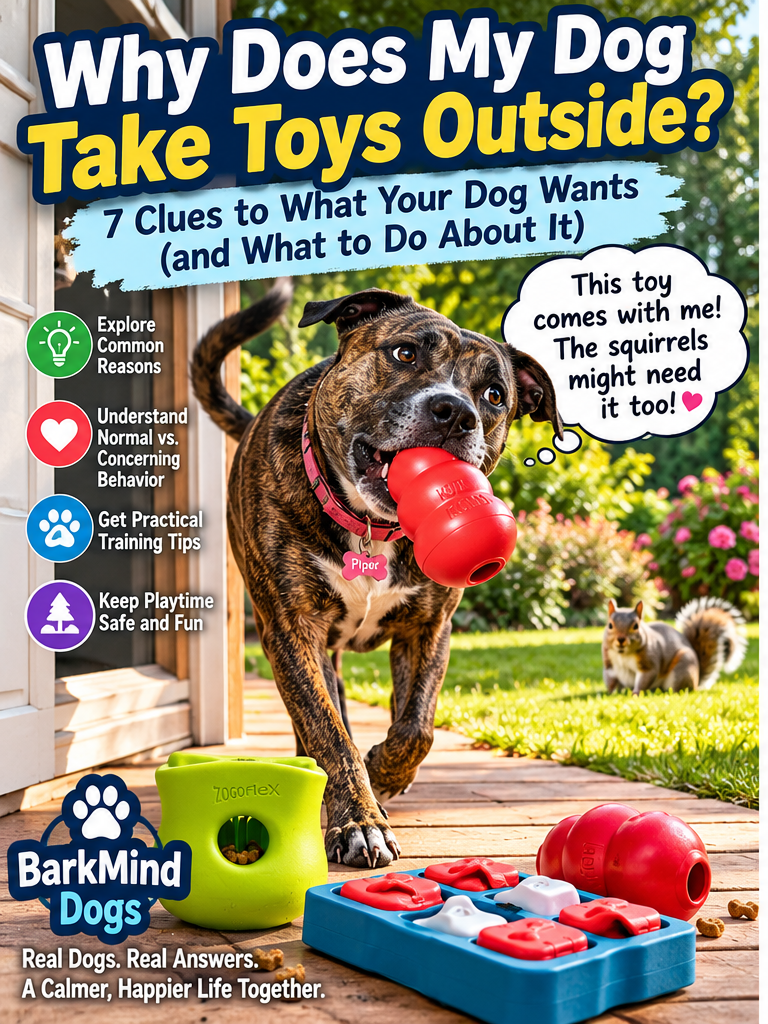
These are product options, not a shopping requirement or a treatment for anxiety. The photographs below are the supplied product photographs; Piper’s hero is an illustration. Supervise unfamiliar toys, choose sizes to reduce swallowing risk, and follow each manufacturer’s instructions. Stop if an item causes frustration or unsafe chewing.
KONG Classic

A carry, fetch or fillable toy option. Select the right size and rubber for your dog; inspect after outdoor play and remove damaged toys.
West Paw Toppl
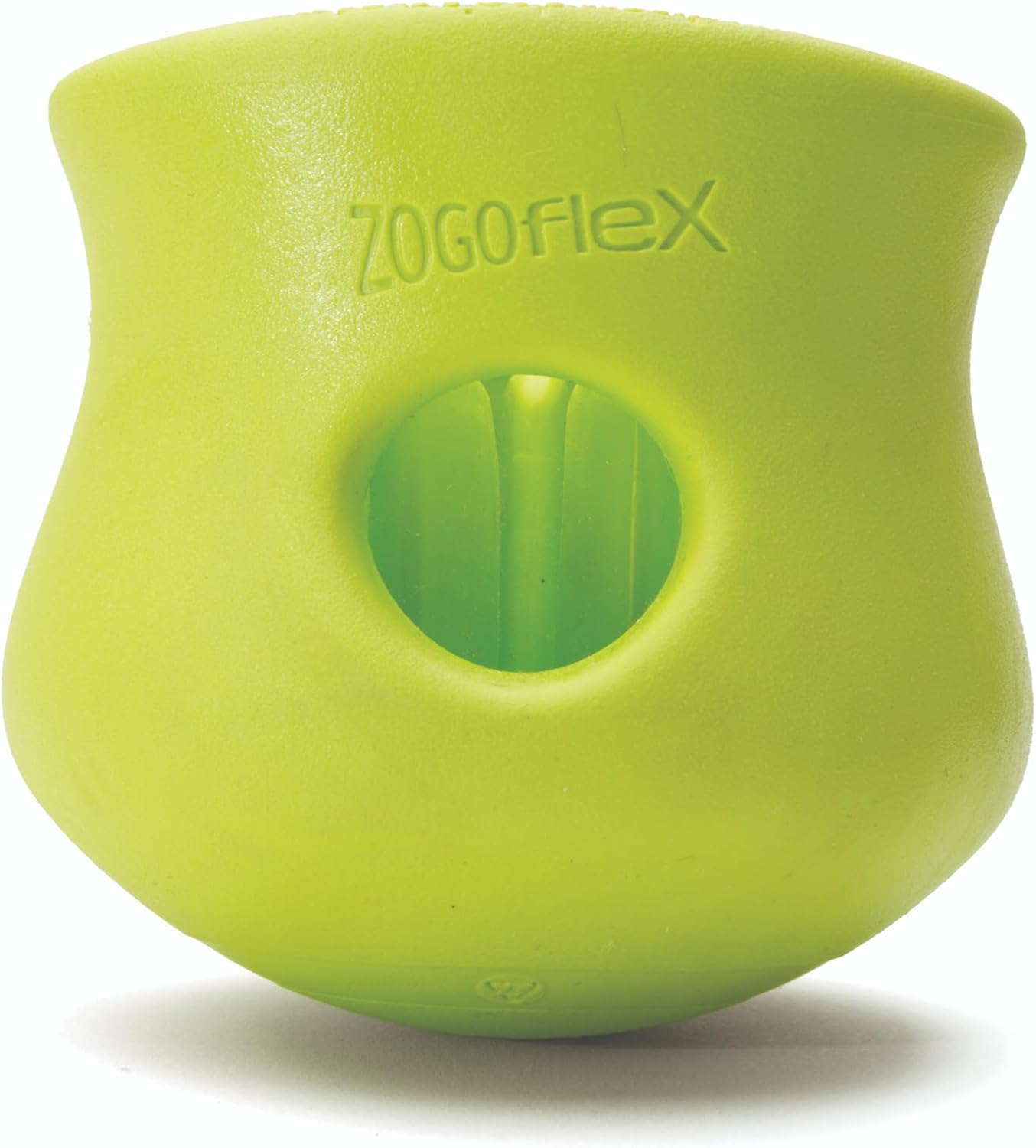
A food-enrichment option to introduce while you are present. Choose an appropriate size, allow for food calories, and remove if damaged.
Nina Ottosson Dog Brick
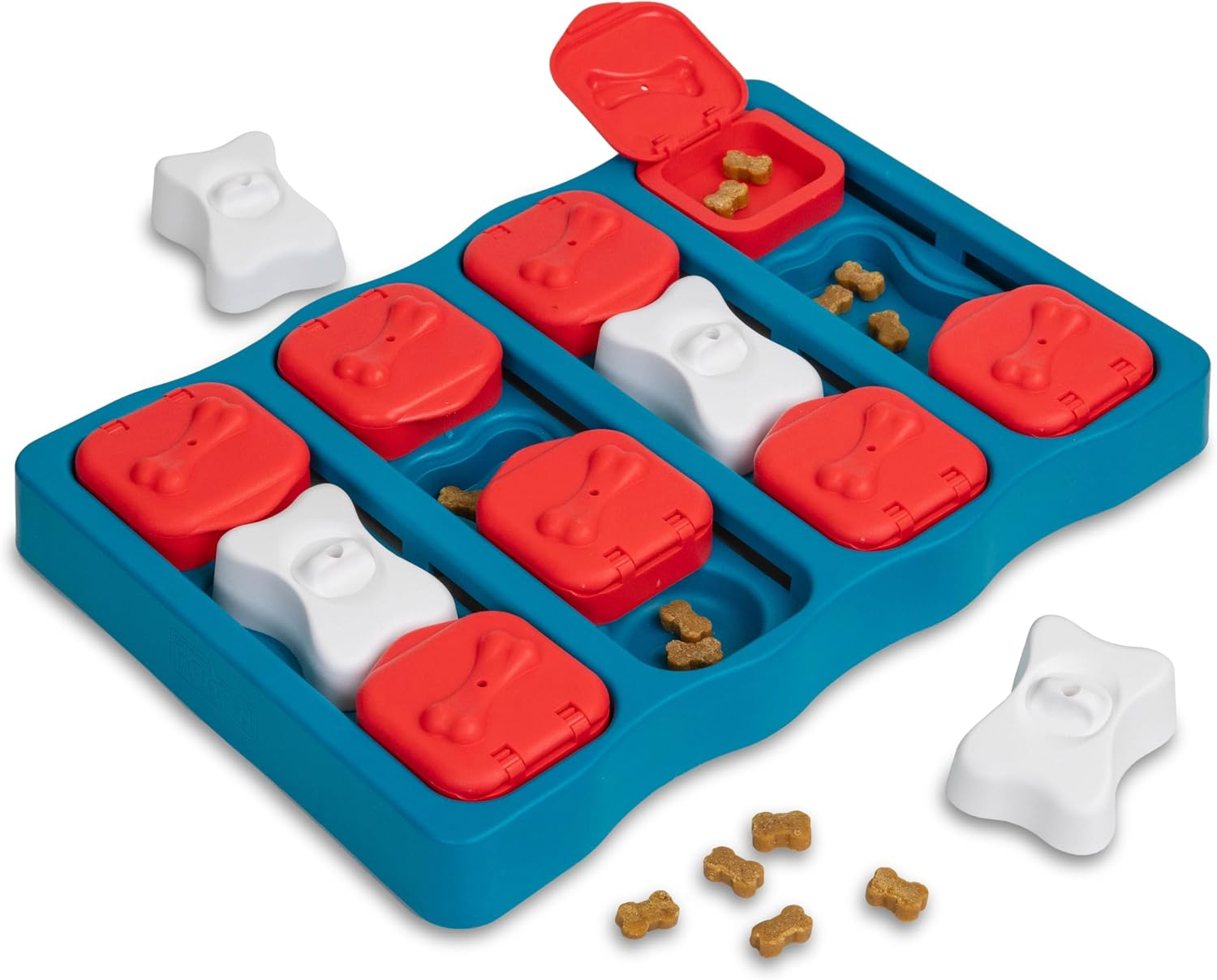
An interactive food puzzle for supervised sessions. Its movable and removable pieces are not intended for unattended chewing.
PetSafe Treat Pouch Sport
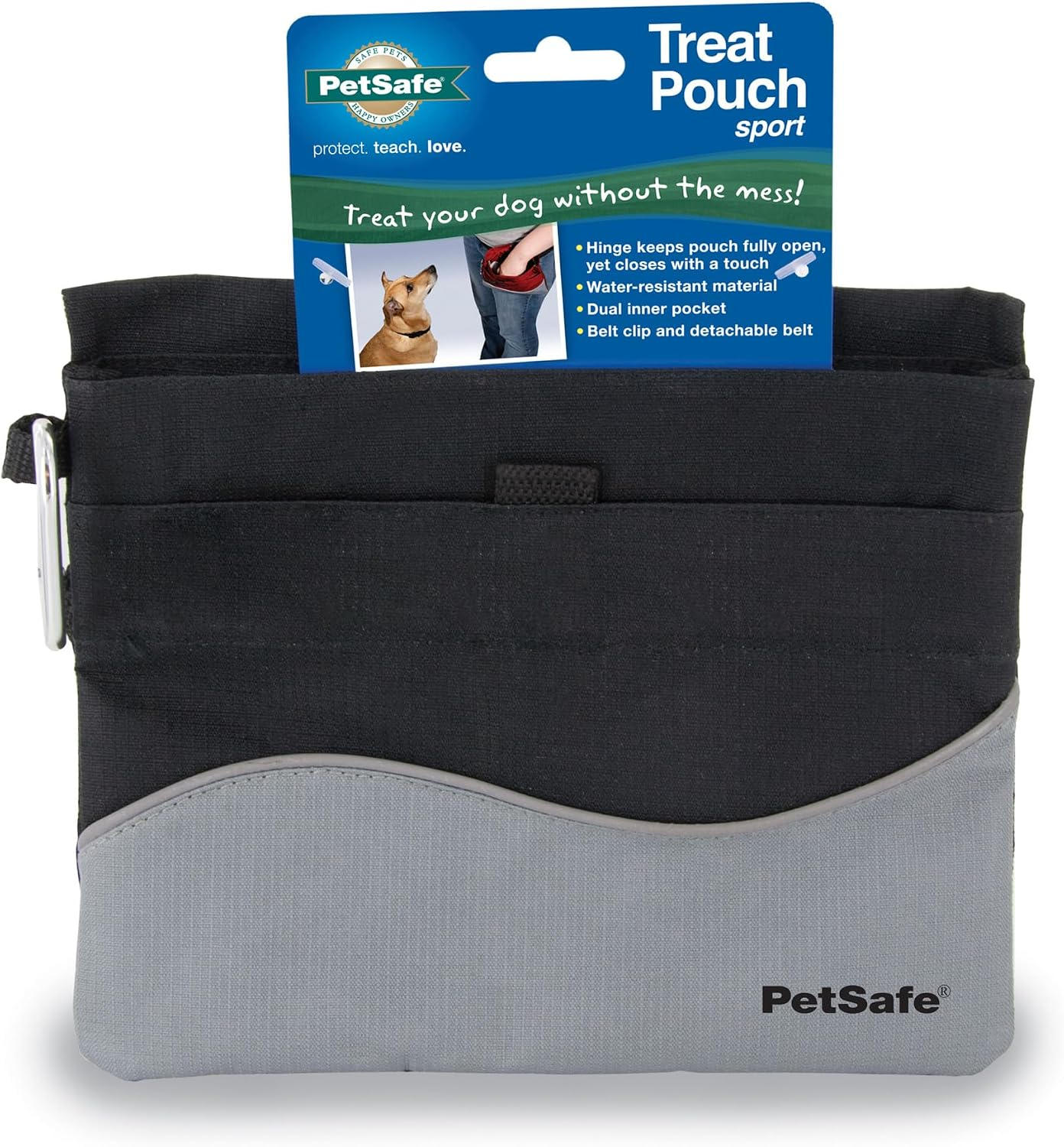
A way to keep rewards handy for calm return-and-trade practice. Keep the pouch and its attachments away from dogs when not in use.
View PetSafe Treat Pouch Sport on Amazon Affiliate Disclosure
Frequently asked questions
Is my dog hiding toys because they are afraid? Not necessarily. Hiding can occur without fear. Watch the rest of the dog’s behavior and context.
Should I stop my dog from taking toys outside? Only if safety, hygiene, or guarding makes it necessary. Offer outdoor-safe toys and a consistent cleanup routine.
Why does my dog take my shoes outside instead of toys? Shoes carry familiar odors and may reliably attract your attention. Secure shoes, provide appropriate chew and carry objects, and reward the behavior you want.
Does taking toys outside mean my dog is dominant? No. That label does not explain the observable behavior and is not a useful training plan.
Bottom line
The most useful question is not just why does my dog take toys outside? It is what does the dog do next? When you notice the sequence, you can preserve harmless habits, teach a better return routine, and recognize the rare cases where guarding or distress needs professional attention.
Sources and further reading
- Dogs Trust, “Resource Guarding in Dogs Explained”: https://www.dogstrust.org.uk/dog-advice/training/unwanted-behaviours/resource-guarding-food-and-toys
- Maryland SPCA, “Resource Guarding Management”: https://mdspca.org/wp-content/uploads/2025/05/Resource-Guarding-Management.pdf
- VCA Animal Hospitals, “Behavior Management — Enrichment and Activity Toys”: https://vcahospitals.com/know-your-pet/behavior-management—enrichment-and-activity-toys
- PetMD, “Why Do Dogs Bring You Toys When You Get Home?” https://www.petmd.com/dog/behavior/why-do-dogs-bring-you-toys-when-you-get-home
- Vet Help Direct, “Why Does My Dog Bring Me Toys?” https://vethelpdirect.com/vetblog/2023/02/15/why-does-my-dog-bring-me-toys/
- AKC, “Why Does My Dog Hoard?” https://www.akc.org/expert-advice/training/why-do-dogs-hoard/
- Chewy, “Why Do Dogs Bury Bones?” https://www.chewy.com/education/dog/training-and-behavior/why-do-dogs-bury-bones
- Humane Society of Missouri, “Dog Behavior Problems — Stealing and Stay Away”: https://hsmo.org/portfolio-item/dog-behavior-problems-stealing-and-stay-away/
- ASPCA, “Separation Anxiety” (for distinguishing toy habits from distress): https://www.aspca.org/pet-care/dog-care/common-dog-behavior-issues/separation-anxiety
Continue exploring with Piper
Why dogs bring toys but refuse to let go · Separation anxiety in dogs · Why your dog watches you leave