

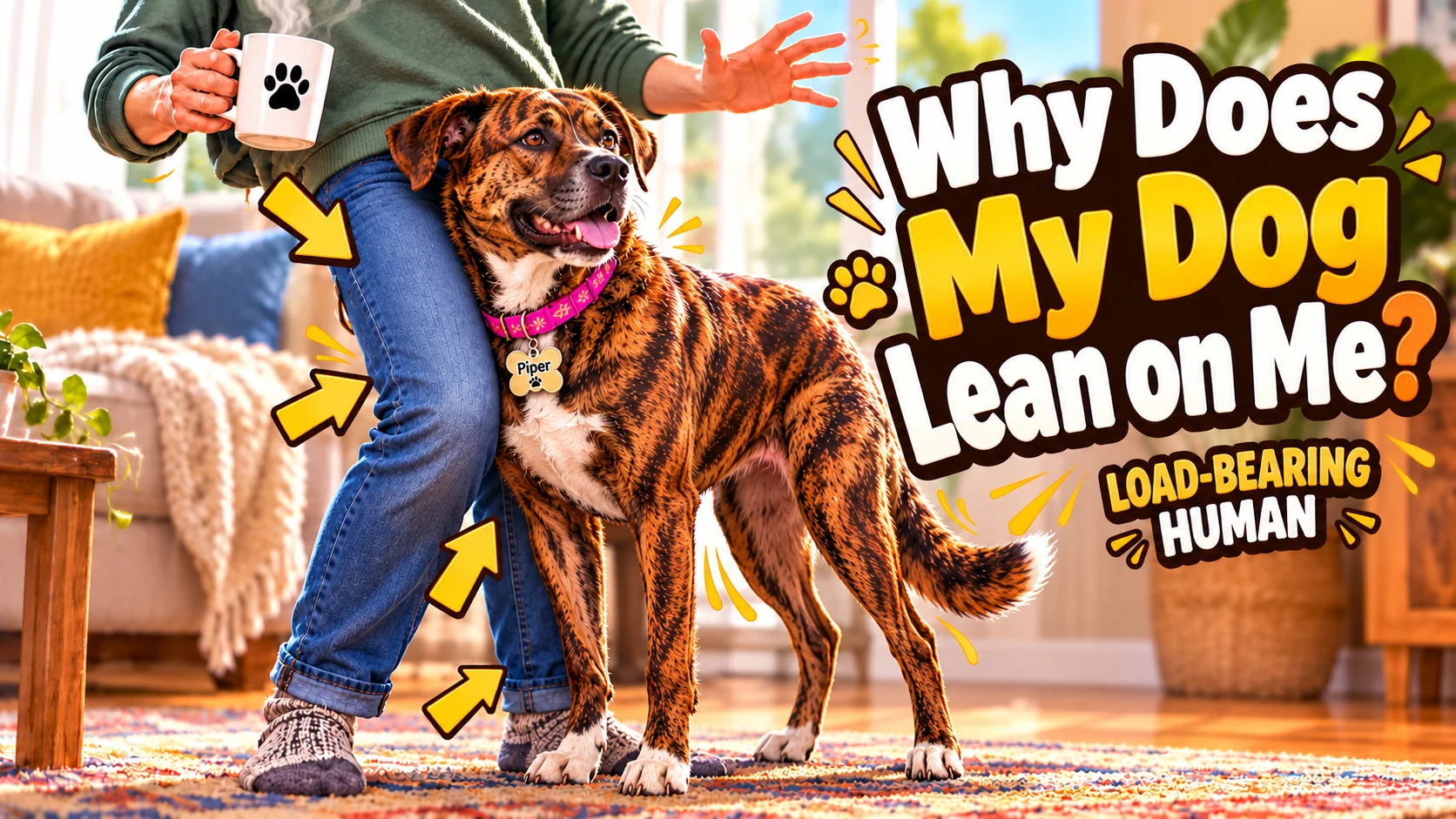
Leaning often means the dog wants contact or attention. It can also happen when a dog seeks proximity in an uncertain situation. The setting and the rest of the body matter. A new lean accompanied by weakness, pain, or poor balance belongs in a veterinary conversation rather than an affection explanation. [1][2]
You are standing in the kitchen when a substantial dog settles their weight against your leg. You shift. They adjust. Somehow you have accepted a position as load-bearing human without reviewing the contract.
Piper’s terms include a formal title and absolutely no lunch break.
The same contact can belong to different situations
Comfortable contact
- It happens during familiar, quiet time.
- The dog’s weight shifts easily; the face and mouth are not held rigid.
- They can move away or follow an easy cue without immediately returning in distress.
That combination fits a contact-seeking explanation. You can enjoy it if it is comfortable and safe for both of you. [1]
Contact during worry
- It begins around a visitor, noise, crowded place, or other change.
- The dog may press in while scanning, holding their body stiffly, trembling, or repeatedly trying to hide behind you.
- They find it harder than usual to move on or engage with familiar activities.
Look at the situation and help create space from what worries them. Do not decide that one tucked ear or one lick proves anxiety. [2]
Compare several details with what is ordinary for your dog. Veterinary stress guidance emphasizes both context and the dog’s usual behavior. [2]
Is it okay to let my dog lean?
Yes, if both of you are comfortable, everyone can keep their balance, and the dog can move away or follow a familiar cue when needed. You do not have to turn an enjoyable cuddle into a correction. Contact-seeking is a common explanation for leaning; it does not automatically mean your dog is trying to take charge. [1]
Why do they choose one family member?
Look at what happens with each person. Perhaps one person stands still and scratches the dog’s shoulder while another is usually moving around. If leaning reliably produces attention from one person, it makes sense for the dog to try that person again. Warmth, familiar routines, and a preference for contact can also play a part. A favorite leaning post is not a ranking of how much the dog loves everyone. [7]
Does leaning mean separation anxiety?
Leaning alone does not tell you that. Separation-related distress concerns what happens when a dog is separated from someone or left alone: repeated pacing, vocalizing, drooling, or damage around exits may be part of that pattern. A dog who enjoys pressing against your leg and then rests comfortably when you leave presents a different picture. [6]
If you are concerned, a short recording of an ordinary absence can help your veterinarian understand what is happening. Do not deliberately leave a distressed dog longer to prove a point. [6]
You can like your dog and still need your legs back
Try a predictable alternative before you start a task. Put a comfortable mat beside, rather than underneath, the area where you stand. During quiet practice, mark the dog stepping onto it, reward there, and then reward resting. Deliver food on the mat so the dog does not need to return to your leg for it. [3]
For example, before making coffee, cue the familiar mat and reward the dog there. Turn toward the counter briefly, return, and place another reward on the mat while they remain comfortable. Increase the little work intervals only as the dog can manage them. If they repeatedly get up, reduce how long you turn away or practise without the coffee-making activity.
If the dog is already leaning, use a known movement or mat cue and give them room to follow it. Step away calmly when it is safe; avoid repeatedly pushing the dog off with your knee or hands, which can become another interaction they seek or an unpleasant confrontation. With a large dog, put down hot drinks first and plan the space so neither of you trips.
Reward time spent on the mat proactively, not only a lean → redirect → treat cycle. The aim is to make resting nearby familiar enough that the dog can choose it before applying their entire body weight to your shin. [3]
If the lean happens because something is worrying them
Start with distance and choice. Move farther from the visitor or noise if possible, and let the dog use a quieter area. Do not send them away from you straight toward the thing they are avoiding. Comfort and a predictable escape route matter more than obtaining a polished mat exercise during a difficult moment. If the pattern persists or limits everyday life, ask your veterinarian about qualified behavior support. [2]
If the contact is new, consider the movement too
A dog who suddenly needs support, stumbles, struggles to rise, or seems sore should be assessed by a veterinarian. Sudden inability to stand or a marked loss of coordination warrants urgent care. Describe the change in movement rather than just saying the dog has become clingy. Balance disorders are among the conditions that can change how a dog stands or moves; leaning alone cannot identify one. [5]
Your next step is to notice where and when the lean happens. Quiet companionship, an inconvenient learned habit, and difficulty coping with a situation call for different responses. The load-bearing-human joke works best when the real dog has comfortable choices.
Watch the related video on YouTube
Keep exploring
Sources and further reading
- Dr. Patty Khuly, veterinarian: contact-seeking leaning
- VCA: stress signs, context and helping a worried dog
- Dogs Trust: teaching a comfortable settle and gradually adding duration
- K&H: Original Bolster Pet Cot product information
- VCA: balance and coordination changes requiring assessment
- VCA veterinary behavior specialists: separation-related distress and observation
- AKC certified applied animal behaviorist: contact, warmth and attention reinforcement