
Dogs may dig in their water bowls because splashing is enjoyable, movement catches their attention, or something about the bowl encourages pawing. Watch the context, keep drinking water available, and change one feature at a time. A new change in thirst or difficulty drinking deserves a veterinary check.
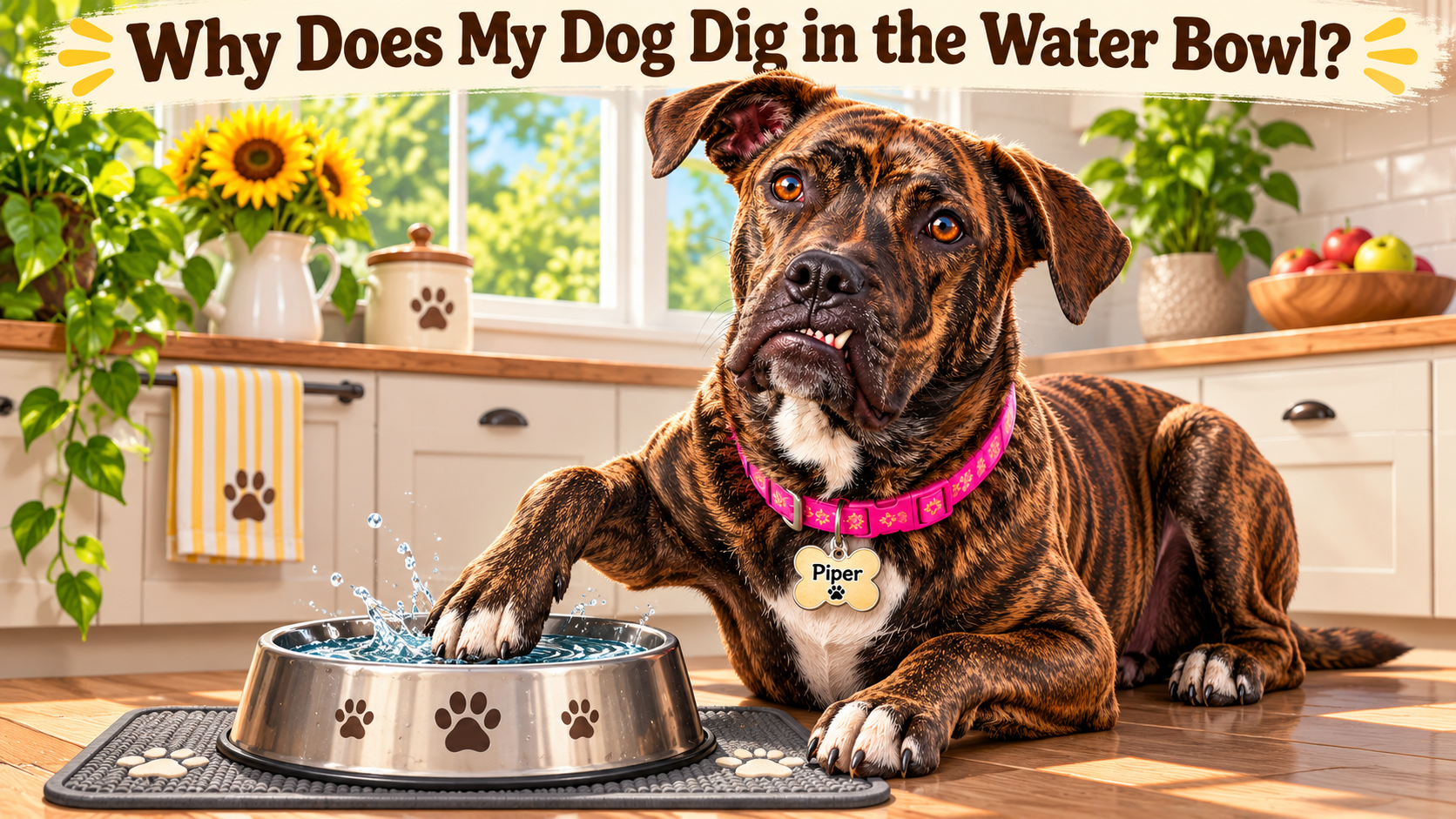
You refill the bowl. Your dog takes one sip, adds two paws, and announces an indoor swimming season nobody approved. Piper’s imaginary explanation would be: “The kitchen needed a waterfront.” The mess is real; the motivation needs observation.
Start with what happens before the splash
Note whether pawing happens after play, only with a shiny bowl, when the water is low, or whenever somebody walks past. Watch from a comfortable distance. You do not need to provoke a repeat or interrupt the dog mid-drink.
Veterinarian Patty Khuly describes water play as a likely explanation in Vetstreet’s discussion of bowl digging. That makes play a reasonable possibility, not a diagnosis for every dog. Ripples and reflections are observations you can record; they do not prove what your dog is thinking.
Use a trigger-to-response plan
Trigger: a recently filled bowl. Interpretation: possible interest in splashing. Response: protect the floor and offer a separate, supervised play opportunity. Reinforcement: notice and reward calm behavior away from the drinking area.
For a different pattern—pawing only at one bowl—try a stable alternative in a quieter location. Change either the bowl or its position first, so you can tell which adjustment helped. Keep another familiar drinking station available while your dog investigates.
Try a simple three-day observation plan
First day: note the time, what happened just before the pawing, which bowl was involved, and whether your dog drank normally. Count splashing episodes separately from refills. Water on the floor makes a disappearing bowl an unreliable measure of how much your dog actually drank.
Next day: change one feature, such as replacing a sliding bowl with a stable one in the same spot. Keep water freely available and the rest of the routine similar. Watch whether pawing changes and whether drinking remains comfortable.
Third day: review the pattern. Fewer splashes with normal drinking suggests the adjustment may help; it does not establish a diagnosis. If nothing changes, avoid piling on several new products at once. Pause home experiments and contact your vet whenever drinking changes or your dog seems unwell; this plan is not a reason to wait.
Keep hydration easy
A washable, nonslip mat and a stable bowl can reduce cleanup. Refresh water and clean the container regularly. Do not solve splashing by withholding water, making the bowl inaccessible, or leaving it empty. Any replacement must let your dog drink comfortably.
Avoid chasing, shouting, or turning every splash into a dramatic game. Calmly manage the environment. If you offer a different activity, provide it proactively rather than waiting for a flooded floor every time.
For broader enrichment, UC Davis’ discussion of digging emphasizes looking at the reason and meeting the dog’s needs. Ground digging and water-bowl pawing are different behaviors, so do not automatically transfer one explanation to the other.
When is a vet visit the next step?
Ask your veterinarian about a sudden or persistent change, especially if it comes with markedly increased drinking or urination, apparent discomfort, difficulty swallowing, vomiting, or reduced energy. PDSA’s veterinary guidance recommends contacting a vet about increased drinking or urination and keeping fresh water available. Record the change without restricting water. Seek urgent advice if your dog seems unable to drink or is acutely unwell.
Questions owners ask
Does this mean my dog is bored? Boredom is one possibility, but pawing alone cannot establish it. Look at daily activity and the specific situations that predict the behavior.
Should I buy a fountain? Start with the observations. New equipment is not automatically necessary, and moving water may be interesting without solving the splashing. If you are comparing everyday dog supplies or enrichment options, browse Piper’s Picks for ideas; a purchase is optional, and fresh drinking water should always remain available.
What if the excitement continues after exercise? See why a dog may struggle to settle after a walk. For another everyday mystery, explore taking toys outside.