
A dog who leaves a puzzle may be finding it too difficult, unrewarding, awkward to use or simply uninteresting at that moment. Start with an easy win: food your dog can see and reach, a stable setup and one small challenge at a time. Watch your dog’s response before making it harder.
The box promised enrichment. Your dog gave it a sniff, looked at you and walked away. That does not make either of you a failure. The puzzle may need a better introduction—or your dog may prefer a different activity.
First, work out what “giving up” looks like
Walking away is different from repeatedly biting the housing, barking at it or asking you for help. These behaviors do not reveal one certain cause, but they help you choose what to change. Dogs Trust recommends considering the individual dog’s abilities, health, diet and preferences, then adjusting enrichment if the dog seems confused or frustrated.[1]
- One sniff, then away: the food or activity may not interest your dog right now.
- Eager at first, then stuck: the next step may be a bigger jump than expected.
- Chasing the whole toy: movement may be making access difficult.
- Chewing the casing or loose parts: stop before damage creates a swallowing risk.
Notice what your dog can already do easily. A dog who can eat from an open compartment has not necessarily learned to lift, slide and rotate three different mechanisms.
A practical progression: easy access before harder puzzles
The sequence below is a suggested teaching approach, not a timed program or a report of our own product testing. Move forward only while the activity remains comfortable and enjoyable. There is no graduation deadline.
Stage 1: Let the reward be obvious
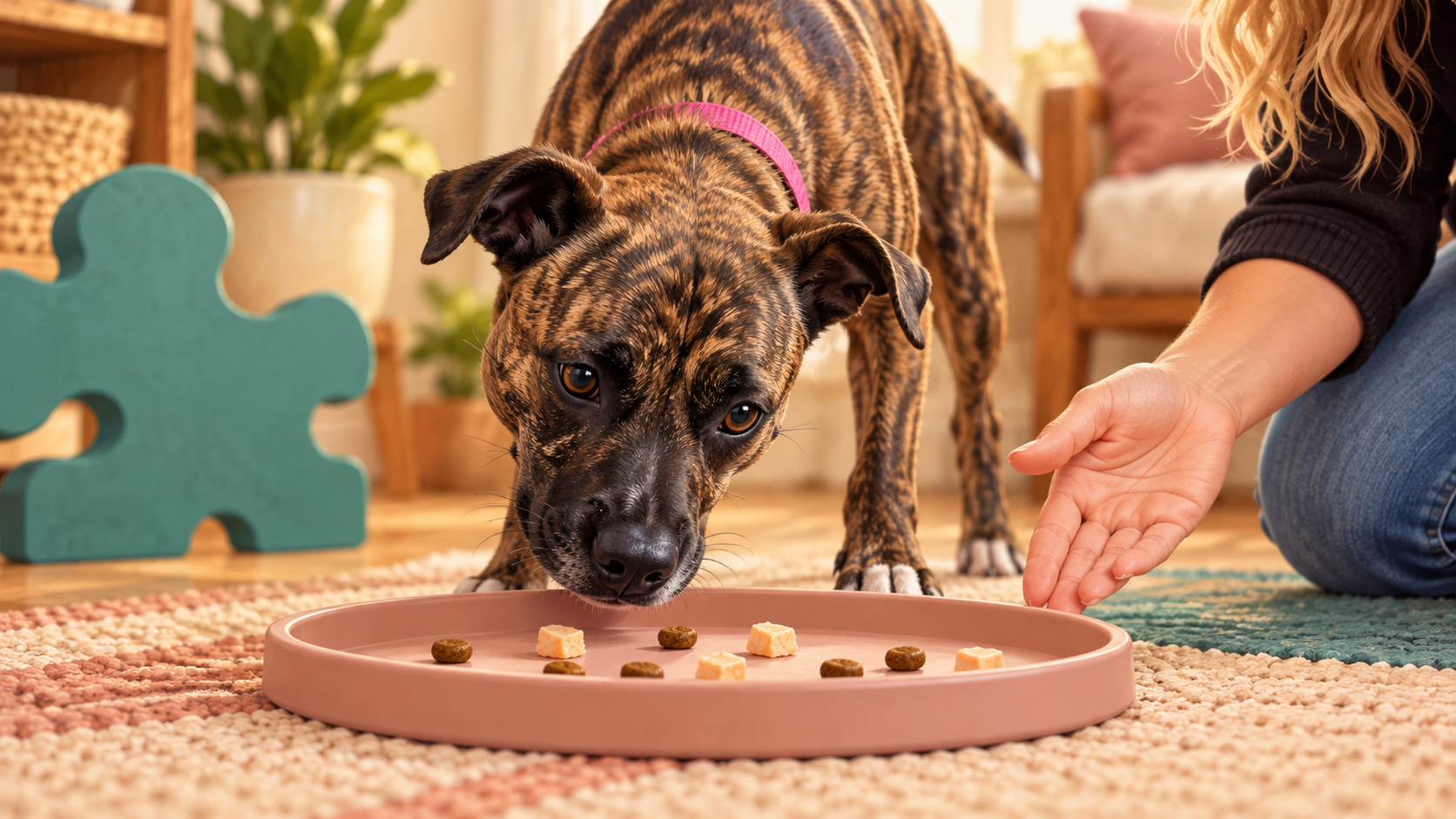
Begin with a small portion of suitable food openly accessible in a safe, appropriately sized dish or feeder. For a compartment puzzle, leave the relevant opening uncovered if the product instructions allow it. Let your dog explore without repeatedly pointing, moving the toy or asking for performance.
Use food that fits your dog’s normal diet and allowance. Do not withhold needed meals to make a puzzle irresistible. Dogs on a prescribed diet need activities and fillings consistent with their veterinarian’s instructions.
Stage 2: Add one simple action
When access is easy, introduce a small obstacle your dog can succeed with: for example, one partly covered compartment in a design intended for adjustable difficulty. Keep the rest simple. Stable placement matters; follow the maker’s instructions and avoid improvising attachments that could be chewed off.
Stage 3: Change one feature at a time
Try a slightly less-open compartment or one extra step—not a new location, unfamiliar filling and a much harder mechanism together. If your dog repeatedly leaves or begins attacking the toy, return to an easier version or stop. Finishing quickly can be perfectly acceptable; the goal is an enjoyable activity, not the longest possible delay before eating.
Stage 4: Offer choice, including an easier choice
A dog can enjoy a challenge some days and prefer an easy sniffing activity on others. “Advanced” is not a requirement. Keep familiar successes available rather than treating every session as a harder exam.
Four puzzle designs to match to your dog’s current skills
Use the progression above to choose a starting point. These are design-based suggestions, not reports of our own product testing. Match the toy’s size and challenge to your dog, follow its instructions and supervise use.
Nina Ottosson Dog Smart — Level 1: a beginner’s starting point

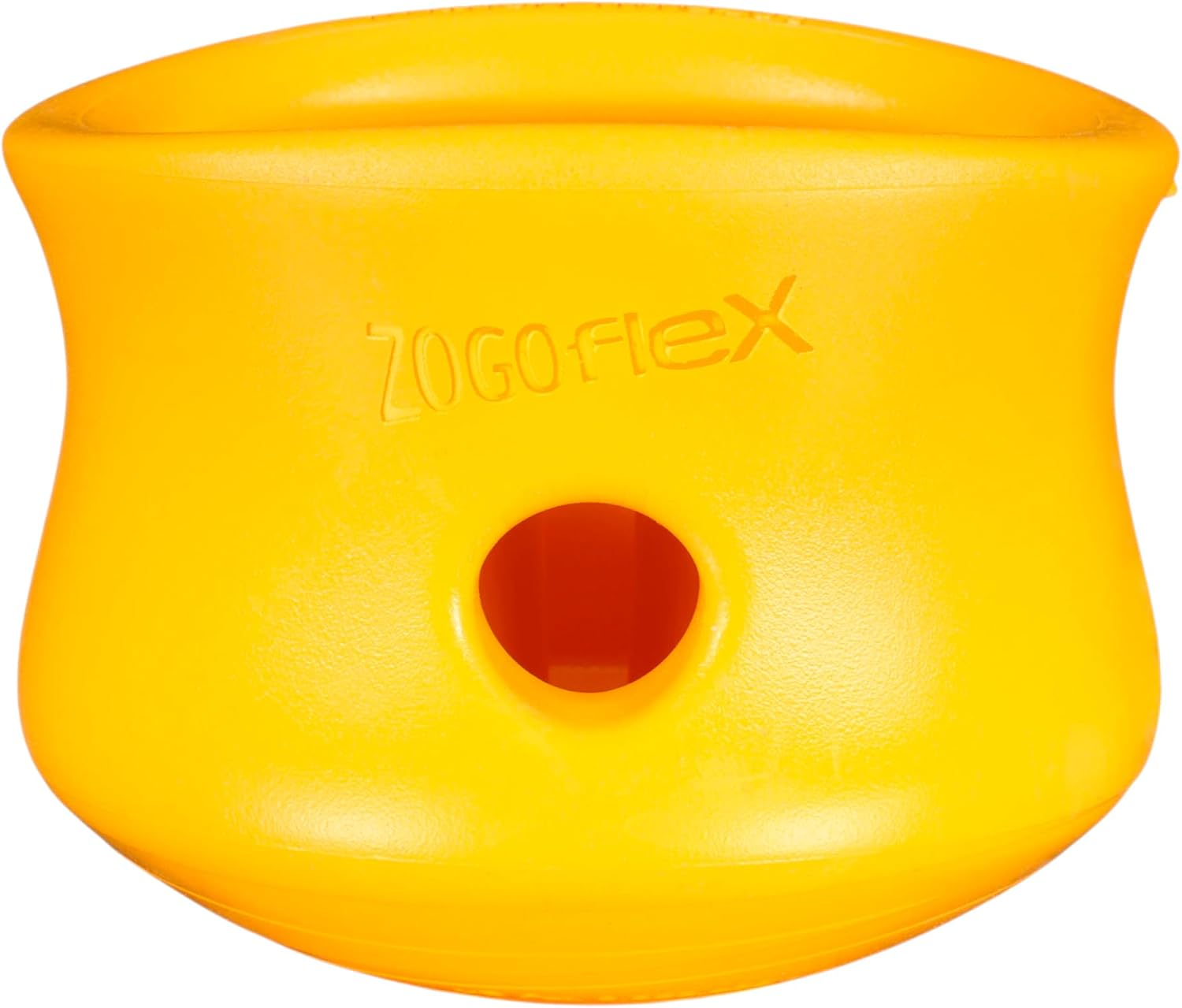
West Paw Toppl: start with easy-to-reach food
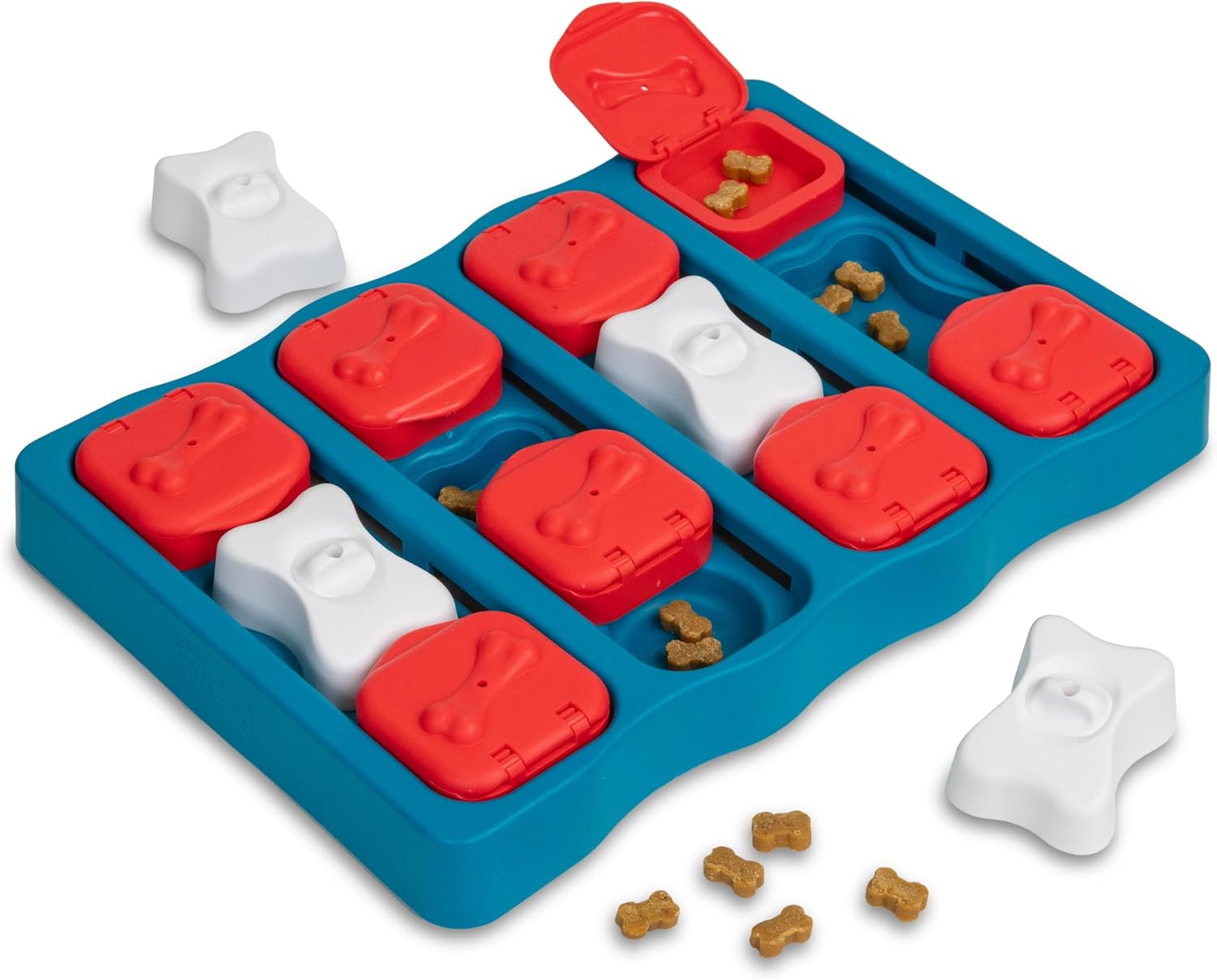
Nina Ottosson Dog Brick — Level 2: a possible next step
KONG Wobbler: for dogs who enjoy nudging and movement
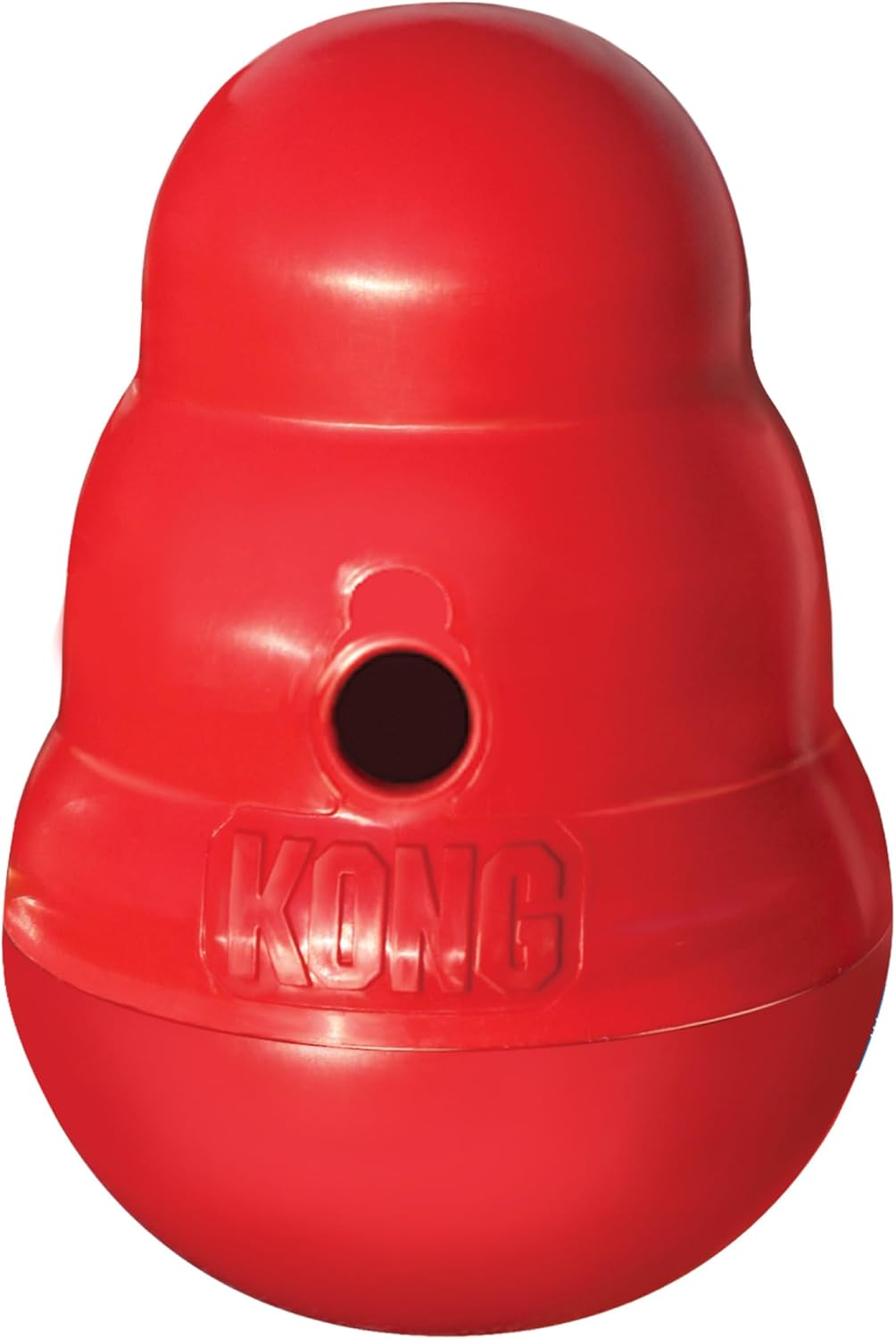
Count food used in toys toward your dog’s normal allowance. If your dog guards the feeder, give space and seek qualified help rather than reaching in or testing the reaction.
When the current setup is the problem
The toy rolls away
Try a manufacturer-approved stable arrangement or a suitable stationary alternative. Do not pin a moving toy beside your dog’s mouth if they become tense or protective. A quieter, less mobile setup may help you see whether movement was the difficulty.
The food is too hard to reach
Reduce the challenge before changing the food. For a stuffable feeder, easily accessible loose food can be a simpler starting point than tightly packed or frozen contents, where compatible with that model. Freezing is optional and does not suit every dog.[2]
There are too many steps
Look for adjustable difficulty rather than a higher level number. As one documented example, the Dog Tornado uses rotating tiers and optional covers. Its parts and instructions—not the label “level two” alone—determine how you can simplify it. The manufacturer specifies supervised use and replacement if damaged.[3]
Your dog wants to chew the object
A food puzzle is not automatically an appropriate chew toy. End the activity calmly and choose an outlet suited to your dog’s chewing behavior. If your dog stiffens, hovers over the item, growls or snaps, give space, keep children and other animals away and seek qualified help. Do not test the response by reaching in again.[4]
Should I help?
Yes, you can make the task easier. You do not need to watch your dog struggle to preserve the “benefit.” Reset the opening when it is safe to do so, or demonstrate one easy movement while your dog has space to observe. Then give them a chance to choose whether to continue. Avoid holding their paw or forcing their muzzle toward the mechanism.
If the dog used to manage a familiar task comfortably and now cannot, consider whether the change extends beyond that toy. Difficulty eating, moving or using the mouth deserves veterinary advice rather than a harder training session.[5]
Sometimes the better answer is a different activity
A simple search for a few suitable food pieces in an easy, safe area may be more appealing than a mechanical puzzle. Sniffing, play with you and appropriate chewing are other possible outlets. Choose for the individual dog, supervise and avoid materials they are likely to swallow.[1]
Piper’s fictional review: “I support puzzles with an achievable snack policy.”
More puzzle questions
Does giving up mean my dog is not smart?
No. One puzzle cannot measure a dog’s intelligence. Motivation, experience, comfort and design all affect the interaction.
Should every dog work up to frozen feeders?
No. They are one option, not the final stage every dog needs. An easy, unfrozen activity may be the right choice.
My dog solves it quickly. Is it pointless?
No. Enjoyable short activities can still have a place in the day. You do not have to make food frustratingly difficult to reach.
Can I leave a new puzzle with my dog when I go out?
First learn how your dog uses it under supervision and follow the specific product’s instructions. Some puzzles explicitly require supervision. Do not assume every food toy is suitable for unattended use.[3]
For more about learning through successful experiences, read How Dogs Learn. If your question is about a dog inviting a game rather than solving a feeder, see why dogs bring toys but keep hold of them. Your dog’s willingness to join in is useful information. Let it guide the next step.