
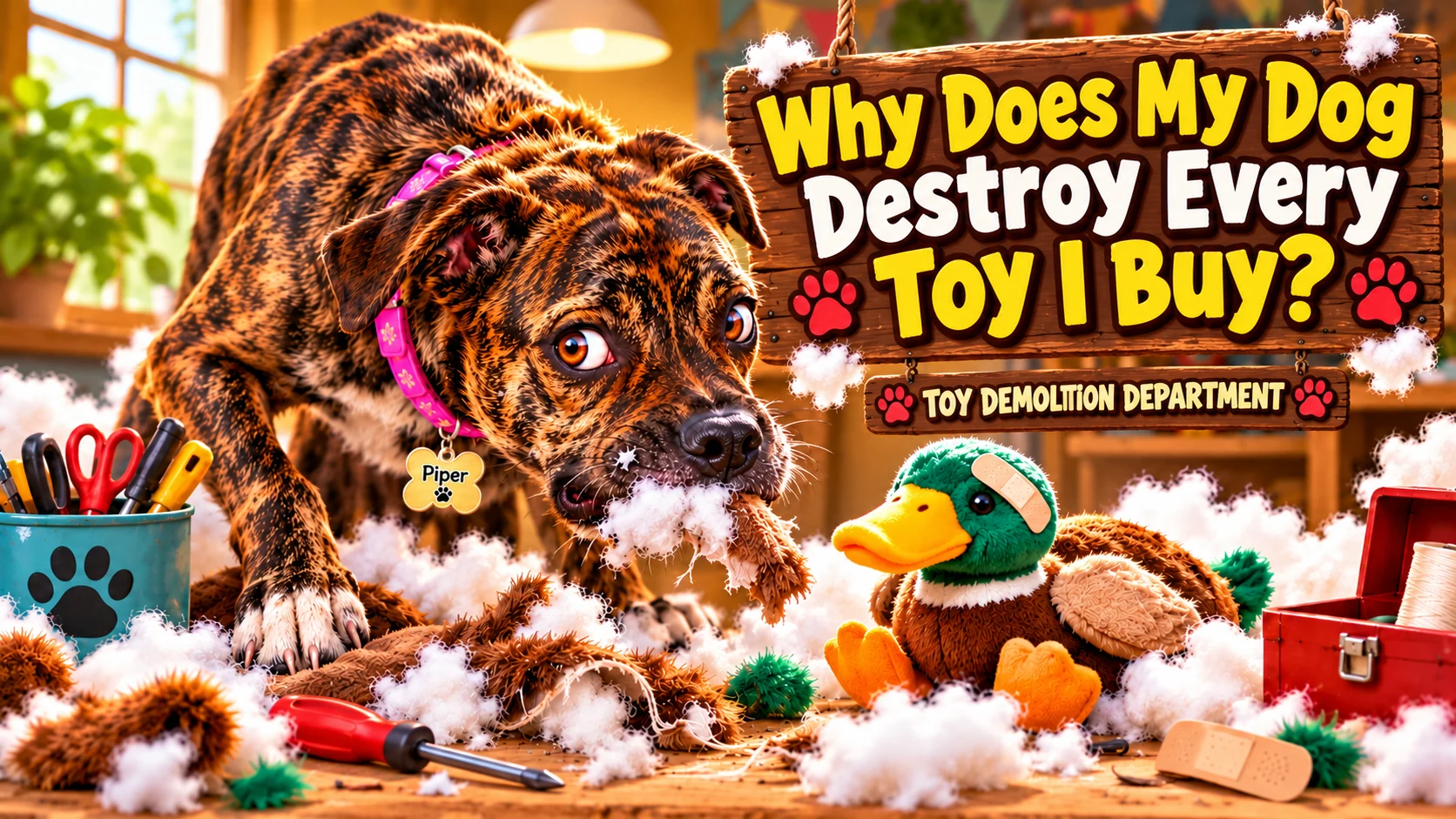
The new toy had reinforced stitching, an optimistic label, and the face of a duck expecting a long retirement. Seven minutes later, your floor resembles a pillow factory after an internal investigation.
The likely explanation: Some dogs enjoy shaking, chewing, and pulling toys apart. The toy may also be a poor match for that dog’s play. Destruction alone does not prove aggression. The immediate safety question is whether the dog spits the pieces out or swallows them. [1][2]
In Piper’s Toy Demolition Department, Mr. Quackers has requested an independent safety officer. Piper has nominated herself, which has not reassured him.
Watch one supervised play session before buying another toy
Does your dog carry the toy around, work steadily at one seam, crush it between their back teeth, or shake it until an appendage comes off? The important clue is the method, not simply the size of the dog. A small dog can methodically unpick stitching; a large dog may treasure a soft toy without damaging it.
Notice whether the activity remains easy to interrupt. If the dog readily pauses for a familiar cue and moves on to another activity, you have useful information for planning play. If they freeze over the toy or growl when you approach, do not reach in to test the response. That is a separate handling problem needing qualified guidance.
Is supervised shredding different from swallowing pieces?
Yes. A dog who pulls a toy apart and drops the scraps is doing something different from a dog who immediately swallows the scraps. Dismantling can be enjoyable play; a wrecked toy does not, by itself, mean anything is wrong with your dog. It may tell you more about their preferred activity and the toy’s construction. [1]
Supervision helps you notice the damage, but it cannot make every shredding session safe. Once loose stuffing, squeakers, strands, or chunks are accessible, retire the damaged toy. If your dog gulps fragments, skip toys they can readily dismantle instead of relying on being fast enough to intercept each piece. Choose a more suitable activity with your veterinarian’s help if needed. [2]
A dog who has always enjoyed unpicking a seam is different from one who suddenly starts destroying things, cannot settle, or damages items mainly during absences. That change deserves a closer look at the circumstances rather than another purchase alone. [1]
A practical toy-selection checklist
- Size: Avoid toys small enough to fit entirely inside the dog’s mouth. Check the manufacturer’s size guide, then consider your own dog’s mouth and play style.
- Material: Look for appropriate give rather than maximum hardness. Rigid materials can damage teeth. A durable rubber toy may still be unsuitable if your dog removes chunks.
- Construction: Check exposed seams, detachable eyes, ribbons, squeakers, and handles. Ask what happens when the first part loosens.
- Chewing style: Match the toy to the behavior you observed. A plush toy for carrying is not automatically a safe unattended chewing project.
- Inspection: Look before and after use, and during vigorous chewing. Retire items with loose stuffing, frayed strands, cracks, missing pieces, or damaged rubber.
- Supervision: Stay close enough to notice damage and respond. Do not assume a toy is safe alone because the packaging says tough.
These checks reflect VCA’s chew-toy guidance. Its useful point is that a toy has to suit the individual dog; hardness, swallowing hazards, wear, and supervision all matter. [2]
Why “tougher” is not automatically safer
A toy that survives your dog’s teeth can still be hard enough to injure those teeth. Conversely, softer material can come apart and be swallowed. The target is a suitable combination of size, flexibility, construction, and observed use—not simply the toughest product on the shelf. Veterinary guidance advises avoiding overly hard chews and supervising for broken pieces. [5]
Do not move straight from a destroyed plush duck to the hardest object on the shelf. Ask your veterinarian about a suitable option if your dog has damaged teeth, chews forcefully, or has already swallowed toy parts. No label eliminates the need to watch what happens.
What should I do while the toy is coming apart?
If your dog comfortably knows a trade or drop cue, use it and offer a suitable alternative. Avoid chasing them around the house, which can turn removal into a game. If they guard the toy, create distance and get help rather than grabbing at their mouth.
Make the next session easier to manage: choose a suitable toy, keep the activity short enough to inspect it, and finish before the dog works through a seam. You might reserve a soft duck for carrying or gentle interaction if that is how your dog can safely enjoy it. There is no obligation to keep offering a material they immediately dismantle.
Missing pieces change the question
If you think pieces were swallowed, contact your veterinarian promptly rather than waiting to see whether they pass. Vomiting, appetite loss, or abdominal discomfort can occur with an obstruction, but the signs vary. Toys and strings can lodge in the digestive tract and sometimes cause serious damage. [4]
For the next purchase, write down three observations: what broke first, how your dog used it, and whether pieces disappeared. That little record is more useful than buying another duck and hoping Mr. Quackers negotiates a better contract.