How to read this guide: These five patterns are possible explanations, not a dictionary of fixed meanings. Body language, context, health and learning history matter. The imagined “thoughts” and Piper jokes are humour; they do not reveal a dog’s exact thoughts or diagnose a medical condition.
⏱️ Estimated Read Time: 9 Minutes Last Updated: May 2026
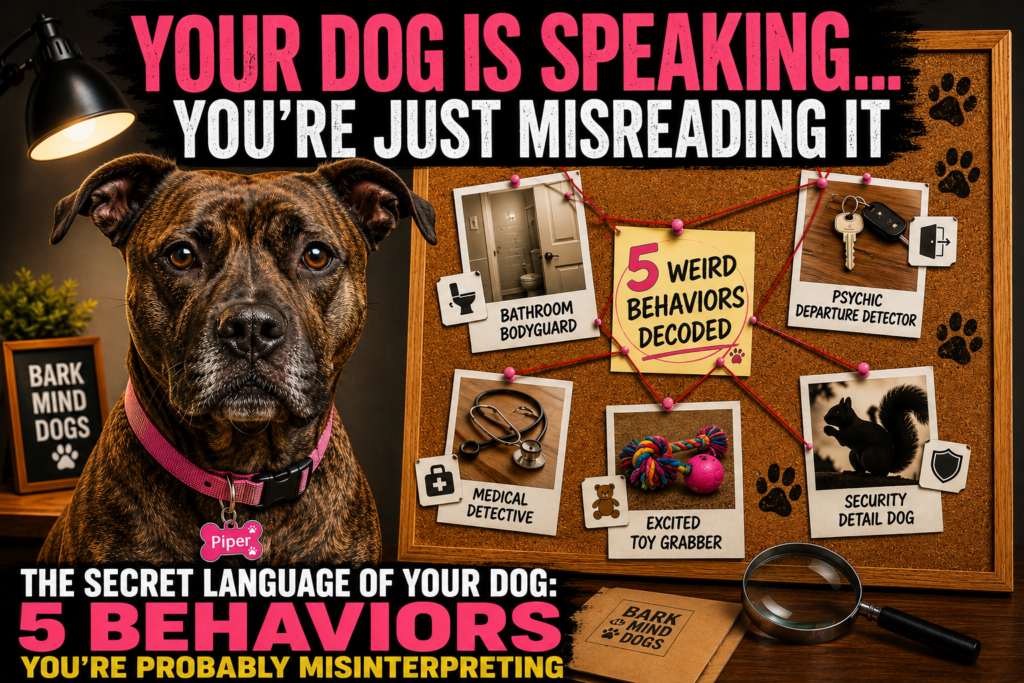
Your Dog Is Not Random — They’re Reading the Room
One minute your dog is staring at you while you pee. The next they somehow know you’re leaving before you even grab your keys. Then somehow they act weird hours before you realize you’re getting sick.
Weird? Maybe…Maybe not. Your dog may actually understand your routines, emotions, and behavior patterns far better than you realize.
Sometimes it feels like your dog understands you better than most humans do.
Most owners label these as “weird,” “clingy,” “dramatic,” or stubborn. At Bark Mind Dogs, we know better. These aren’t random quirks — they’re intelligent responses to patterns your dog has learned through routines, triggers, and emotional patterns. That’s why behaviors like zoomies, separation anxiety, and territorial barking are usually far more logical than they first appear.
🐾 Jump to a Behavior
- 🚽 Bathroom Bodyguard
- 🚪 Psychic Departure Detector
- 🩺 Medical Detective
- 🧸 Excited Toy Grabber
- 🛡️ Security Detail
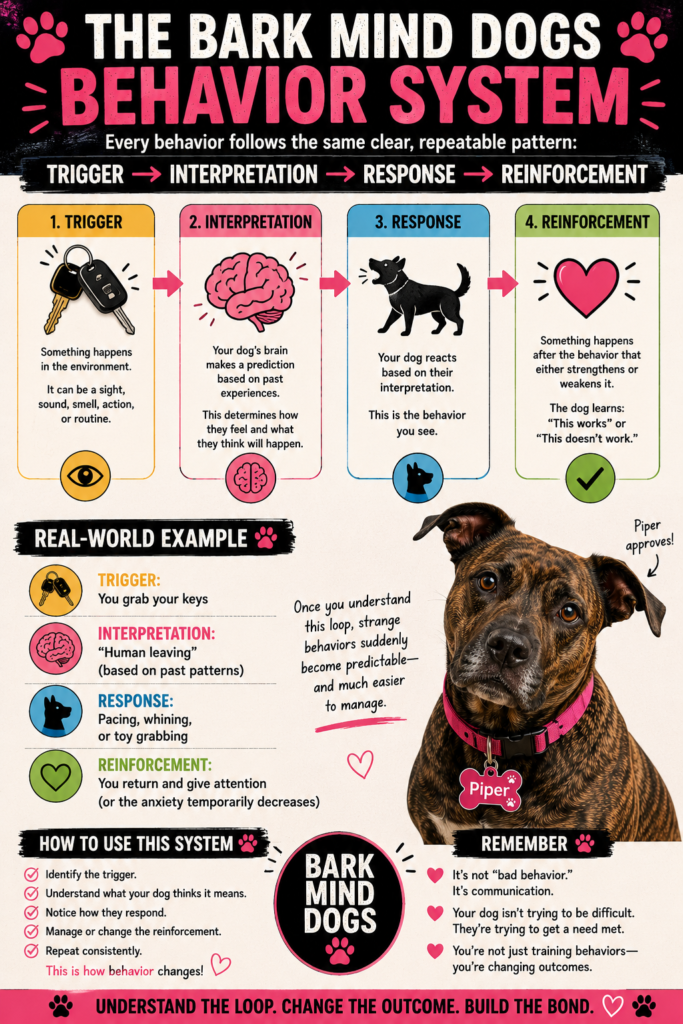
The Bark Mind Dogs Behavior System
At Bark Mind Dogs, every behavior follows the same clear, repeatable pattern:
Trigger → Interpretation → Response → Reinforcement
Real-World Example:
- Trigger: You grab your keys
- Interpretation: “Human leaving” (based on past patterns)
- Response: Pacing, whining, or toy grabbing
- Reinforcement: You return and give attention (or the anxiety temporarily decreases)
Once you understand this loop, strange behaviors suddenly become predictable — and much easier to manage.
🐾 Piper Warning Side effects of reading this article may include:
- Suddenly understanding your dog
- Apologizing to your dog
- Realizing your dog has been smarter than you this whole time
🐾 Piper Approved!
🚽 1. The Bathroom Bodyguard
Why Dogs Watch You in the Bathroom
Your dog isn’t being creepy — they’re being a loyal pack member. In the wild, pack animals stay close during vulnerable moments for safety. Closed doors, stillness, and private routines trigger their monitoring instincts.
You May Have Seen This Your dog waits outside the bathroom like they’re guarding classified government documents.
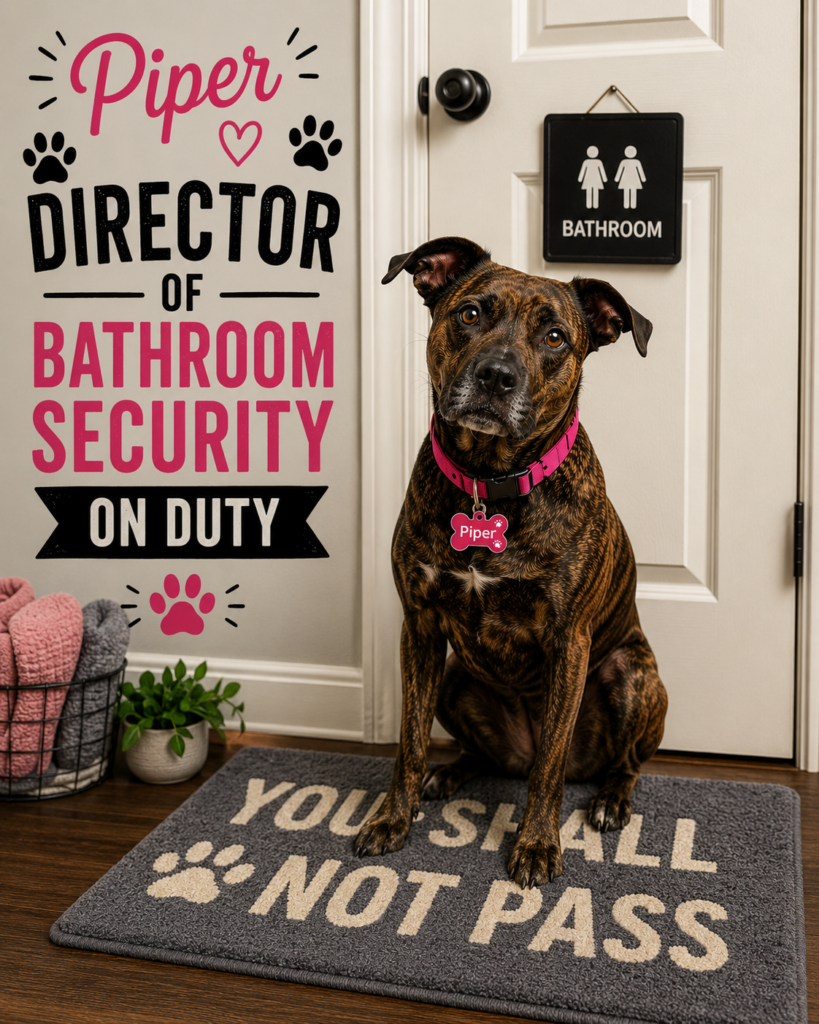
What Your Dog Is Actually Thinking “The human has disappeared into the tiny water room again. This requires immediate supervision.”
Possible explanation: access to a familiar person, attention, routines or concern about separation. Bathroom following does not prove a protective response to human vulnerability.
Common Signs
- Waiting right outside the door
- Pawing or light scratching
- Whining when the door closes
- Immediate following once you emerge
Why Dogs Do This (Quick Science Breakdown)
- Evolved as social pack animals
- Vulnerable moments trigger protective instincts
- Closed doors create uncertainty
- Routines reinforce the monitoring response
Breeds Most Likely To Do This German Shepherds, Labs, Border Collies, Rottweilers, Heelers
Any dog can display these behaviors, but some breeds are genetically more likely to show stronger versions due to temperament, working history, and instinct patterns.
⚠️ Common Owner Mistake Punishing bathroom following without understanding the anxiety or pack-bonding behind it.
Piper Note Piper once stood guard outside the bathroom for 17 straight minutes while absolutely nothing dangerous happened… unless you count the towel that fell off the rack.
Related Dog Behaviors
🛒 Helpful Products For Bathroom Guarding
- Anxiety Products for Dogs — Used By Millions of Dogs With Anxiety
- View Calming Chew Toy — Calming Support For Your Pet
- View Orthopedic Dog Bed — Ideal for Extended Guard Duty
Does your dog do this too? Tell us the weirdest bathroom guard behavior you’ve ever seen in the comments.
Quick Summary
- Trigger: Closed door + stillness
- Interpretation: Vulnerability or separation
- Response: Guarding/monitoring
- Reinforcement: You eventually emerge + attention
🚪 2. The “Psychic” Departure Detector
Why Dogs Know You’re Leaving Before You Do
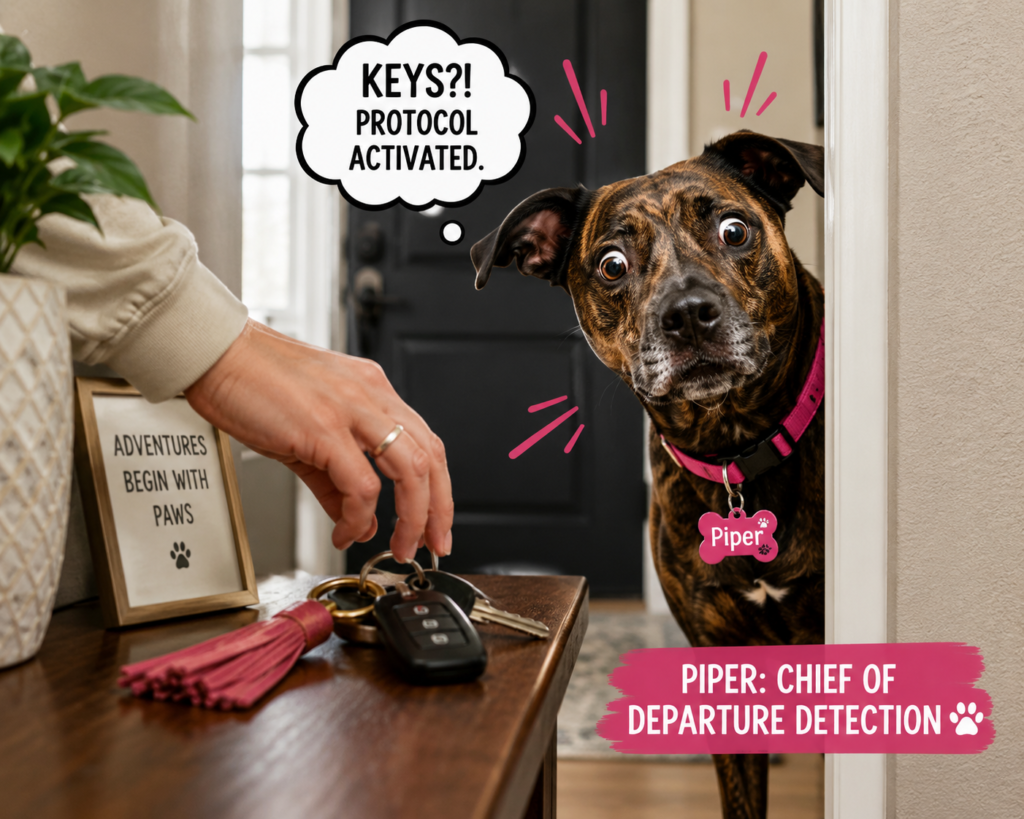
Dogs aren’t psychic — they’re expert pattern detectors. They notice micro-cues like specific shoes, keys jingling, jacket changes, breathing shifts, and pre-leaving energy.
You May Have Seen This You stand up casually and your dog materializes like they’ve been monitoring you through hidden cameras.
See This Behavior In Action
What Your Dog Is Actually Thinking “Jeans instead of sweatpants? Keys? Jacket? Code red — human is abandoning the pack.”
Science Translation: Your dog builds predictive routines from tiny repeated cues.
Common Signs
- Sudden alertness when you open the closet
- Pacing or toy grabbing
- Whining at the door
- Following you from room to room
Why Dogs Do This (Quick Science Breakdown)
- Superior associative learning
- Daily routines create strong predictions
- Emotional anticipation builds quickly
- Reinforcement through your departures and returns
Breeds Most Likely To Do This Border Collies, German Shepherds, Labs, Australian Shepherds
When This Might Be Too Much It may point to separation anxiety if you see destructive chewing, excessive vocalization, or house soiling when alone. See our full guide: Separation Anxiety in Dogs.
⚠️ Common Owner Mistake: interpreting departure distress as disobedience or treating greetings as its sole cause. Avoid punishment and seek qualified help when a dog panics alone.
Related Dog Behaviors
🛒 Helpful Products For Departure Routines
- Lick Mat — great for calming routines
- View Puzzle Feeder
- View Long-Lasting Enrichment Toy
Does your dog do this too? Tell us in the comments: What tiny cue does your dog always catch before you leave?
Quick Summary
- Trigger: Pre-leaving cues (shoes, keys, etc.)
- Interpretation: “Departure imminent”
- Response: Anticipatory anxiety or following
- Reinforcement: Your return or attention
🩺 3. The Medical Detective
Why Dogs Can Sense When You’re Sick
Dogs can notice scent changes, but sensitivity varies by substance and task. An untrained pet’s sniffing, staring or clinginess does not diagnose illness, inflammation or a blood-sugar change.
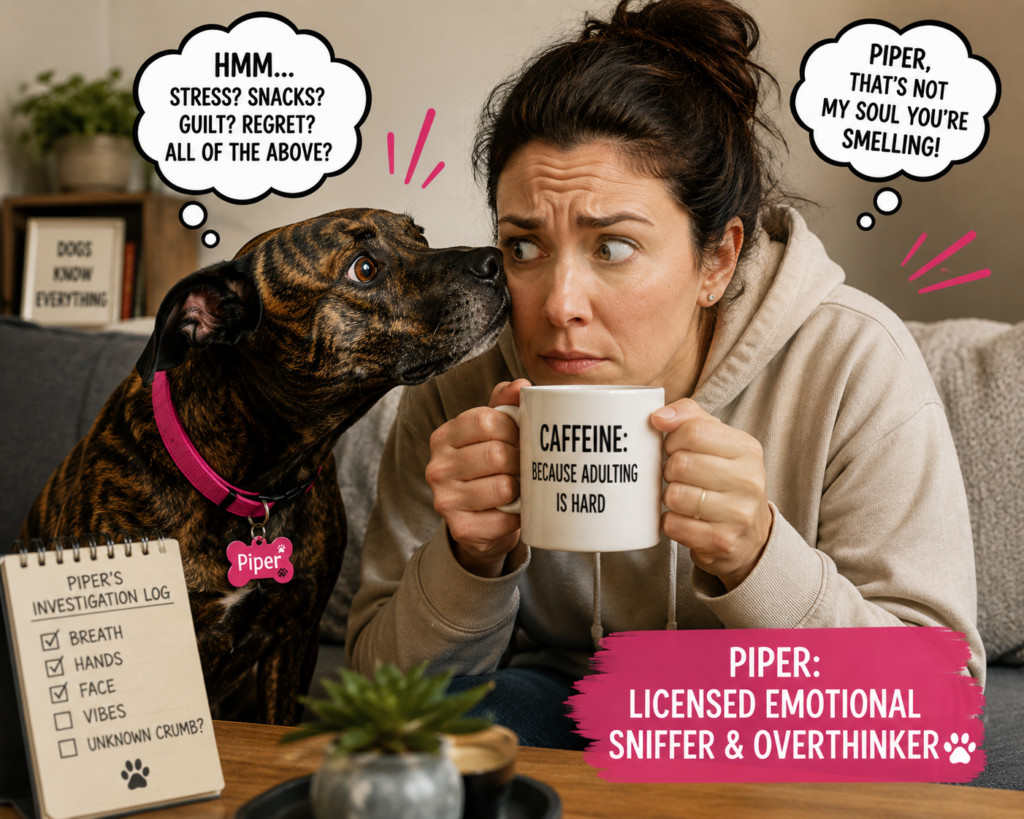
You May Have Seen This Your dog becomes extra clingy and sniffs you intensely right before you feel under the weather.
Watch Piper Investigate This Behavior
What Your Dog Is Actually Thinking “Human scent changed. Something is different. Must investigate immediately and stay close.”
Science Translation: Dogs combine scent detection with emotional pattern recognition.
Common Signs
- Intense sniffing of breath, skin, or urine
- Unusual clinginess or following
- Alerting behaviors (pawing, staring, nudging)
- Changes in their own energy around you
Why Dogs Do This (Quick Science Breakdown)
- Extraordinary olfactory detection of scent changes
- Daily proximity sharpens pattern recognition
- Strong emotional bond amplifies attention
Dogs Notice More Than Smell They also read walking speed, posture, facial tension, voice tone, routine shifts, and energy levels.
Nutrition and behaviour: suitable feeding supports daily care, but this article has not established that a food upgrade corrects anxiety, improves alertness or prevents behaviour swings.
Explore: Best Dog Food Systems (2026) • Spot & Tango Review • We Feed Raw
Breeds Most Likely To Do This Labs, German Shepherds, Beagles, Golden Retrievers
Piper Note: Piper does not have a medical degree, but her nose acts like it went to graduate school.
⚠️ Common Owner Mistake: treating a pet’s behaviour as a medical test. Seek healthcare advice for your own symptoms; seek veterinary advice for a sudden change in your dog.
Related Dog Behaviors
- Heightened clinginess during routine changes
🐾 Join Team Piper Enjoying these breakdowns? Join Piper’s Pack for more funny real-dog stories and science-backed explanations.
Does your dog do this too? Share your “medical alert” story in the comments.
Quick Summary
- Trigger: Scent/behavior change
- Interpretation: “Human not normal”
- Response: Alerting or extra closeness
- Reinforcement: Bond + attention
🧸 4. The Toy Grab When Excited
Why Dogs Grab Toys When Excited
This is emotional overflow management. Excitement needs an outlet — grabbing a toy self-soothes, celebrates, or redirects energy.
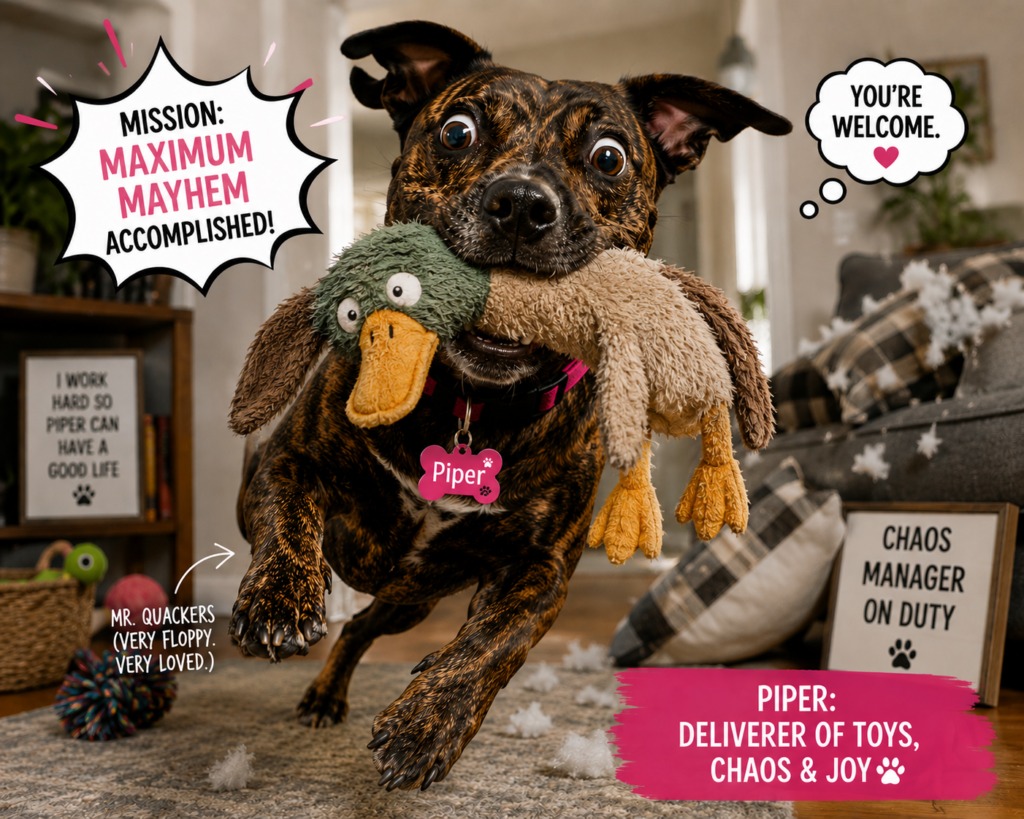
You May Have Seen This You walk in the door and your dog sprints to the toy basket like it’s an Olympic event.
Full Video Breakdown
What Your Dog Is Actually Thinking “Too much happy! Must grab object immediately so brain doesn’t explode with joy.”
Science Translation: Excitement creates emotional overflow that needs an outlet.
Common Signs
- Sprinting to toy box upon your return
- Bringing toys during greetings
- Play-bowing with toy in mouth
- Zooming with toy while excited
Why Dogs Do This (Quick Science Breakdown)
- Arousal overflow (energy has to go somewhere)
- Displacement behavior for high emotions
- Learned greeting/celebration ritual
Breeds Most Likely To Do This Labs, Border Collies, Golden Retrievers, Australian Shepherds
Piper Note: Some dogs bring toys because they love you. Others do it because their brain just opened seventeen tabs and needs a file folder.
⚠️ Common Owner Mistake Taking the toy away instead of using it as a positive interaction moment.
Related Dog Behaviors
🛒 Helpful Products For Excitement
Does your dog do this too? What’s the funniest toy-grab moment you’ve had? Comment below.
Quick Summary
- Trigger: High excitement/arousal
- Interpretation: “Need outlet now”
- Response: Toy grab
- Reinforcement: Interaction/play
🛡️ 5. The Security Detail
Why Dogs Act Like Security Guards
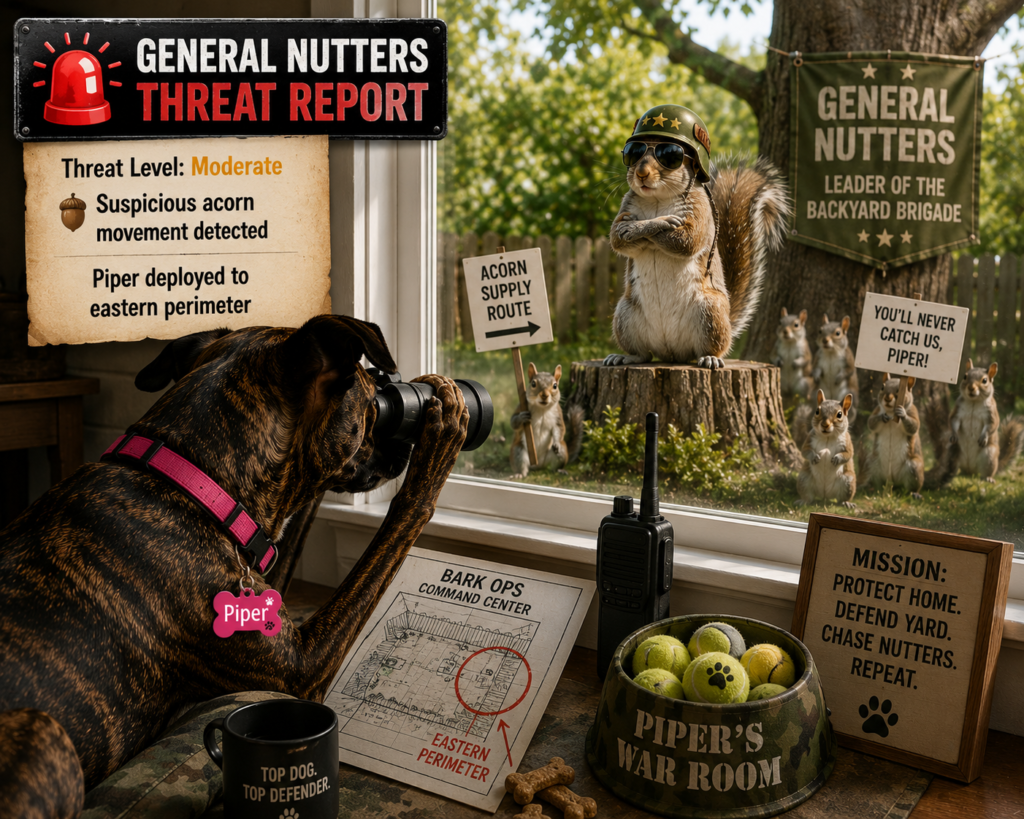
Patrolling, window staring, and barking at delivery trucks stem from natural territorial awareness and pack protection instincts.
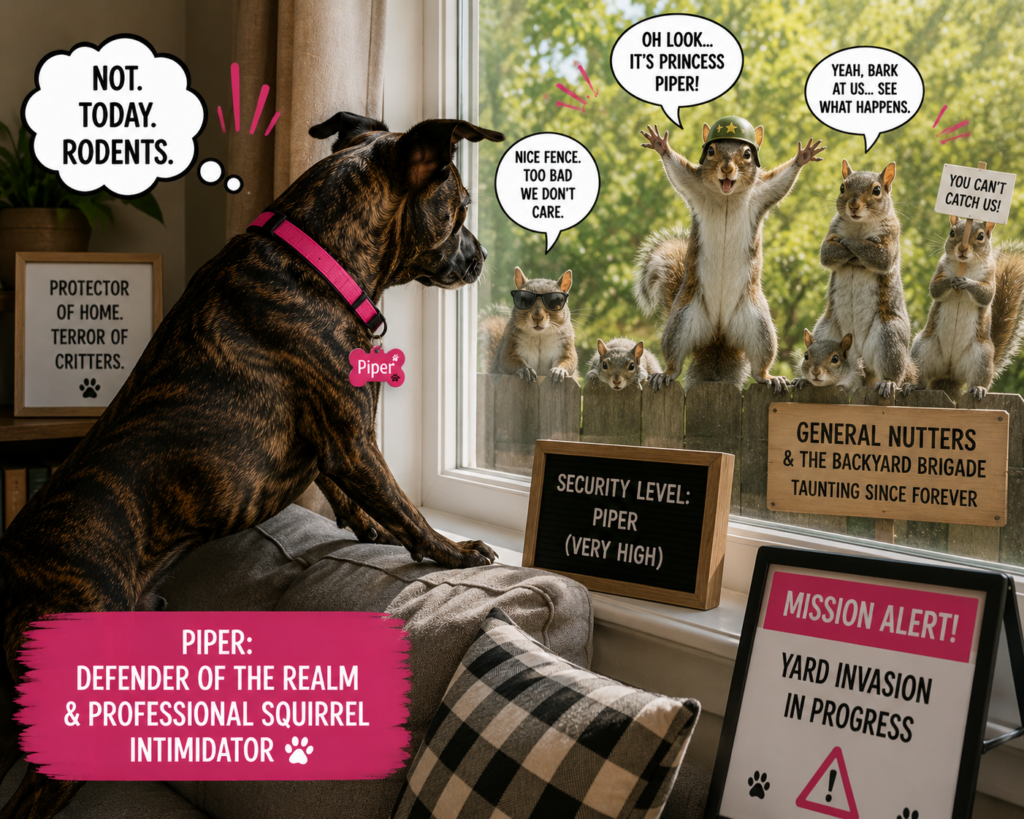
You May Have Seen This A delivery truck three blocks away triggers full neighborhood defense mode.
See The Complete Explanation
What Your Dog Is Actually Thinking “Perimeter check complete. Squirrel activity suspicious. Alerting the pack.”
Science Translation: Your dog’s brain is wired to constantly scan for environmental changes.
Common Signs
- Window patrolling
- Alert barking at sounds
- Following outdoor movements
- Yard monitoring
Why Dogs Do This (Quick Science Breakdown)
- Innate vigilance as pack guardians
- High sensitivity to sounds/movement
- Reinforcement when alerts get attention
Breeds Most Likely To Do This German Shepherds, Rottweilers, Terriers, Border Collies, Heelers
When This Might Be Too Much Excessive barking, inability to settle, or anxiety-driven reactivity may need management strategies.
⚠️ Common Owner Mistake Yelling at alert barking, which can accidentally reinforce the behavior.
Related Dog Behaviors
🛒 Helpful Products For Security Duty
Does your dog do this too? Tell us your best “security detail” story in the comments.
Quick Summary
- Trigger: Sounds/movement outside
- Interpretation: Potential threat
- Response: Alerting/patrolling
- Reinforcement: Perceived success or attention
📌 Save This Article for Later Bookmark this guide — future “Secret Language of Your Dog” behavior articles will continue expanding this system and linking back here as the central hub.
Continue Decoding Your Dog (Next Behaviors to Learn)
- Why Dogs Follow You Everywhere
- Why Dogs Bark At Nothing
- Why Dogs Sleep Touching You
- Why Dogs Know When You’re Sad
- Why Dogs Zoom Around the House
Understanding These Behaviors Strengthens Your Bond
The more you understand your dog’s behavior, the less random it all feels. What once looked strange starts looking like communication. What looked dramatic starts looking like instinct. And what looked chaotic starts making perfect sense.
Your dog is speaking clearly. Now you have the decoder ring.
Share this with a fellow dog parent and tell us in the comments: Which “weird” behavior finally makes sense?
Disclaimer: We’re not veterinarians or certified behaviorists — just passionate dog people sharing what we’ve learned. For serious concerns, consult qualified professionals.
About Bark Mind Dogs
Bark Mind Dogs explores the science, psychology, instincts, and humor behind real dog behavior through stories, education, Piper investigations, and the Trigger → Interpretation → Response → Reinforcement framework.
Further reading and limitations
Merck Veterinary Manual: behaviour problems in dogs provides context for attention-seeking and separation distress. One behaviour can have several causes; the breed lists here are illustrative, not evidence-based rankings. For focused examples, read watching an owner leave and bringing toys without releasing them.