


Yes, some dogs pay attention to television images and sounds. That does not mean they follow a story, understand golf, or experience a program the way you do. What matters at home is whether watching seems comfortable and optional for your particular dog. [1][2]
You put on a program, and suddenly the dog who ignored your entire afternoon is interested in the screen. Another dog in the same room barely looks up. Both responses can fit the range reported by owners in television studies. [1][2]
Piper has opinions about the programming
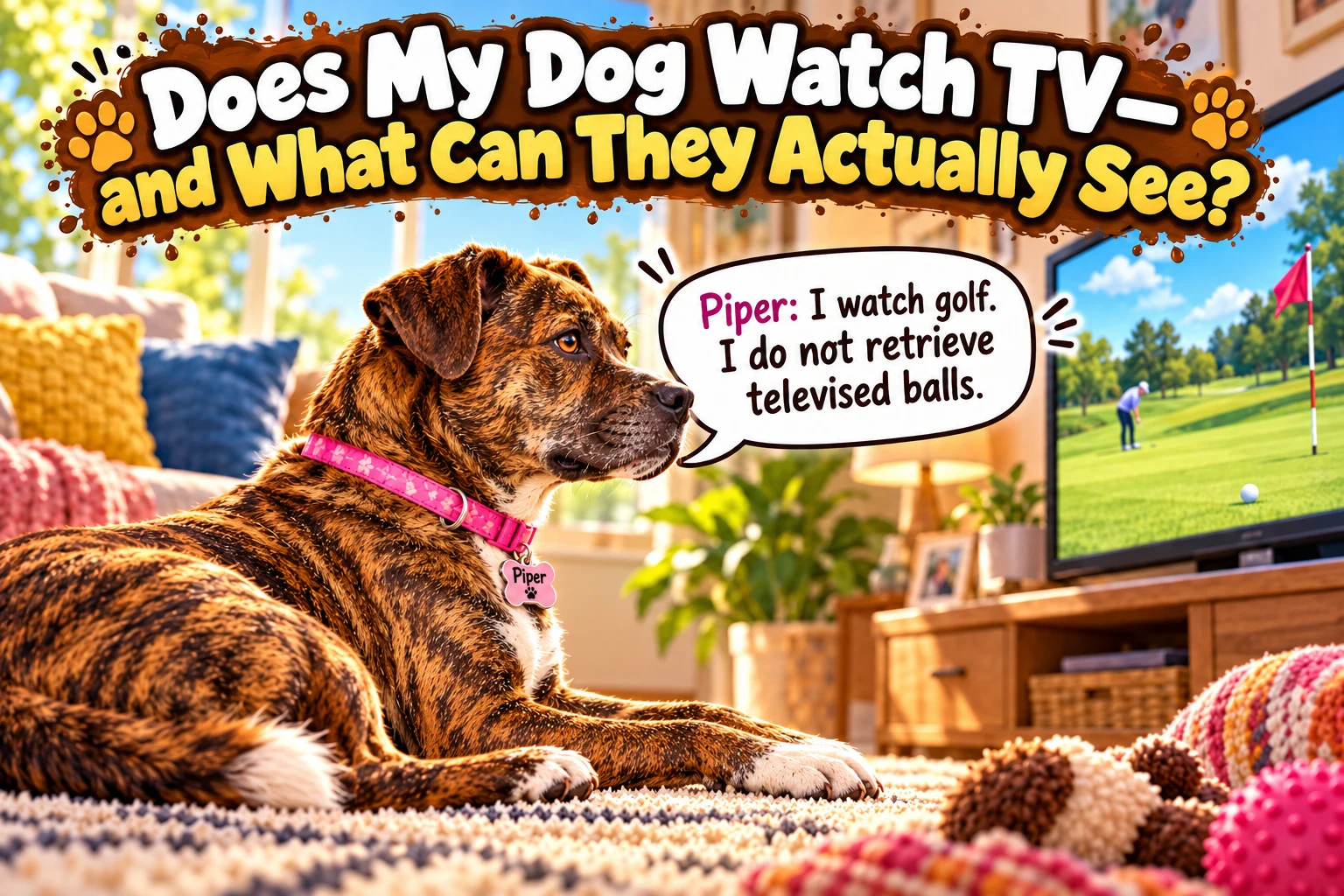
Piper is fascinated by horses on television, and she also watches golf—a little household habit Dr. Rich has noticed. What catches her interest may vary from one scene to another.
It is a lovely little household detail without needing a grand explanation. You can share the room, enjoy your program, and notice what your dog chooses to watch. Piper does not need a handicap or a subscription to the equestrian channel.
Can dogs actually see the screen?
Dogs can respond to images presented on screens; owner-survey research describes looking, approaching, vocalizing, and other interactions. Moving animals are among the reported interests. Sound may also draw attention. [1][2]
A useful distinction is attention versus comprehension. Turning toward a televised animal is an observable action. Understanding the plot is a much stronger conclusion. You can record the first without claiming the second.
We also should not assume that a dog who ignores television has poor vision. A screen is only one setting, with its own content, sound, distance, and competing attractions. Discuss actual changes in vision or everyday navigation with your veterinarian rather than using a television program as an eye test.
What the studies can tell us
The 2025 television study used owners’ reports and a television-viewing questionnaire, finding associations between reported viewing behavior and temperament. A separate screen-interaction survey also collected owner observations. These studies help describe variation; they do not directly show what a dog thinks a program means. Owners interested in dogs watching TV may also be especially likely to participate. [1][2]
That is why a sensible answer leaves room for both the enthusiastic viewer and the dog who would rather investigate the kitchen.
An optional viewing card
Use an ordinary occasion when the TV would already be on. Skip the exercise entirely if your dog reacts or seems uncomfortable. This card organizes observations; it is not a test of intelligence.
| Notice | Write one plain observation |
|---|---|
| Content | Horses, golf, conversation, or another ordinary scene |
| Sound | Muted, quiet, or usual household volume |
| Distance | Where the dog chose to sit; do not move them closer |
| Choice | Looked briefly, stayed, turned away, or left |
| Comfort | Rested, resumed another activity, or became tense/reactive |
Change only something that makes the situation easier, such as reducing sound or allowing more distance. Avoid repeatedly replaying a scene to obtain a reaction. Looking away and leaving are acceptable outcomes.
When watching stops being relaxing
If barking, lunging, or repeated agitation starts, lower the intensity or switch off. Give the dog access to a comfortable place away from the screen. Our separate TV-barking guide focuses on that management problem.
Television is optional entertainment, not a treatment for distress when left alone. It should not replace walks suited to the dog, sniffing, rest, social contact, or help with a behavior concern.
For tonight, leave Piper’s viewing position up to her. You can appreciate her interest in the horses without asking her to explain the leaderboard.