


This educational guide cannot diagnose your dog; contact your veterinarian about concerning or sudden changes.
Quick answer: A dog who chews, barks, or makes a mess while home alone is not necessarily bored—and is not necessarily experiencing separation anxiety. Watch the behavior, especially around departure, and note signs such as sustained pacing, panting, vocalizing, escape attempts, or inability to settle. Video is useful evidence to share with your veterinarian, not a home diagnostic test.
The mistake that sends owners in the wrong direction
You come home to a shredded cushion. One article says your dog needs more exercise; another says the dog has separation anxiety. Neither can know from the cushion alone.
The same visible outcome—destruction—can arise from ordinary chewing, access to tempting objects, frustration, outside noises, confinement problems, pain, or separation-related distress. The practical first step is not to guess. It is to observe.
What to record before you change the routine
Set up a safe camera view that captures the door and the area your dog usually occupies. Record a normal departure and, if practical and safe, another short routine absence. The American Veterinary Society of Animal Behavior recommends reviewing roughly the first 30–60 minutes, because signs of separation distress often appear early. If the dog becomes highly distressed, end the absence rather than prolonging it for the sake of footage.
Track five things:
- Timing: Does behavior begin as keys come out, immediately after the door closes, or much later?
- Body language: Is the dog relaxed, playful, tense, panting, drooling, or repeatedly scanning the exit?
- Pattern: Is the dog resting between short episodes, or continuously pacing and vocalizing?
- Location: Is chewing directed toward an available toy or toward doors, windows, or escape routes?
- Recovery: Does the dog settle independently? Can the dog eat or engage with a safe familiar activity?
These observations do not establish a diagnosis by themselves, but they help your veterinarian or qualified behavior professional distinguish possibilities.
Boredom and separation-related distress: a useful comparison
| Observation | May fit understimulation or ordinary behavior | Raises concern for separation-related distress |
|---|---|---|
| Dog settles and sleeps for much of the absence | Often consistent | Does not completely exclude it |
| Dog chews accessible household items while relaxed | Possible | Also possible; context matters |
| Dog paces repeatedly near an exit | Less typical of simple boredom | Important warning sign |
| Dog vocalizes continuously soon after departure | Not well explained by boredom alone | Worth prompt assessment |
| Dog drools, pants, scratches exits, or attempts escape | Requires other causes to be considered | Strong concern; injury risk |
| Dog barks only at delivery trucks or passing people | Environmental trigger possible | Not necessarily related to separation |
| Dog refuses a normally valued food toy and cannot settle | Could have several explanations | Concerning in context |
Important: These are patterns, not a scoring system. Some dogs show frustration or confinement distress rather than fear of being alone, and a dog can experience more than one problem.
Four questions that can change the interpretation
Does the dog become distressed before you leave? Panting, following, pacing, or whining as shoes and keys appear can be important context. Some dogs show distress before the door closes. Merck Veterinary Manual
Does the behavior start immediately or after an outside trigger? A dog who settles and then barks at a delivery truck may need a different plan from a dog who cannot settle after departure. Video with audio can reveal that distinction.
Does confinement change the picture? Panic in a crate or behind a barrier can reflect confinement-related distress, alone-time distress, or both. Do not assume a crate will resolve the problem. Merck Veterinary Manual
Could health be contributing? Sudden behavior change, new house-soiling, pain signs, or altered sleep patterns warrant veterinary review. A behavior label should not replace a medical assessment.
Why timing matters more than the damage
Imagine two dogs that both shred a paper towel roll.
Dog A: Sleeps for 40 minutes, wakes, finds an accessible roll, shreds it, and settles again. Management and enrichment may be appropriate starting points.
Dog B: Begins panting as the owner puts on shoes, follows the owner to the door, whines continuously, and scratches the exit immediately after departure. This pattern warrants veterinary assessment for separation-related distress.
Neither example is a diagnosis. The value is in seeing the sequence, not merely the result when you get home.
The BarkMind framework: Trigger → Interpretation → Response → Reinforcement
For ordinary nuisance behavior, this framework helps owners notice what repeatedly precedes and follows an action:
- Trigger: The dog is alone and hears a truck outside.
- Interpretation: The sound is novel or important.
- Response: The dog barks at the window.
- Reinforcement: The truck moves away; the dog may repeat the response in future.
But separation-related distress is not simply a bad habit being rewarded. A distressed dog may be unable to settle or learn effectively while the fear or frustration is intense. Address welfare and safety first; do not use the framework to blame the dog or justify punishment.
What to do if the dog looks relaxed but underoccupied
Begin with management and modest enrichment: secure unsafe items, provide appropriate chews, schedule sniffing walks or short training sessions, and try safe food puzzles under supervision before leaving them alone. Introduce any new enrichment while you are present first, checking for choking or destruction risks. Make sure sleep and rest are available too; constant stimulation is not the goal.
Then record again. If the behavior improves, you have useful information, but improvement alone still does not prove boredom was the only cause.
What to do if the footage shows distress
Contact your veterinarian and share representative video. Ask about medical causes, separation-related distress, and whether a credentialed behavior specialist should be involved. While developing a plan, arrange company or other safe supervision when possible so the dog is not repeatedly pushed into panic. Gradual alone-time training should stay below the point at which the dog becomes distressed.
Do not punish destruction after returning home. Do not use a bark collar to suppress distress vocalization. Do not assume that crating a panicked dog is safe: attempts to escape confinement can cause injuries. A veterinarian may recommend a tailored behavior plan and, in some cases, medication.
A safe way to make a useful recording
Place a camera where it can capture the departure area and record sound. If your dog usually moves to another room, adjust the camera on another day rather than assuming an empty frame means the dog is calm. A real departure can differ from briefly stepping outside and watching through a window. The SPCA of Texas notes that even five minutes of safe footage may be useful when a longer absence risks distress; AVSAB suggests reviewing the first 30–60 minutes when safe and appropriate. Never leave a dog in panic merely to complete a recording. SPCA of Texas · AVSAB
A five-minute footage review worksheet
Before departure: Was the dog calm? Did shoes, keys, or a coat change behavior?
First minutes: How quickly did the dog begin moving or vocalizing? Was the dog able to settle?
During the absence: What percentage of the visible time was resting versus pacing, barking, or interacting with objects? (An estimate is fine.)
Environment: Were there street sounds, people at windows, another animal, or confinement barriers?
Safety: Any drooling, self-injury risk, attempts to break out, or swallowing of objects?
Next step: Save a short representative clip and discuss it with a veterinarian if signs are persistent, intense, or worsening.
Optional tools: match the activity to your dog
These are product options, not a shopping requirement or a treatment for anxiety. The photographs below are the supplied product photographs; Piper’s hero is an illustration. Supervise unfamiliar toys, choose sizes to reduce swallowing risk, and follow each manufacturer’s instructions. Stop if an item causes frustration or unsafe chewing.
Tapo C210 indoor camera

An observation tool, not a diagnosis or treatment. Secure the camera and cord out of reach, protect account access, and disable sirens or remote talking if they upset your dog. Check current storage and subscription requirements on the listing.
West Paw Toppl

A food-enrichment option to introduce while you are present. Choose an appropriate size, allow for food calories, and remove if damaged.
Nina Ottosson Dog Brick
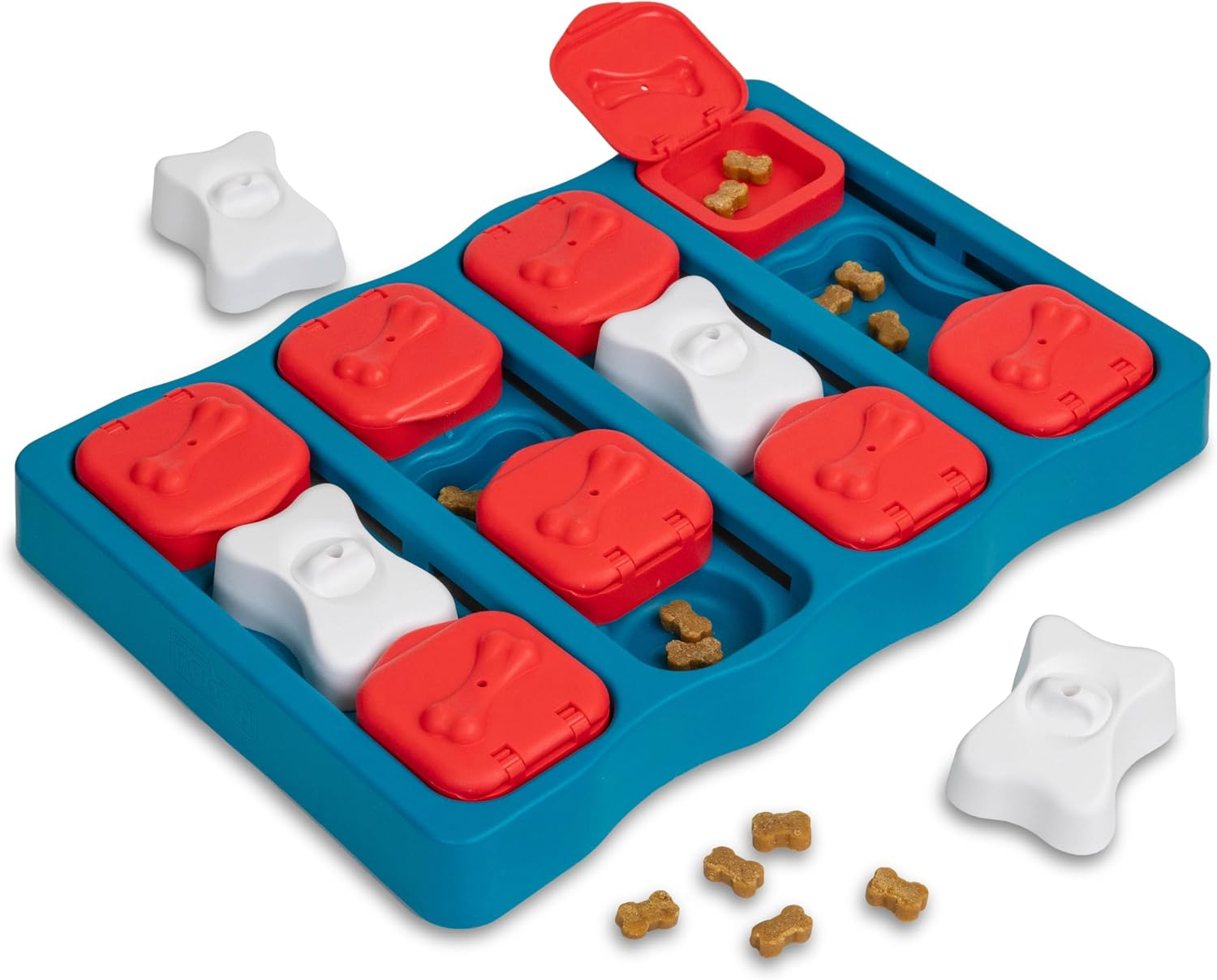
An interactive food puzzle for supervised sessions. Its movable and removable pieces are not intended for unattended chewing.
KONG Classic

A carry, fetch or fillable toy option. Select the right size and rubber for your dog; inspect after outdoor play and remove damaged toys.
PetSafe Treat Pouch Sport
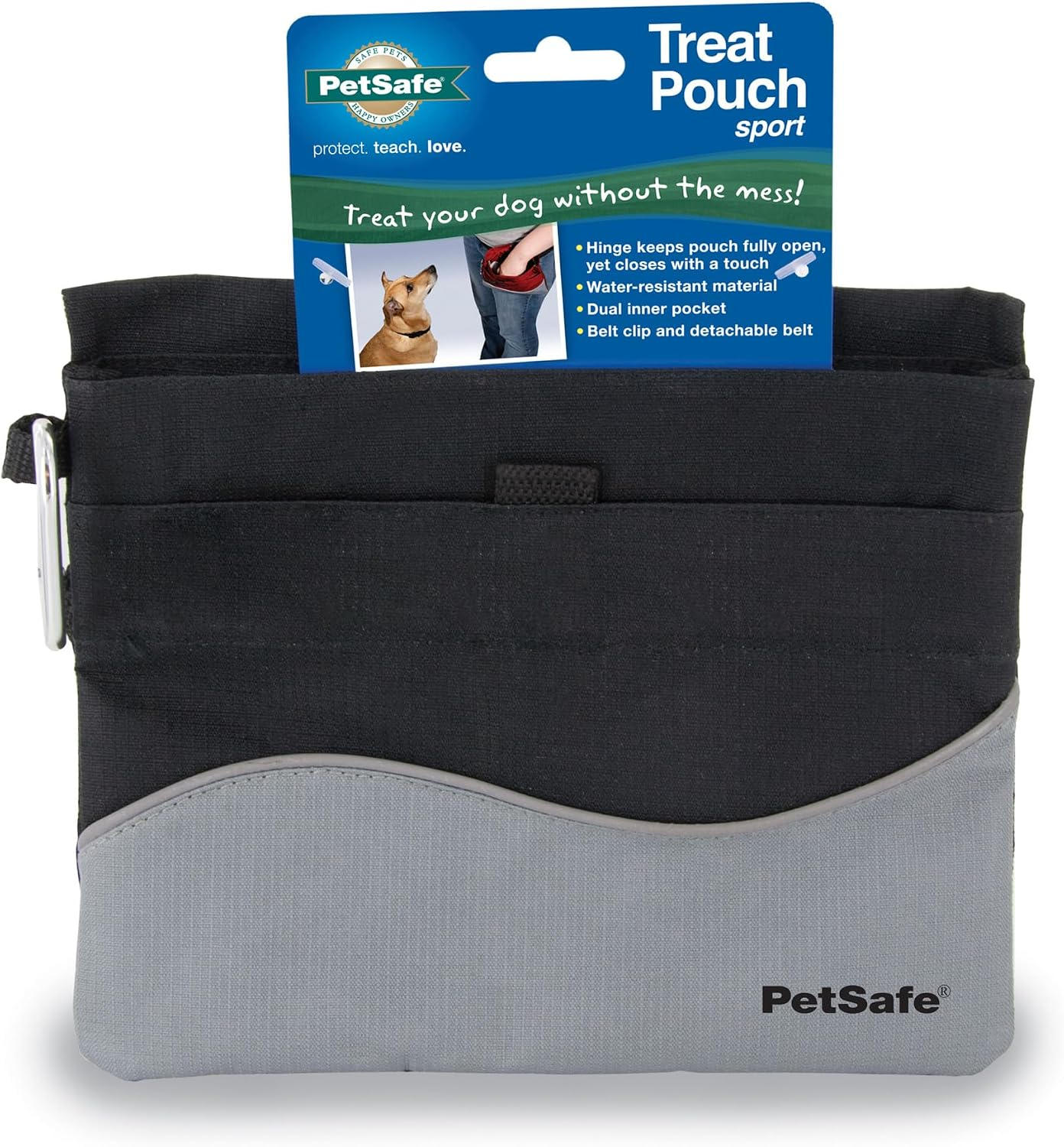
A way to keep rewards handy for calm return-and-trade practice. Keep the pouch and its attachments away from dogs when not in use.
View PetSafe Treat Pouch Sport on Amazon Affiliate Disclosure
Frequently asked questions
Can a bored dog bark when left alone? Yes. But persistent barking soon after departure, especially with pacing or distress body language, deserves closer evaluation.
Can a dog have separation anxiety without destroying anything? Yes. Some dogs show quieter signs such as trembling, pacing, panting, or inability to settle.
Does getting a second dog cure separation anxiety? Not reliably. Some dogs are distressed by the absence of a particular person, and adding a dog is not a substitute for assessment and treatment.
Should I leave a food puzzle when I go? It can be useful for some dogs, but not all distressed dogs will eat, and some objects are unsafe unsupervised. Test it while home first and discuss severe cases with your veterinarian.
How long should I let my dog cry it out? Do not intentionally prolong intense distress to force adaptation. Seek an individualized plan that builds tolerance gradually.
Bottom line
A destroyed cushion tells you what happened. Video can help reveal how it happened. By watching the minutes around departure, you can avoid dismissing distress as boredom—and avoid assuming every home-alone problem is separation anxiety.
Sources and further reading
- Merck Veterinary Manual, “Behavior Problems of Dogs”: https://www.merckvetmanual.com/behavior/behavior-of-dogs/behavior-problems-of-dogs
- Peer-reviewed review, “Canine separation anxiety: strategies for treatment and management”: https://pmc.ncbi.nlm.nih.gov/articles/PMC7521022/
- AVSAB, “How to Tell if Your Dog Has Separation Anxiety and 5 Things to Do if She Does”: https://avsab.org/how-to-tell-if-your-dog-has-separation-anxiety-and-5-things-to-do-if-she-does/
- ASPCA, “Separation Anxiety”: https://www.aspca.org/pet-care/dog-care/common-dog-behavior-issues/separation-anxiety
- VCA, “Separation-Related Distress in Dogs”: https://vcahospitals.com/know-your-pet/dog-behavior-problems-separation-anxiety
- Ohio State University Veterinary Medical Center, “Mitigating Separation Related Behaviors”: https://vmc.vet.osu.edu/sites/default/files/documents/vmc-behavioral-med-separation-anxiety-2024.pdf
- SPCA of Texas, “How to Collect Video of Your Pet”: https://spca.org/wp-content/uploads/2023/02/How-to-Collect-Video-of-Your-Pet_Flyer.pdf
- VCA, “Behavior Management — Enrichment and Activity Toys”: https://vcahospitals.com/know-your-pet/behavior-management—enrichment-and-activity-toys
- AAHA, Separation Anxiety Client Handout: https://www.aaha.org/wp-content/uploads/globalassets/06-publications/trends/digital-editions/2021/06-june-2021/separation-anxiety_client-handout.pdf
Continue exploring with Piper
Why dogs bring toys but refuse to let go · Separation anxiety in dogs · Why your dog watches you leave