
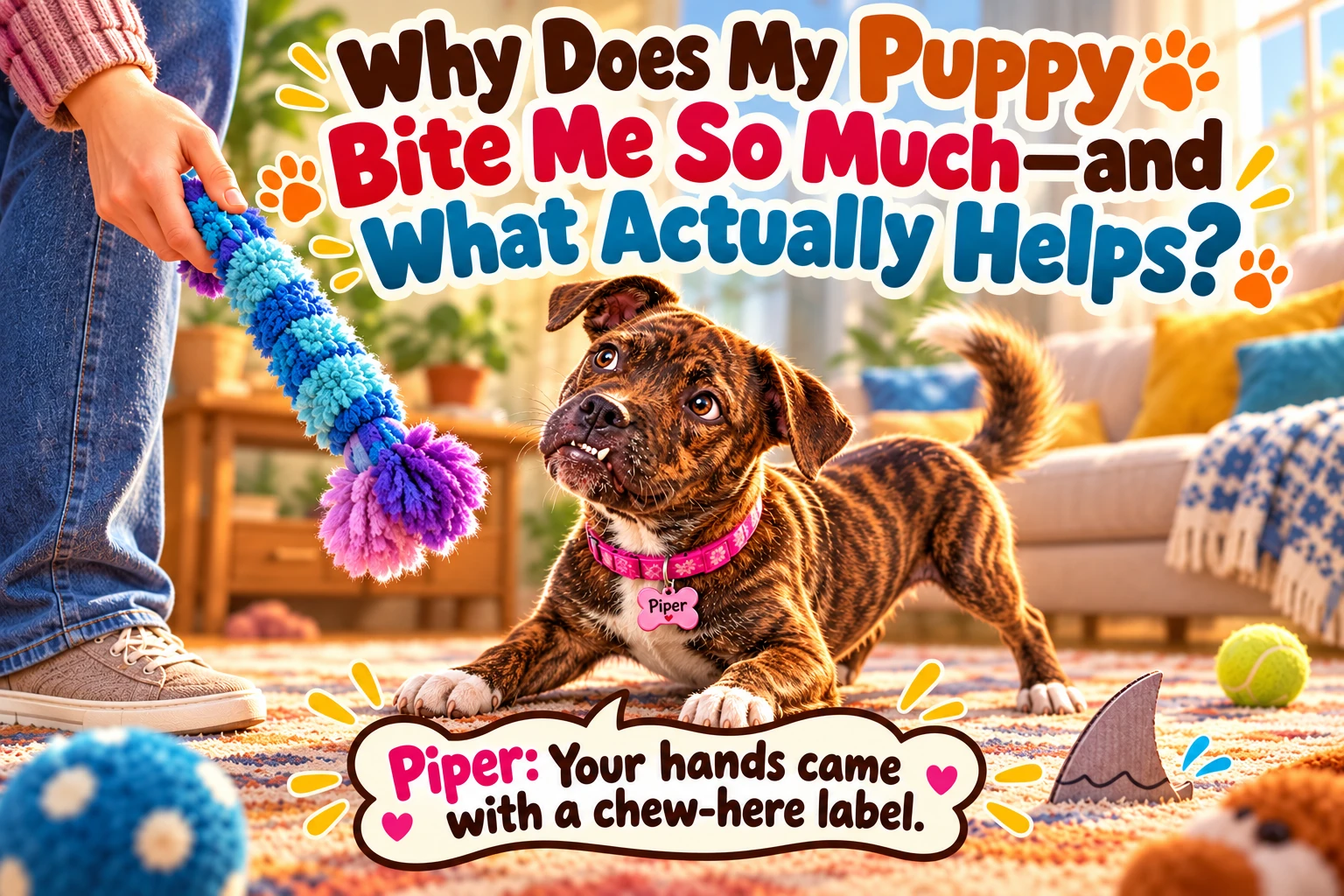
You sit down after dinner, and your puppy attaches to your trouser leg. You offer a toy. They take it for three seconds, drop it, and return to the apparently superior entertainment located at the end of your arm.
Puppies explore and play with their mouths. Teething, excitement, frustration, and tiredness can all contribute to biting. The useful response is to make gentler interactions easier: offer an appropriate outlet early, interrupt the game calmly, and provide opportunities to rest. Painful, fearful, or escalating biting needs individual help. [1][2]
How to stop puppy biting
Offer a suitable toy before the usual biting moment, calmly pause play if teeth return to skin, and use an already-installed safe barrier when you need space. Check toilet, water, and rest needs before restarting. [2][3]
First, work out which moment keeps going wrong
Instead of counting every bite, look for a repeatable scene. Does it happen when you walk across the room? During enthusiastic petting? When the children start running? Near the end of a long, busy evening?
That gives you something you can change. If moving feet start the game, having a toy ready before walking past the puppy is more useful than searching for one after they have caught your sock. Dogs Trust recommends planning an activity before predictable mouthing begins. [2]
Teething can increase chewing, but it does not explain every leap at a sleeve. A puppy who grabs harder as play becomes faster may need a quieter interaction. One who has had visitors, games, and very little undisturbed sleep may need a break from the action. More exercise is not automatically the answer to every energetic-looking puppy. [2][3]
The trouser-leg rescue, step by step
Imagine the familiar ambush as you walk toward the kitchen. This is an example of applying the guidance, not a test your puppy has to pass.
- Slow the moving target. Avoid flapping your hands, squealing repeatedly, or jerking the fabric back and forth. These responses can make the interaction more exciting. Keep yourself safe; you do not need to stand there accepting painful bites. [1][2]
- Offer something appropriate to hold. Have a suitable puppy toy nearby. Present it away from your hands and let the puppy engage with it; supervise play and remove damaged toys. [1][3]
- Pause when teeth return to skin. Calmly stop the interaction. If needed, step behind a safe barrier rather than wrestling the puppy into confinement. Restart when you can both manage a gentler exchange. [1][3]
- Notice the good moment before the next bite. Quietly reward four feet on the floor, playing with their own toy, or resting nearby. Otherwise, the puppy may learn that biting is the reliable way to launch your entire entertainment program. [3]
If the toy is ignored—or the biting restarts immediately
Stop trying to make the toy more exciting. Slow your movements and end the interaction rather than repeatedly presenting it against the puppy’s face. If you need space, use a familiar puppy-safe room or pen with a barrier already installed: keep your hands clear of the mouth, move toward the exit calmly, and close the gate behind you without catching paws or trapping the puppy against it. A walk-through gate lets you leave without stepping over a biting puppy. Do not pick the puppy up mid-bite or drag them into a crate. [2][3]
Stay nearby during a brief pause. If the puppy is distressed by the barrier, increase your proximity and use an easier setup; this is not a cry-it-out exercise. Check whether they need the toilet, water, or quiet rest. Restart with a calm, simple interaction only when you can do so safely. If bites immediately resume, finish the play session and reassess the routine. Persistent painful biting deserves individual help. [2]
Practise during easy moments, too. A few calm seconds with you are worth reinforcing before your puppy has become a tiny airborne stapler.
What if saying ouch makes it worse?
Change the approach. Ohio State notes that some puppies find a high-pitched response exciting or rewarding. Others may find it frightening. A technique is not helping simply because you have heard it recommended often. Use a quieter interruption and reduce the intensity of the interaction. [1]
Avoid muzzle-grabbing, pinning, hitting, or trying to show the puppy who is boss. Punishment can add fear and frustration to an already difficult moment. [2][3]
Why does the biting get worse at night?
Look at the evening as a whole. Perhaps your puppy has been awake through dinner preparation, children arriving home, and a lively game. By the time you sit down, everyone else wants peace, while the puppy is still responding to everything happening around them.
Try an earlier toilet opportunity, a short manageable activity, and a comfortable quiet rest area before the usual difficult period. Meet basic needs first; do not use isolation to punish the puppy. If they are distressed behind a barrier, the setup needs adjusting rather than a longer wait. Sleep matters alongside play and exercise. [2]
When will it stop—and when should I get help?
Mouthing often improves with development and consistent teaching, but birthdays do not teach alternative behavior. Keep track of whether bites become less frequent, easier to interrupt, and less intense. Those changes are more useful than expecting a particular week to fix everything.
Seek veterinary and qualified behavior support if the puppy becomes rigid or fearful, bites during handling, guards objects, causes injury, or the pattern is escalating. A loose body does not make painful biting acceptable, and a growl alone cannot tell you the motive. If someone is injured, obtain appropriate medical advice. [1][2]
For tonight, choose one predictable situation and prepare for it earlier. A toy within reach and a calmer ending to the game will usually be more useful than another argument with your sleeve.
Optional tools for this setup
KONG Puppy Natural Rubber Teething Chew Toy, Pink

A puppy-appropriate chewing option between short play sessions. Choose the correct size, supervise use, and replace damaged toys. Keep a longer toy available for redirecting bites away from hands.
View KONG Puppy Natural Rubber Teething Chew Toy, Pink on Amazon Affiliate Disclosure
Regalo Easy Step Safety Gate, Model 1160
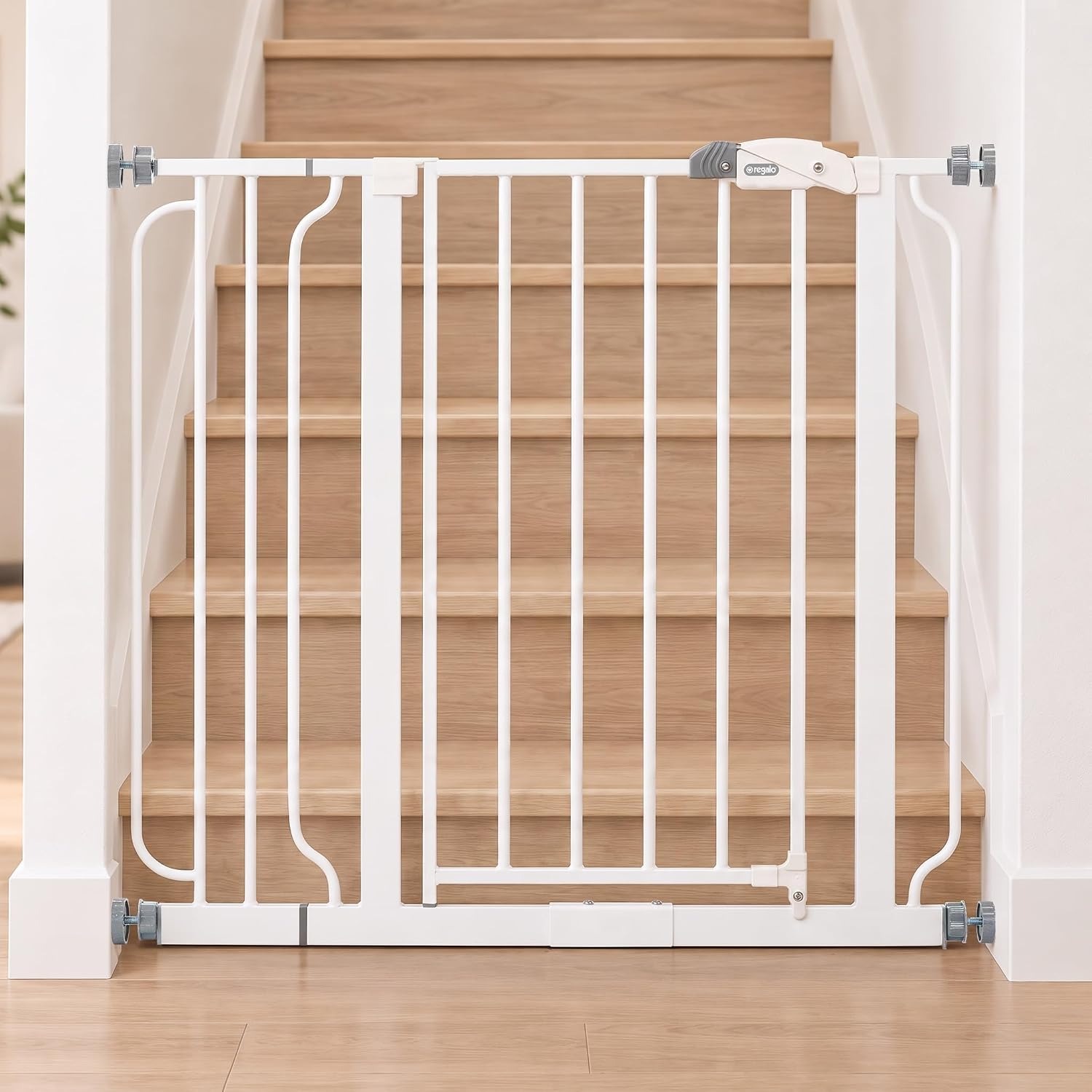
A planned doorway barrier for a brief reset. Measure the opening and follow installation instructions. Use only if the puppy cannot squeeze through the bars, climb, or jump it; some small puppies need a solid barrier instead.
View Regalo Easy Step Safety Gate, Model 1160 on Amazon Affiliate Disclosure
Keep exploring
If your puppy also sneezes during the game, our guide to sneezing during play explains how to watch the whole interaction, offer a pause, and recognize changes that deserve a vet call.