
The doorbell predicts something important. It may announce a visitor, excitement, an interruption, or something worrying. Work on two separate skills: making a manageable version of the sound predict a good experience, and teaching a comfortable place to rest. Combine them gradually, while using safe management for real arrivals. [1][2]
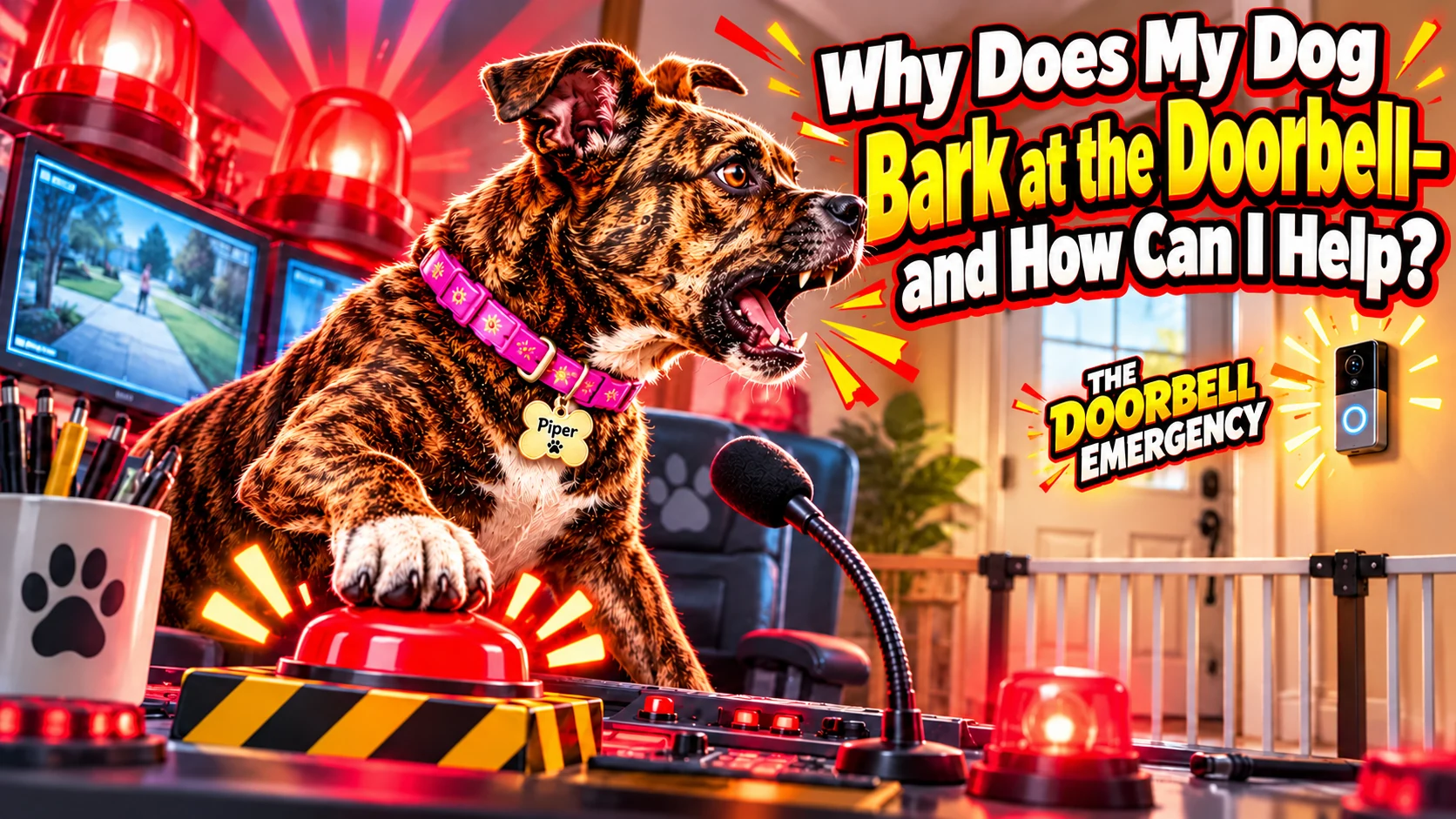
The bell rings once. Your dog responds as though a security summit has collapsed beside the welcome mat. At Piper’s command center, the delivery person has achieved Threat Level Cardboard.
Exercise one: change what the sound predicts
Choose a time with no expected visitors. Have small, suitable food rewards ready and play a doorbell recording at a very low volume, far enough away that the dog notices without rushing or becoming distressed. Let the brief sound happen, then immediately offer the food. Pause, let the dog return to ordinary activity, and repeat only while the exercise remains easy. [2]
This is sound → pleasant outcome, not a demand for a sit before food appears. The point is to work at a comfortable intensity. If the dog barks, freezes, repeatedly scans the door, or cannot eat as they normally would, pause the sound exposure and make the next attempt quieter, farther away, or shorter. You can still offer the planned food if they comfortably take it; do not require silence or a sit for this sound-pairing exercise. Do not play a loud recording until the dog gives up reacting. [2]
Progress when the dog can notice the sound, comfortably take the reward, and return to what they were doing across easy repetitions. Increase just one feature—volume, speaker location, or realism—rather than all at once. A recording may not resemble the actual bell closely enough; treat the real sound as a new, easier introduction, not a graduation exam. Veterinary guidance on desensitization and counterconditioning supports controlled exposure below the level that provokes fear. [2]
Exercise two: teach the resting place without the bell
Choose a mat well away from the doorway swing and visitor path. At a quiet time, reward investigating and stepping onto it. As the dog learns to rest there, deliver the reward on the mat instead of calling them back to your hand. Add a cue such as bed when the movement is familiar, and use a consistent release so they know when the exercise ends. [3]
Now rehearse your part. Take one step toward the door, return, and reward the dog on the mat while they remain there comfortably. If they rise as soon as you move, start with a smaller weight shift. Later, practise touching the handle without opening the door. Work on one action at a time; do not ask an untrained dog to remain there through an entire visitor arrival. [1][3]
A marker helps identify the successful moment. Say yes as the dog remains resting during your small movement, then deliver the reward. The marker is a signal that food follows, not a substitute for it.
Only then begin putting the pieces together
Use an easy sound, give the familiar bed cue, and reward arriving and remaining there. At first, nobody enters. Later, arrange a helper who follows your instructions: one easy bell or knock, plenty of distance, and a controlled doorway. Dogs Trust’s visitor guidance similarly separates preparation from real guest arrivals. [1]
Move forward when the dog can do the current version without repeated cues or signs that the situation is becoming too much. Step back when they repeatedly leave the mat, rush, stiffen, or cannot recover between repetitions. A dog holding still while staring rigidly at the door is not necessarily relaxed. Progress follows the dog’s response, not a fixed number of practice days.
The delivery arrives before the dog is ready
Use management, not an unplanned training test. Keep the front door closed while placing the dog in an already comfortable, secure area away from the entrance. Use a closed interior door or suitable barrier as needed. Ask for the parcel to be left outside; collect it once the visitor has moved away. Do not open the entrance while trying to hold a barking dog by the collar. [1]
If you offer a familiar food activity, do so in the safe area and supervise appropriately. A dog who panics behind a barrier needs a different plan. A qualified professional can help if arrivals involve intense fear, attempts to bite, or unsafe rushing.
Start with one quiet sound rehearsal or one easy mat exercise today. Piper can keep the security title. Your dog gets a predictable job, and you get to collect the parcel without convening an emergency summit.
Keep exploring
Sources and further reading
- Dogs Trust: preparing for visitors, gradual doorbell practice and resting-place training
- VCA veterinary behavior guidance: desensitization and counterconditioning
- Battersea behavior guidance: teaching calm and relaxed behavior
- PetSafe: Clik-R marking tool and reward association
- Carlson: Extra Tall Walk-Through Gate owner’s manual (models 0941 and 0942)