
Affiliate disclosure: Some links in this article may earn Bark Mind Dogs a commission. Food preference is not proof of a health benefit. Read our disclosure.
Why does a different food make your dog more interested in dinner?
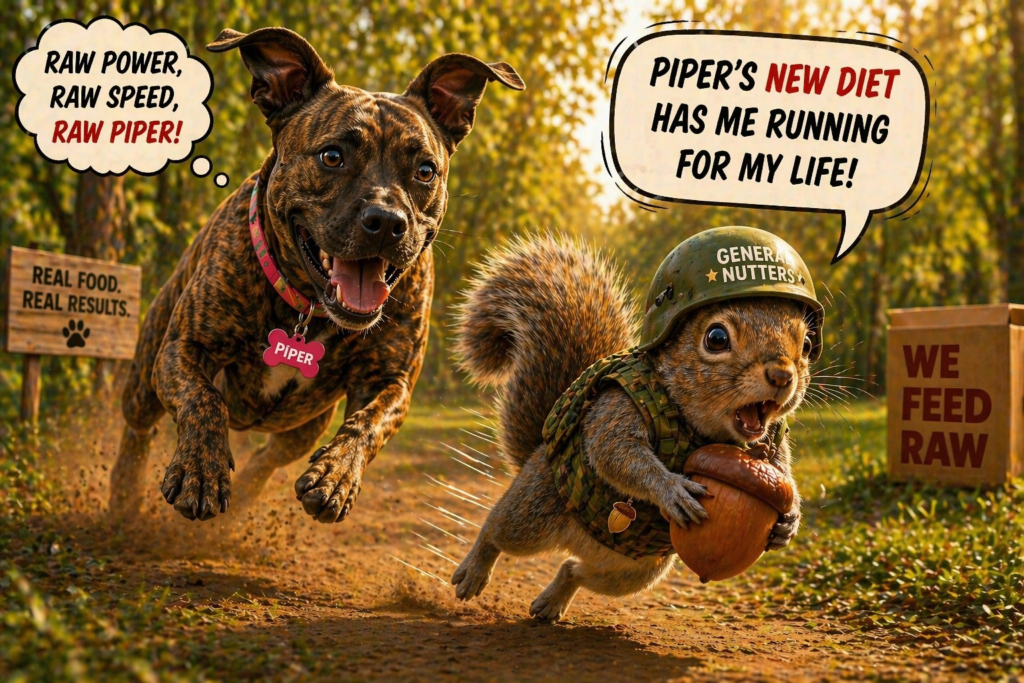
You’ve probably seen it in your own kitchen: your dog barely looks twice at their usual kibble, but the second raw meat hits the bowl they turn into a focused little wolf—devouring every bite like it’s the best thing they’ve ever tasted. That exact moment happened with my brindle girl, Piper. She’d always finish meals fast, but without much spark. The day I introduced a properly balanced raw dog food meal? Everything changed. No more half-hearted eating. Pure predator focus. Even her squirrel nemesis, General Nutters, doing backflips in the yard couldn’t pull her away.
Some dogs show strong interest in a different food because its smell, texture, moisture or novelty is rewarding. Enthusiasm at the bowl does not establish that raw food is healthier than a complete cooked diet or kibble.
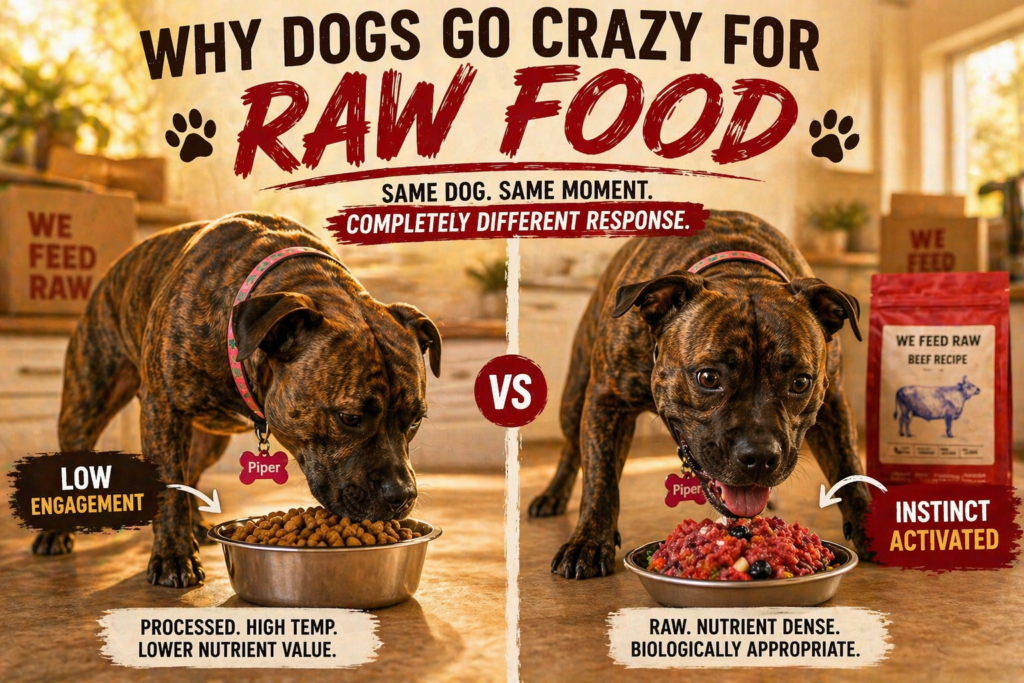
Raw diets and kibble differ in processing, moisture, formulation and handling. Compare the actual recipes and your dog’s needs rather than assuming that less processing guarantees better health.
Key Takeaways
- Food preferences differ between dogs; willingness to eat is not a test of nutritional adequacy.
- Digestibility and stool changes depend on the specific formulation, not simply whether a food is raw.
- Delivery services can simplify ordering and storage planning; they do not remove the need to assess formulation and food safety.
- Results vary by dog—quality, balance, and safe handling matter most.
Breaking It Down: The BarkMind System
Trigger: A new food brings different smells, textures and feeding cues. Kibble is heat-processed; its ingredients and nutrient balance vary by recipe.
Interpretation: Your dog may have learned that these sensory cues predict a rewarding meal. We cannot infer an ancestral nutritional judgment from excitement.
Response: Eating speed, appetite and stool appearance may change. Such observations alone do not prove reduced inflammation or better long-term health.
Reinforcement: Enjoying a meal can strengthen interest in its cues. Preference and nutritional suitability are separate questions.
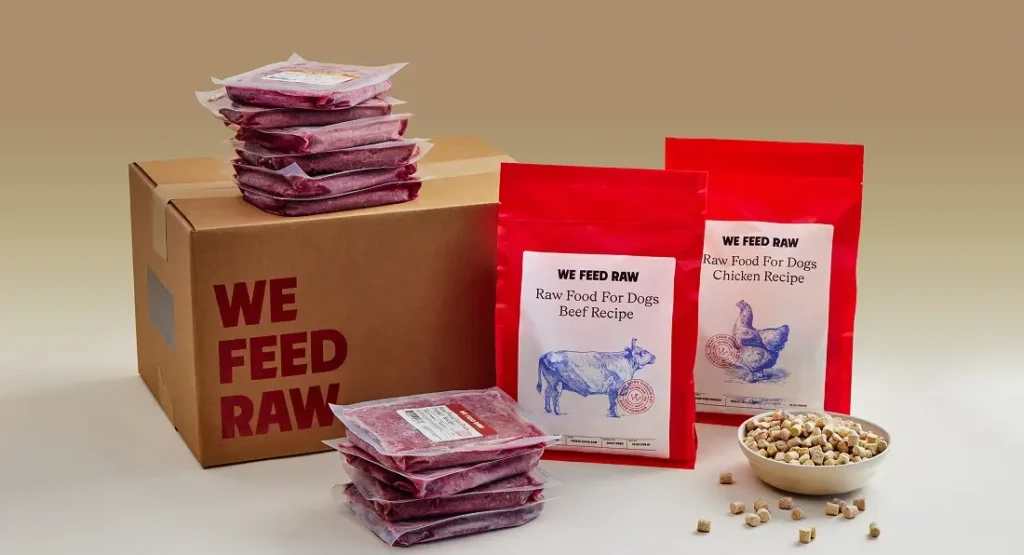
If you’re curious what I tested with Piper and saw real changes, here’s the system we’re using: We Feed Raw – Start Here (Affiliate Disclosure).
Explore this deeper in our pillar guide: Why Your Dog Does That? Understanding Canine Behavior.
Why Dogs Prefer Raw Meat Over Kibble
Some dogs prefer the smell, moisture or texture of raw meat; others prefer cooked foods or kibble. A preference does not show that raw enzymes are necessary or that the diet is nutritionally complete.
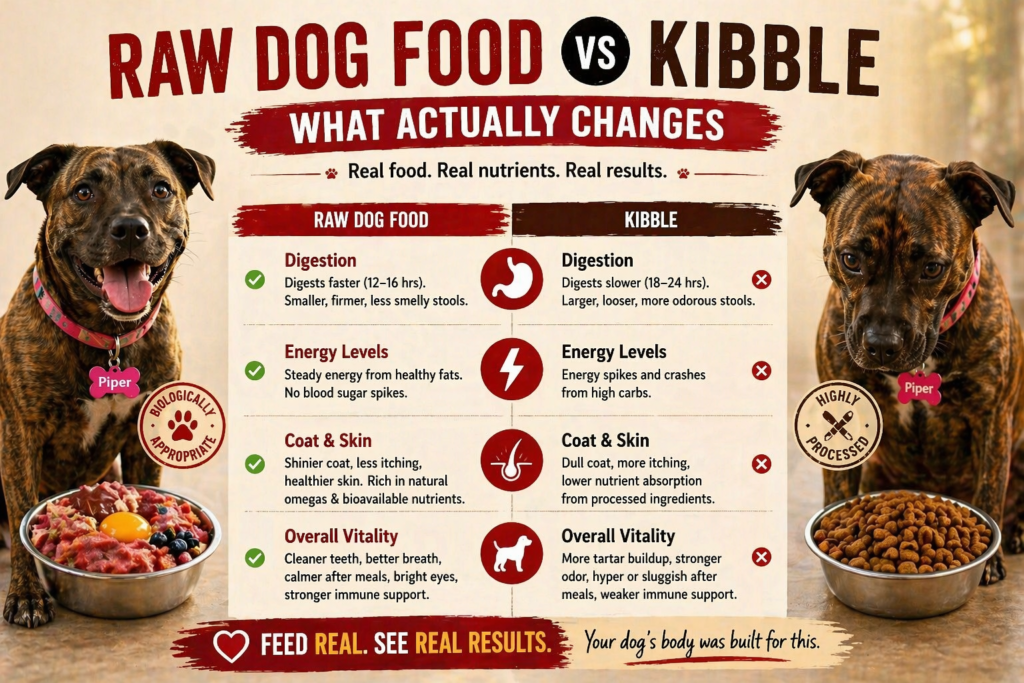
Raw Dog Food vs Kibble: What Actually Changes
When comparing foods, record these observations without assuming a guaranteed benefit:
- Digestion — Stool size and consistency can change with ingredients, fibre, fat and digestibility. Persistent diarrhoea, vomiting or weight change needs veterinary assessment.
- Energy — Compare calories, portions, activity and body condition. Excitement or quieter behaviour after eating does not identify a metabolic improvement.
- Coat and skin — Changes can have dietary, allergic or medical causes. A raw diet is not a general treatment for itching.
- Overall wellbeing — Evaluate appetite, weight and health with your veterinarian; cleaner teeth or a calmer temperament are not assured by raw feeding.
Food and feeding routines can affect daily activity, but a dietary change is not a substitute for training or treatment of a behaviour or health problem. Related links: how dogs learn and respond to their environment · how dogs learn and adapt to food rewards over time · environmental triggers in dogs.
Piper’s Real-Life Raw Dog Food Story
Piper slowed down, savored every bite, and her post-meal zoomies became more playful. Within weeks her coat looked glossier and digestion stabilized. It felt like her body finally recognized the food as proper fuel. I’ve heard the same from countless owners making the switch—less itching, better energy, and happier mealtimes all around.
Why This Happens: Science + Instinct
A 2023 DogRisk study examined associations between owner-reported early diets and later chronic enteropathy. Its observational design cannot show that raw feeding caused protection, or support a general claim that kibble causes poor metabolic health. Read the study record and limitations.
Compare a delivery service on its current recipe, adequacy statement, handling instructions and price rather than promised health outcomes.
This is exactly why we built our Best Dog Food Systems pillar page — to help owners choose nutrition that actually supports natural behavior instead of fighting it.
Real Talk: The Honest Risks & Who Should NOT Switch to Raw
Raw food can expose animals and people to harmful bacteria. The FDA describes contamination and handling risks, and the AVMA discourages raw or undercooked animal-source proteins. Good handling reduces exposure but does not make raw food risk-free.
Who should approach raw with extra caution or avoid it:
- Growing puppies require a diet appropriate for growth, including mineral balance; there is no six-month threshold that makes raw feeding safe.
- Dogs with compromised immune systems, cancer, or on chemotherapy.
- Seniors or dogs with severe kidney/liver issues.
- Households with high-risk people.
This isn’t about pushing raw — it’s about choosing what’s right for your specific dog.
If you want to compare a gently cooked and dried option, read our UnKibble review. The right choice depends on formulation and your dog, rather than a universal claim that one format is gentler. Related links: Spot & Tango UnKibble Review.
How to Make Raw Dog Food Work (The Simple Way)
Before changing diets, discuss suitability with your veterinarian and check the nutritional adequacy statement for your dog’s life stage. If you use raw food, follow the label’s storage and thawing instructions, prevent cross-contamination, and clean hands, bowls and surfaces. A delivery brand is not an assurance of safety. Related links: We Feed Raw · (Affiliate Disclosure).
We Feed Raw is one commercial option linked here. Check its current recipe, nutritional adequacy statement, portions and handling directions; this article has not established that it improves health or behaviour. Related links: We Feed Raw · (Affiliate Disclosure).
A change in appetite may reflect preference, stress, dental pain or illness. Discuss persistent changes with your veterinarian before treating them as proof that the current food is unsuitable.
We cover full comparisons like this in our Best Dog Food Systems guide.
FAQ
Why does my dog go crazy for raw food but ignore kibble? Smell, texture, moisture, novelty and learned expectations may explain the preference. Preference does not establish a health benefit.
Is raw dog food actually better than kibble? There is no universal answer. Compare nutritional adequacy, the individual dog and food safety rather than assuming raw is superior.
What are the main raw dog food benefits? Some owners report appetite or stool changes. These observations do not establish broad benefits for coat, energy, digestion or disease prevention.
Is raw feeding safe? Raw feeding carries bacterial and nutritional risks. A reputable service and careful handling do not eliminate those risks.
Who should not feed raw dog food? Discuss raw feeding with your veterinarian, particularly for vulnerable dogs or households. Growing dogs need appropriately formulated diets.
How does best raw dog food delivery compare in cost? Compare current prices, portions, shipping and storage. This article provides no evidence that a higher food price will be offset by fewer veterinary visits.
Raw diet for dogs pros and cons? Potential convenience and palatability vary by service and dog. Weigh these against cost, cold storage, nutritional adequacy and pathogen exposure.
This content is for educational purposes only and is not a substitute for professional training or veterinary advice.
A dog’s excitement about dinner tells you about preference. It does not, by itself, settle the raw-food-versus-kibble health question.
Treat Piper’s story as an individual observation, not a controlled test or a promise of results. Discuss a suitable feeding plan with your veterinarian.
What’s one thing you’ve noticed about your dog’s eating habits? Drop it in the comments — I read every one.
Explore our feeding comparisons and behaviour guides for practical context. A food switch is not a guaranteed route to a healthier or happier dog. Related links: Best Dog Food Systems · Why Your Dog Does That?.
Sources and review note
Factual claims and FAQs reviewed October 19, 2026. Sources: FDA raw-pet-food guidance, AVMA raw-diet policy, and the 2023 DogRisk study record. Piper’s observations are anecdotal and do not establish a diet’s health effects.