

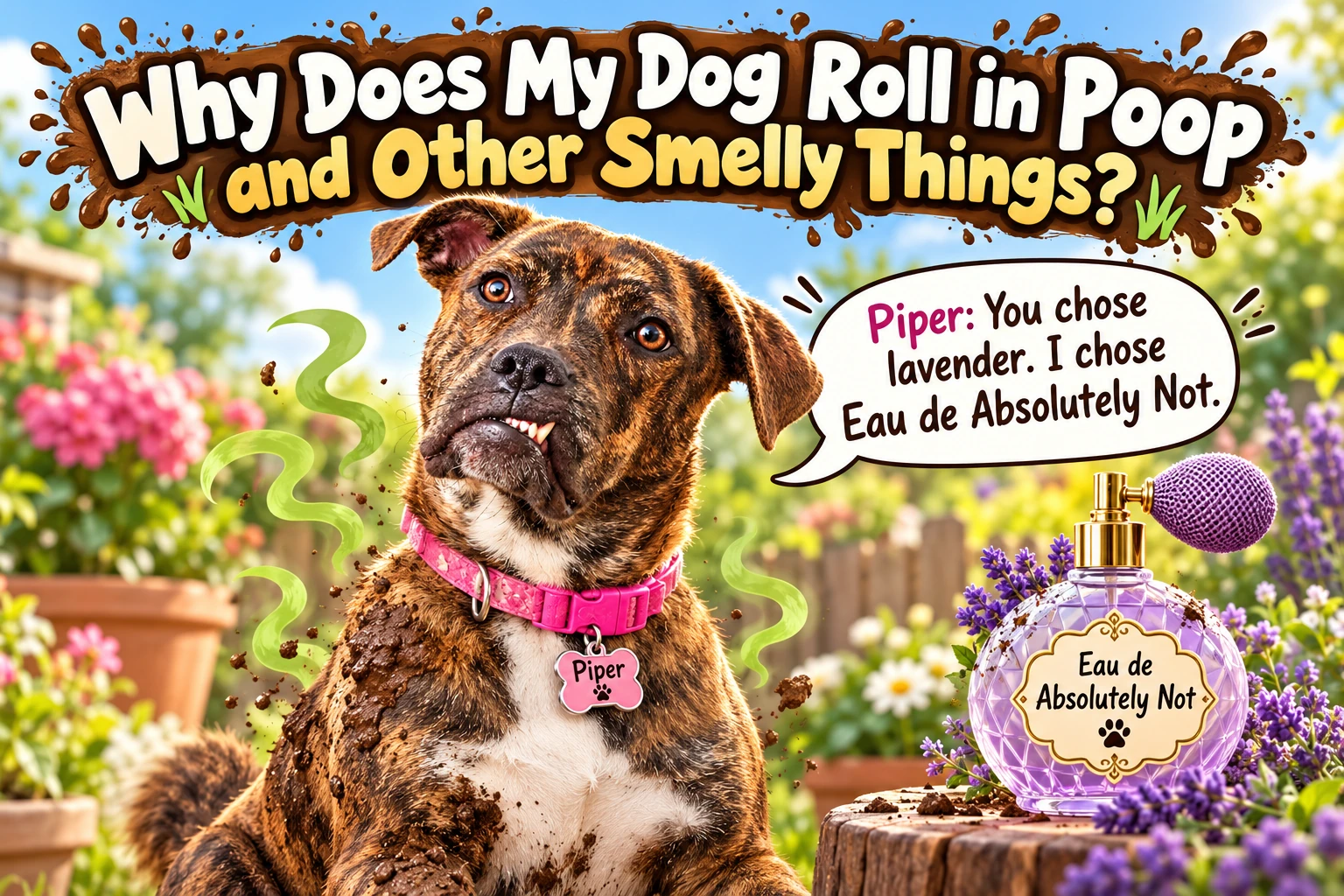
The walk was going beautifully. Then your dog discovered one special patch, lowered a shoulder, and committed their entire body to a smell you had hoped never to meet.
Dogs sometimes roll in strong odors, but the precise reason remains unsettled. Hunting camouflage, scent communication, and enjoyment are proposed explanations—not a proven translation for every roll. You can prevent a repeat without solving the evolutionary mystery. [1]
Catch the shoulder before the full-body commitment
Notice your dog’s own sequence. It may begin with a focused sniff, a pause, and a head or shoulder dipping toward the ground. Not every sniff predicts a roll, but recognizing the familiar setup can give you an earlier moment to respond.
Call your dog away with a cue they already know, reward moving with you, and keep enough distance to avoid an immediate return. Near livestock, wildlife remains, or repeatedly tempting patches, use a leash and close supervision. AKC guidance emphasizes management and well-practised leave-it and recall skills. [1]
Imagine the usual wooded path. Your dog stops at the same verge every visit. Instead of waiting for the dramatic flop, cross to the clearer side before reaching it, invite a check-in, and reward alongside you. That changes the route at the point where you still have options.
Why would a dog want to smell like that?
Dogs investigate odors that humans find revolting. That observation is clearer than any single explanation of what they intend to achieve. Some may find the sensory experience rewarding. Theories about conveying scent information or disguising their own odor remain hypotheses. [1][2]
Even plausible ancestral stories have weaknesses. For instance, a dog’s choice to roll in a particular substance does not show that they are preparing to hunt. Avoid building a training plan around an unverified motive.
The behavior can also be familiar without being safe in every setting. Feces, decomposing material, and unknown substances can expose your dog—and the people cleaning them—to contaminants. The source matters. [2]
Why right after a bath?
The timing makes it feel personal. You bought a pleasant shampoo; your dog apparently submitted a revision.
It is often suggested that dogs roll to replace an unfamiliar or strong smell after bathing. That is a possible interpretation, not proof that your dog disliked the shampoo or deliberately undid your work. Record the pattern, but do not mistake the comic timing for an explanation. [1][2]
If a product seems to irritate the skin, or rolling comes with persistent scratching, redness, paw chewing, or ear problems, discuss it with your veterinarian. Skin discomfort requires a different response from an occasional encounter with an interesting patch. [3]
The cleanup depends on what they found
Ordinary dirt or fecal soiling
For ordinary dirt or fecal soiling, keep the dog away from furniture and food-preparation areas, wear gloves, and clean the coat with a suitable dog shampoo according to its directions. Rinse thoroughly, avoid eyes and ears, and wash your hands afterward. Clean contaminated washable collars and harnesses according to their care instructions. [2][4]
Unknown or potentially hazardous substances
If the substance could be a chemical, oil, pesticide, or another hazardous material, prevent licking and contact your veterinarian promptly for specific instructions. Do not experiment with solvents, bleach, disinfectants, or essential oils on the coat. Identification and appropriate decontamination matter more than finding the strongest fragrance. [5]
An ordinary shampoo recommendation is not a treatment plan for an unknown exposure.
What if recall does not work near the smell?
Make the next attempt easier. Practise away from the tempting area and reward generously for moving with you. On the real walk, use the leash and route to prevent access while the skill develops. A cue that works in the kitchen may not yet work beside a highly interesting odor. [1]
If the roll has already happened, calmly move the dog away and deal with cleanup. Punishing afterward cannot undo it, and repeatedly returning to the spot to practise makes an avoidable problem harder.
Your useful victory is often quite small: you noticed the focused sniff a little earlier, changed direction, and both went home without needing a bath. General Nutters may still object to the route, but his fragrance preferences do not get a vote.
Optional tools for this setup
earthbath Oatmeal & Aloe Shampoo, Vanilla & Almond, 16 fl oz (2 pack)
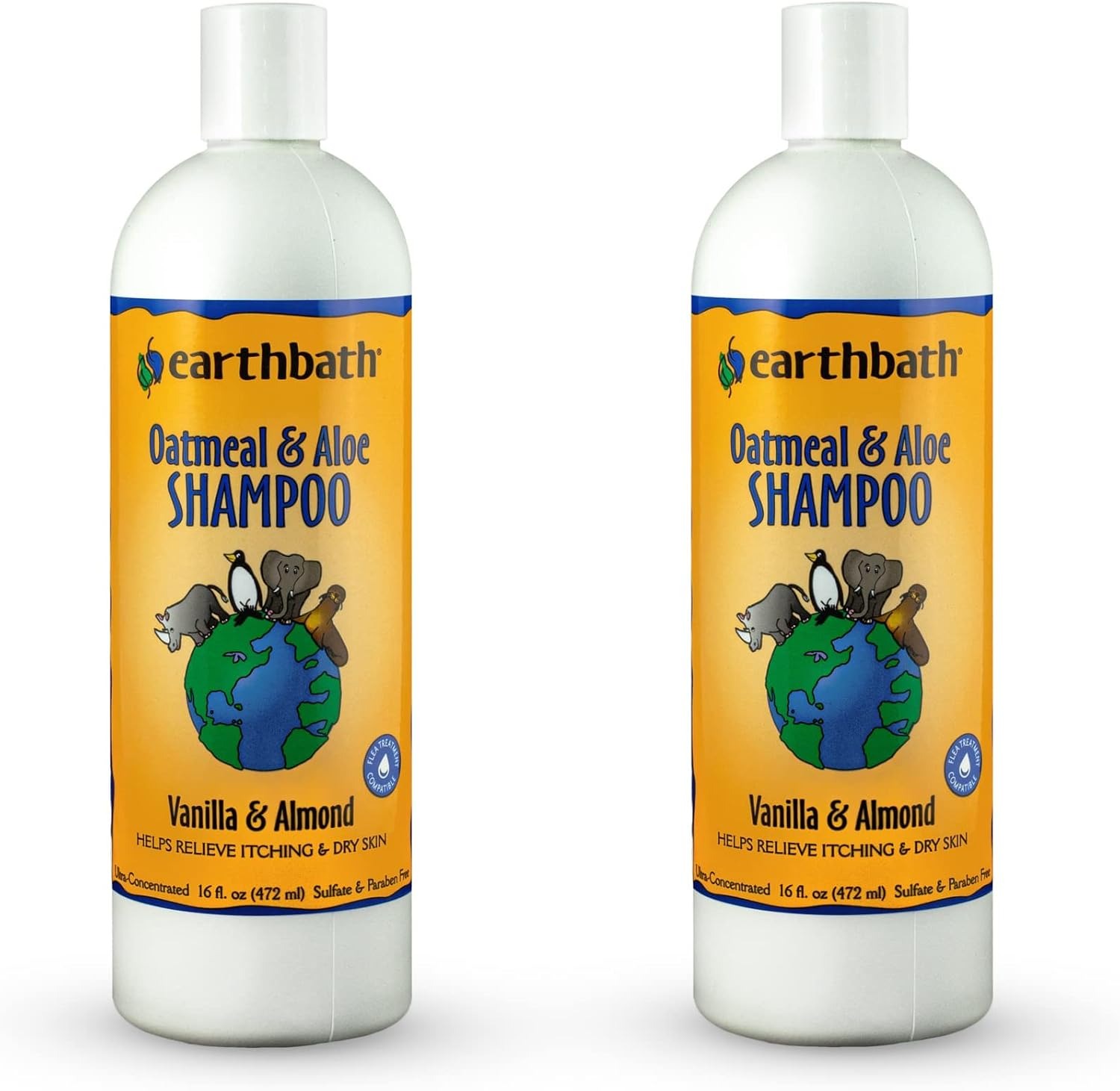
An ordinary shampoo option after rolling in familiar dirt or smelly material. Follow the label and rinse thoroughly. This supplied version is scented. For an unknown hazardous substance, follow the veterinary advice above instead of starting a bath.
View earthbath Oatmeal & Aloe Shampoo, Vanilla & Almond, 16 fl oz (2 pack) on Amazon Affiliate Disclosure