
Affiliate disclosure: Product links may earn Bark Mind Dogs a commission. Read our disclosure. “Natural” does not mean risk-free; follow the exact product label.
Natural flea and tick yard treatment: start with the pest, the setting and the product label.
A useful plan combines appropriate care for the dog, home cleaning and yard management. The products below are options to evaluate, not a proven combination that guarantees relief or kills every life stage.
There’s a moment every dog owner knows too well.
Your dog bounds back inside after playing in the yard, tail wagging, eyes full of joy. You scoop them up for belly rubs and everything feels perfect.
But later that night, the scratching begins. Nonstop. You hear the frantic thumps, the whimpers. Or you feel something crawling while cuddling.
Your stomach drops. In that instant, it’s no longer “just yard bugs.” It’s on your dog. In your house. Possibly in your bed. And the guilt hits hard—you only wanted them to play freely and stay safe.

Why This Actually Matters (More Than People Think) Fleas and ticks aren’t random annoyances. They’re environmental triggers that activate the exact same BarkMindDogs Behavioral Framework we explain throughout this site: Trigger → Interpretation → Response → Reinforcement.
A single flea can lay dozens of eggs every day—eggs that fall into carpet, furniture, and floor cracks. And the worst part? Most of this happens quietly… long before you ever notice a problem. Ticks carry Lyme disease and other infections that steal your dog’s energy and health. Fleas trigger allergic reactions, raw skin, and endless discomfort that leaves your playful pup hiding away.
Flea immature stages develop in the environment. Many tick species wait for hosts on vegetation; describing most fleas and ticks as hidden underground is misleading.
Yard treatment may be useful where exposure occurs, but not every home needs a blanket pesticide treatment. Identify the pest and address the pet, home and relevant outdoor areas together.
What Happens If You Ignore It Flea populations explode. Eggs invade your home. Dogs develop chronic itching or allergic dermatitis. Tick exposure risks climb.
Persistent scratching may reflect parasites, allergy or another medical problem. Scratching is not simply a reinforced behaviour pattern; seek veterinary assessment when it continues.
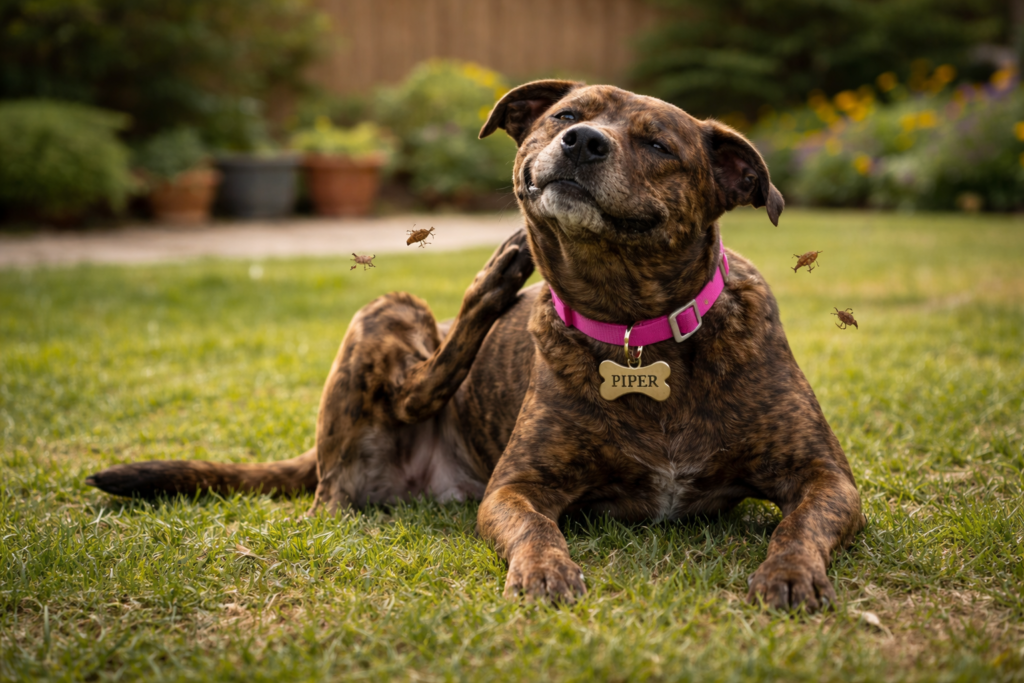
A layered plan can include cleaning, habitat management and a veterinarian’s advice on prevention. Natural ingredients are not automatically safer or more effective than other options.
The Biggest Mistake: treating a product purchase as a complete plan, without checking the pest, permitted use and the dog’s needs.
Reinfestation is possible. Monitor the pet and the environment, and adjust the plan with a veterinarian or qualified pest professional rather than promising that bugs never return.
The Backyard Options: evaluate each product separately. There is no requirement to use all of them, and the combination has not been demonstrated here to eliminate fleas, ticks or anxiety.
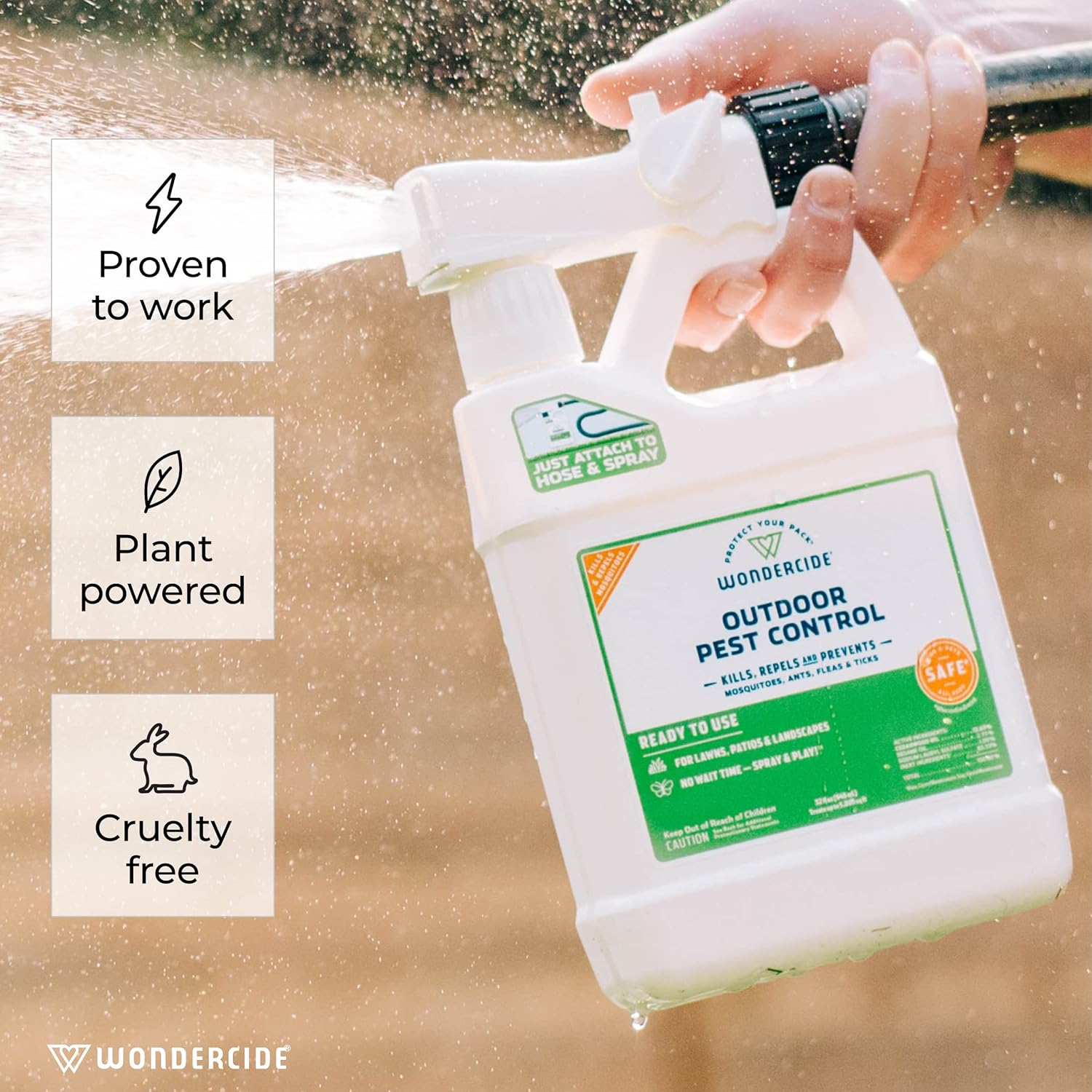
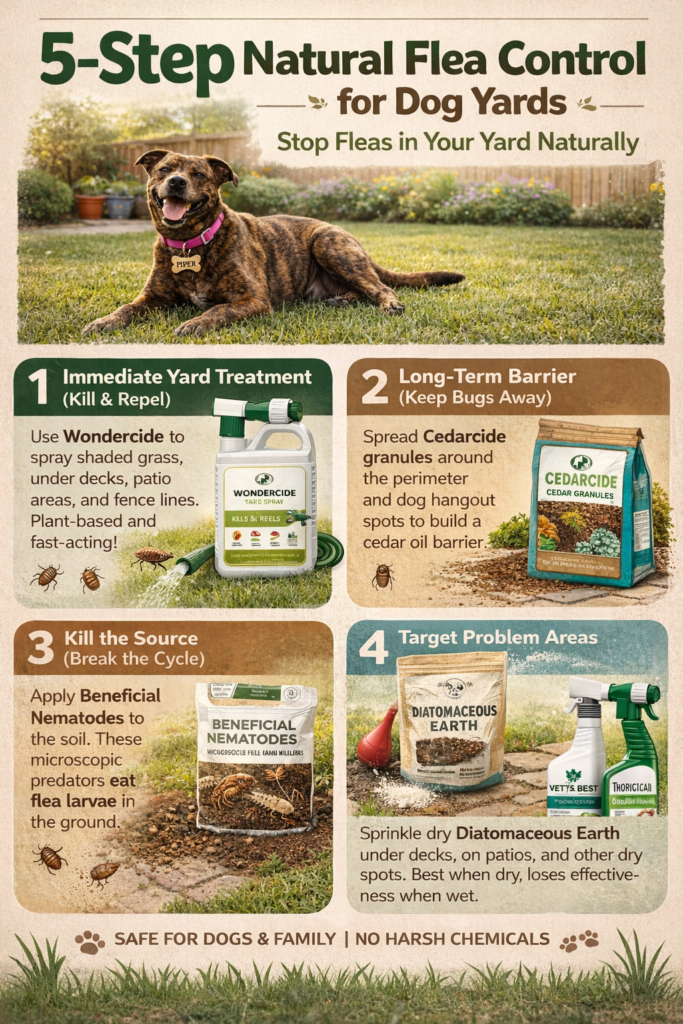
🌿 Step 1: Check a labelled yard spray. Wondercide products vary by formulation. Read the exact product’s target-pest, application, dilution and re-entry directions before use. Plant-based ingredients do not make every use safe around every animal. Related links: Wondercide Yard Spray · (Affiliate Disclosure) · Shop Wondercide Yard Spray on Amazon · (Affiliate Disclosure).
🌲 Step 2: Assess granules for the actual site. Cedarcide product directions and permitted uses must be checked on the current package. Do not assume that granules establish a lasting pest-proof barrier or treat the dog’s itching. Related links: Cedarcide Cedar Granules · (Affiliate Disclosure) · Shop Cedarcide Cedar Granules on Amazon · (Affiliate Disclosure).

🧬 Step 3: Evaluate beneficial nematodes as an optional biological approach. Results depend on the organism, target pest and environmental conditions. This article has not verified that a generic listing controls ticks or permanently breaks the flea life cycle. Related links: Beneficial Nematodes · Shop Beneficial Nematodes on Amazon · (Affiliate Disclosure).

🪲 Step 4: Use diatomaceous earth only where its pesticide label permits. It acts by drying insects and requires dry conditions. Avoid dust exposure; inhalation and eye irritation are concerns. “Food grade” does not replace pesticide directions or establish that broad application is safe. Related links: Diatomaceous Earth · Shop Diatomaceous Earth on Amazon · (Affiliate Disclosure).

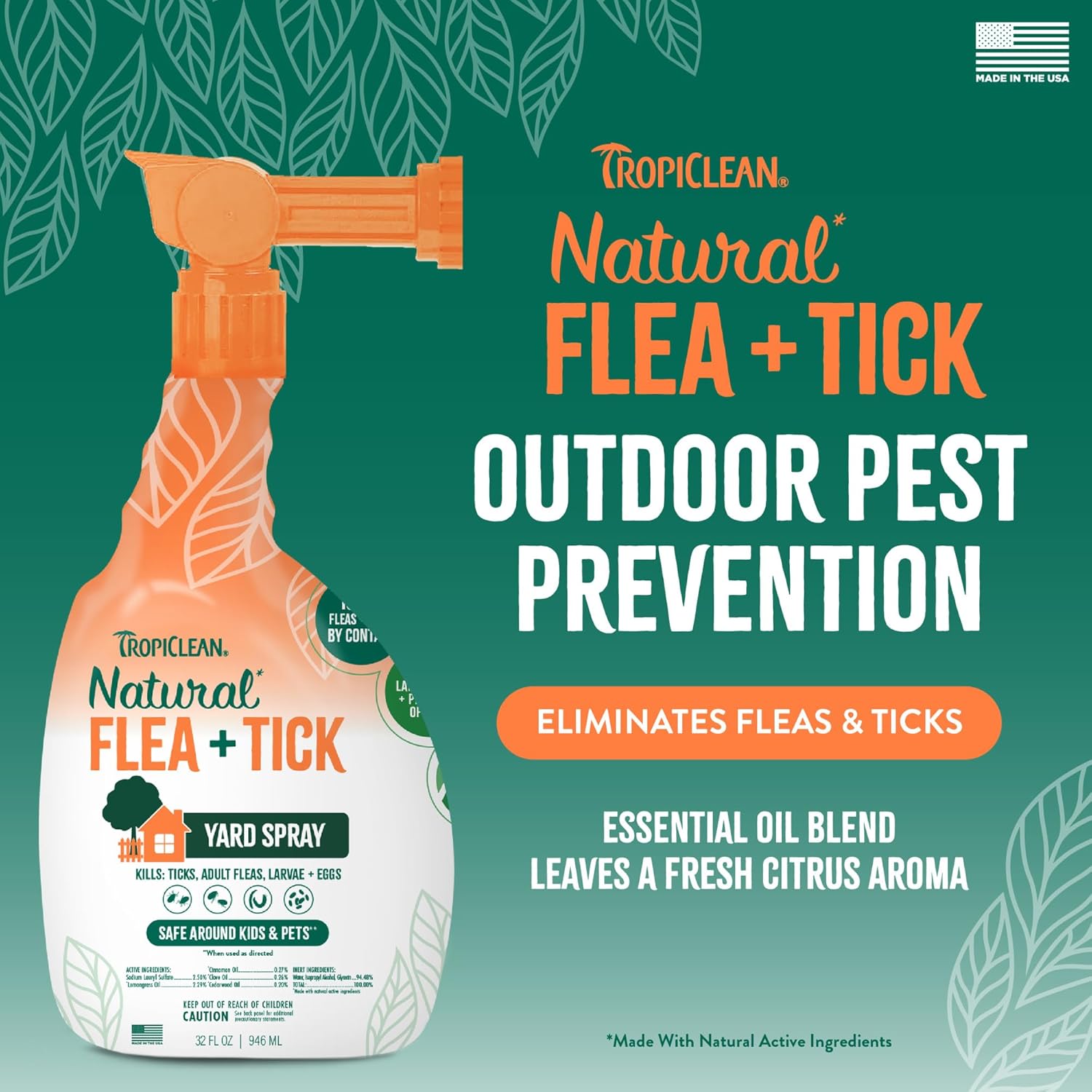
🌿 Step 5: Review and monitor rather than automatically rotate sprays. Check each Vet’s Best or TropiClean formulation and label. Rotating brand names does not establish resistance prevention, and combining products may create unnecessary exposure. Related links: Vet’s Best Yard Spray · TropiClean Yard Spray.

Quick Comparison of the System
| Product | Best For | Why Dog Parents Love It |
|---|---|---|
| Wondercide Yard Spray | Check labelled target pests | Outcome and timing are not guaranteed |
| Cedarcide Granules | Assess labelled outdoor use | Follow the current product directions |
| Beneficial Nematodes | Optional biological approach | Species and conditions affect results |
| Diatomaceous Earth | Targeted dry spots | Avoid dust; use only as labelled |
| Vet’s Best / TropiClean | Label review and monitoring | Brand rotation does not prove resistance control |
Why a combined plan can help: cleaning, habitat management and appropriate pet prevention address different exposure points. That does not validate this particular shopping list as a tested system.
What to expect: the time needed depends on infestation, weather, household conditions and treatment choices. The earlier day-by-day relief timeline was not supported by a documented trial and should not guide expectations.
Monitor scratching and the presence of pests. If discomfort persists, contact your veterinarian rather than assuming another yard product will solve it.
The Hidden Layer (This Changes Everything) Support the products with basic yard habits that reduce environmental triggers: more sunlight, short grass, moisture control, and clearing leaves/brush/wood piles.
These yard habits can support exposure reduction. They do not create a pest-free or risk-free space.
This System Is For You If…
- Your dog won’t stop scratching
- You’ve found even ONE flea or tick
- You want a natural solution (not harsh chemicals)
- You want to prevent the problem before it gets worse
- You’re tired of temporary fixes that don’t last
Piper’s observations are anecdotal; this guide does not document a controlled product trial.
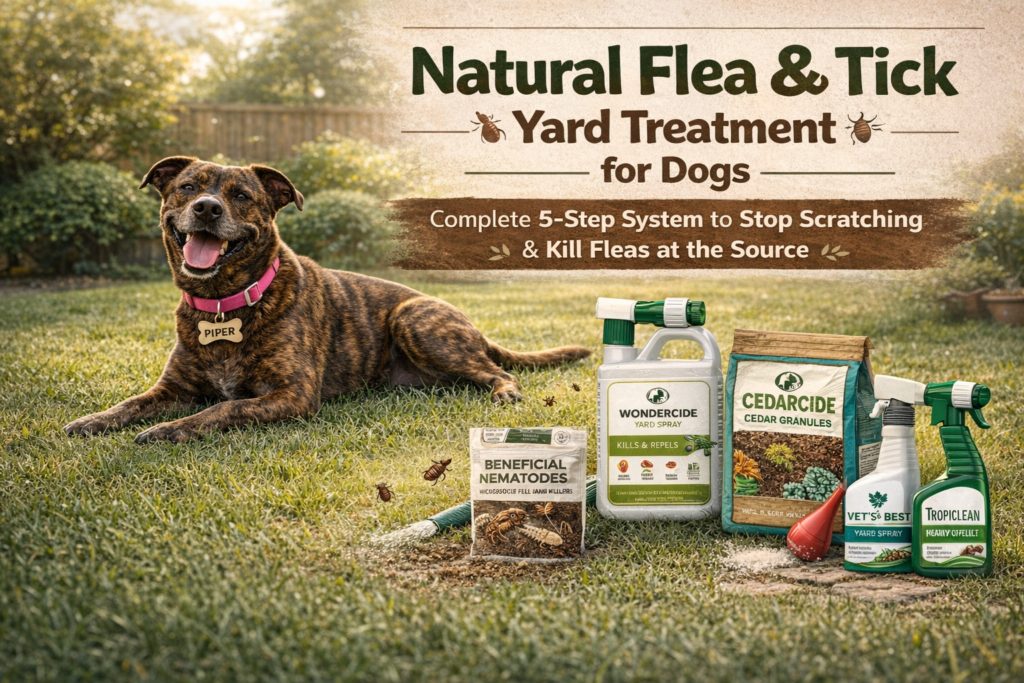
The goal is to reduce exposure while following product precautions and protecting the dog’s comfort. No outdoor area or treatment can guarantee worry-free play.
This guide is part of our complete approach to understanding environmental triggers in dogs and how they affect behavior, health, and daily comfort.
Practical plan: identify the pest, speak with your veterinarian about prevention, clean pet resting areas, maintain the yard, and consider a labelled treatment where needed. Buying every listed product is not necessary.
FAQ:
How do I reduce fleas in the yard? Start with habitat management and a coordinated pet/home plan. Select any treatment by its label and target pest; no single natural system is guaranteed to hit every life stage. Related links: Environmental Triggers in Dogs.
Is lime good for flea control in yards? No—skip it.
Can I spread diatomaceous earth everywhere? No. Follow the exact pesticide label, avoid breathing dust, and keep people and animals out as directed. Dryness affects performance. A listing for one pest is not proof of mosquito or tick control in your yard.
Related Reads
- Why Your Dog Does That: The Complete BarkMindDogs Behavioral System
- Environmental Triggers in Dogs: Why Behavior Changes in Different Situations
- How Dogs Learn: The Science Behind Behavior and Training
- Separation Anxiety in Dogs: Why It Happens and How to Help
Important Note: This article is for educational purposes only and is not veterinary medical advice. Always consult your veterinarian for specific health concerns about your dog.
Start with identifying the problem and making a realistic pet, home and yard plan. Get professional advice when pests or scratching persist.

Sources and review note
Reviewed October 19, 2026 against EPA home-control guidance, University of Minnesota Extension flea guidance, and the NPIC diatomaceous-earth fact sheet. These sources support integrated control and precautions; they do not endorse the linked product combination or a guaranteed relief timeline.