Why Your Dog Watches You Leave (And What It Actually Means)
You’ve done this a hundred times… but it still gets you.
You grab your keys, slip on your shoes, and reach for the door. As your hand turns the knob, you pause for half a second and glance back.
There they are.
And for a second… everything else stops.
Your dog is standing in the hallway or by the window, completely still, eyes locked on you. No barking. No jumping. Just watching. Quiet. Steady. As if they’re trying to memorize the exact moment you disappear.
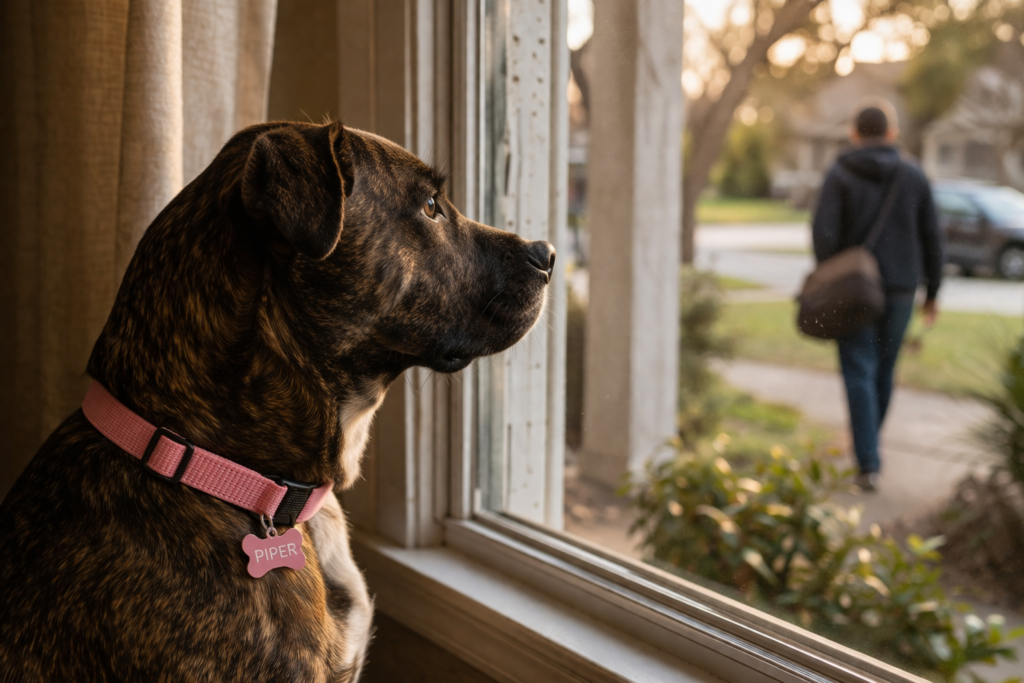
This moment feels emotional to us — but to your dog, it’s information.
In that split second, something twists in your chest.
You think: Are they okay? Do they understand I’m coming back? Am I breaking their heart right now?
You tell yourself they’ll be fine. You’ve done this before. They have toys, water, a cozy bed. But deep down you feel it — that small, heavy guilt that comes with loving a dog so much. You hate leaving them. You hate the idea that they might feel abandoned, even for a few hours.
That quiet stare at the door can break your heart — because you don’t know if they’re okay once you’re gone.
If you’ve ever felt that moment at the door… this will explain exactly what’s happening.
Once you see it this way, that moment at the door starts to look completely different.
Why does my dog watch me leave? (Quick Answer)
Dogs watch you leave because they recognize patterns and predict what happens next. They are not just reacting emotionally — they are processing routines, expectations, and outcomes based on past experience.
When those patterns are inconsistent, this behavior can turn into stress, pacing, or anxiety.
The Real Problem Most Dog Owners Are Trying to Solve
Most people jump straight to: “My dog has separation anxiety.”
But what they’re really seeing is something quieter… and more fixable: uncertainty.
Because dogs don’t struggle with you leaving. They struggle with not knowing what that means this time.
The Part No One Talks About
Your dog isn’t just watching you leave. They’re trying to understand:
- how long you’ll be gone
- what happens while you’re gone
- and how they should respond
And if the answer changes every time… your dog can’t relax. So they stay alert… waiting for something to make sense again.
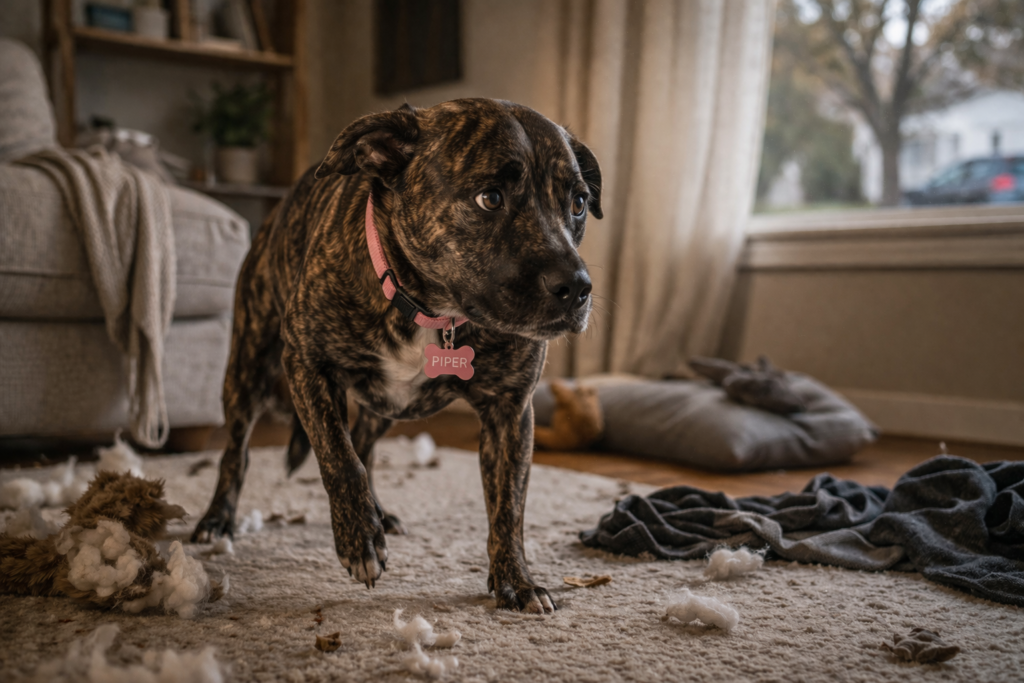
When patterns aren’t clear, dogs stay alert — trying to figure out what happens next.
Dogs Don’t See Moments — They See Patterns
Once you see this pattern, that moment at the door starts to make sense.
Dogs are constantly learning from repetition.
When you: • Grab your keys • Put on your shoes • Walk toward the door
Your dog connects these into a reliable sequence.
This is the same learning system explained in How Dogs Learn — where behavior is built through repetition and reinforcement.
If you want the full behavior lens behind this guide, start with Why Your Dog Does That — the core system behind every behavior your dog shows.
What Your Dog Is Actually Doing
- Tracking a Known Sequence They recognize: “This leads to my human leaving.”
- Predicting Outcomes They anticipate boredom, stress, rest, or stimulation based on what’s happened before.
- Regulating Their Own State They adjust their energy and emotions based on past results.
This ties directly into Environmental Triggers in Dogs.
If this shows up as barking or reactivity, see Why Dogs Bark and Dog Aggression Explained.
Routine matters because dogs learn from repetition. If you want the broader version of that idea, read Start Here and then Why Your Dog Does That, which explain why behavior stops feeling random once you understand the system behind it.
Early patterns matter. If you are building feeding structure with a young dog, Puppy Behavior Development is the best companion guide because it shows how repeated experiences become automatic behavior over time.
Many feeding problems are really owner-pattern problems. That fits the same principle Bark Mind Dogs lays out in Dog Behavior Mistakes: dogs often struggle because humans accidentally reinforce unstable patterns.
If your dog’s feeding behavior gets worse when you leave, change rooms, or disrupt the routine, it may be part of a bigger stress pattern. Separation Anxiety in Dogs explains how distress and instability get reinforced over time.
Why This Matters More Than You Think
This isn’t just about leaving the house. This same pattern shows up in:
- feeding
- energy levels
- digestion
- behavior
If your dog’s world feels inconsistent in one place, it usually feels inconsistent everywhere.
This is why everything starts with structure.
Here’s the Part That Should Actually Make You Feel Better
This isn’t about you failing your dog. It’s not about not loving them enough. It’s not about needing to do more.
It’s about making their world make sense.
And once it does… that look at the door changes.
What To Do Instead
Your dog doesn’t need more reassurance. They need to know: “This always means the same thing.”
That’s what creates calm. Not attention. Not distraction. Not guessing.
Predictability.
Tools That Help Create Predictability (Not Quick Fixes)
You don’t need to overhaul everything at once.
Just make one part of your dog’s day more predictable.
These tools don’t replace structure — they make it easier to stay consistent. Used consistently, they help your dog experience the same outcome every time you leave.
- Interactive Feeding Toy (Routine Builder) Use before you leave to create a consistent transition. Slows eating, reduces anxiety, builds routine. Recommended: KONG Classic Dog Toy – Shop on Amazon (affiliate disclosure)
- Automatic Dog Feeder (Consistency Anchor) Locks feeding times daily, removes variability, stabilizes energy. Recommended: PETLIBRO Automatic Dog Feeder – Shop on Amazon (affiliate disclosure)
The goal isn’t to keep your dog busy while you’re gone. It’s to make leaving feel normal.
Start small. Keep it consistent. That’s what your dog is actually waiting for.
The Bottom Line
Your dog watching you leave isn’t a problem. It’s a signal.
A signal of:
- what they’ve learned
- what they expect
- and whether their world feels predictable
When that system is unclear… you see it in that look.
But when it’s clear? They stop trying to figure it out. They relax.
And that’s when leaving stops feeling heavy — for both of you.
If that moment at the door hits you every time… start fixing the system behind it.
Start with Why Your Dog Does That, then explore The Smarter Way to Feed Your Dog or any of the core behavior pillars above.